


NMDAR antagonist action in thalamus imposes δ oscillations on the hippocampus
- PMID: 22423006
- PMCID: PMC3378362
- DOI: 10.1152/jn.00072.2012
NMDAR antagonist action in thalamus imposes δ oscillations on the hippocampus
Abstract
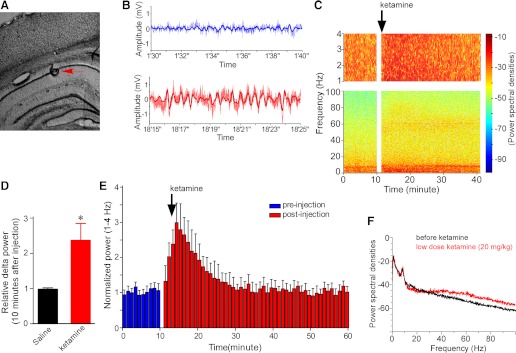
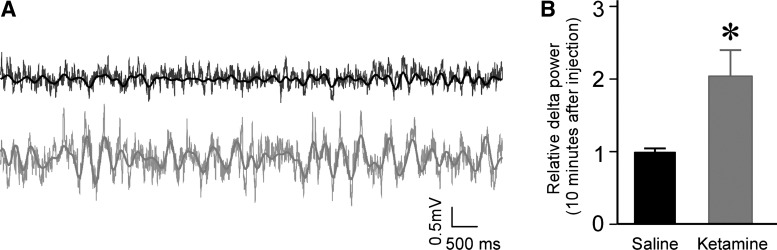
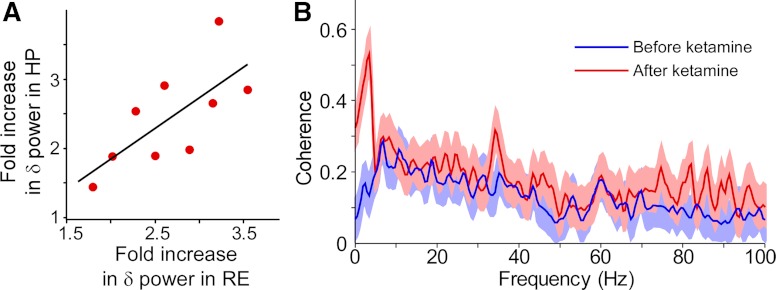
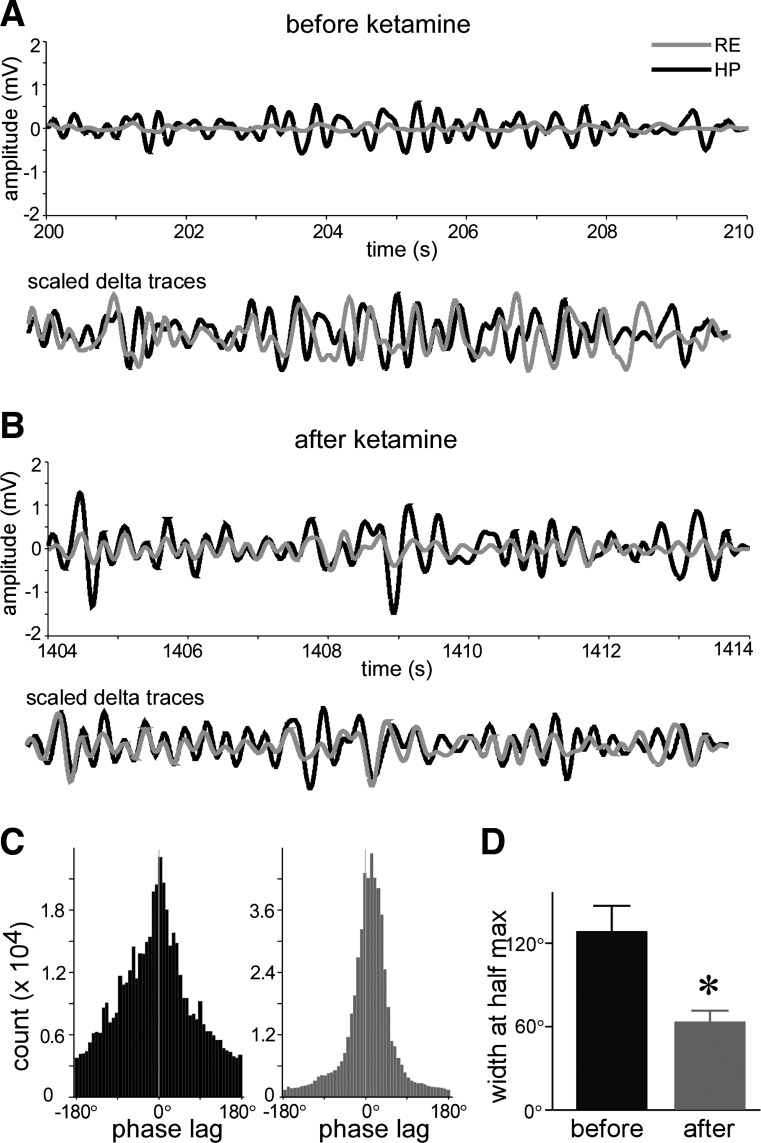
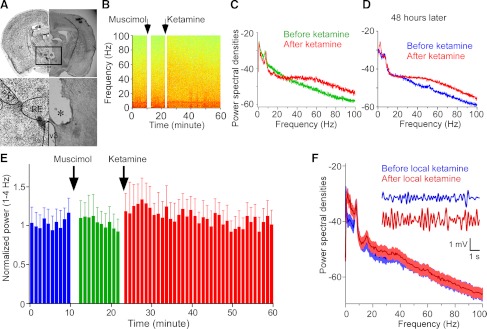
Work on schizophrenia demonstrates the involvement of the hippocampus in the disease and points specifically to hyperactivity of CA1. Many symptoms of schizophrenia can be mimicked by N-methyl-d-aspartate receptor (NMDAR) antagonist; notably, delta frequency oscillations in the awake state are enhanced in schizophrenia, an abnormality that can be mimicked by NMDAR antagonist action in the thalamus. Given that CA1 receives input from the nucleus reuniens of the thalamus, we sought to determine whether an NMDAR antagonist in the thalamus can affect hippocampal processes. We found that a systemic NMDAR antagonist (ketamine; 50 mg/kg) increased the firing rate of cells in the reuniens and CA1 in awake rats. Furthermore, ketamine increased the power of delta oscillations in both structures. The thalamic origin of the change in hippocampal properties was demonstrated in three ways: 1) oscillations in the two structures were coherent; 2) the hippocampal changes induced by systematic ketamine were reduced by thalamic injection of muscimol; and 3) the hippocampal changes could be induced by local injection of ketamine into the thalamus. Lower doses of ketamine (20 mg/kg) did not evoke delta oscillations but did increase hippocampal gamma power, an effect not dependent on the thalamus. There are thus at least two mechanisms for ketamine action on the hippocampus: a low-dose mechanism that affects gamma through a nonthalamic mechanism and a high-dose mechanism that increases CA1 activity and delta oscillations as a result of input from the thalamus. Both mechanisms may be important in producing symptoms of schizophrenia.
Figures

References
-
- Blaha CD, Yang CR, Floresco SB, Barr AM, Phillips AG. Stimulation of the ventral subiculum of the hippocampus evokes glutamate receptor-mediated changes in dopamine efflux in the rat nucleus accumbens. Eur J Neurosci 9: 902–911, 1997 - PubMed
-
- Buzsáki G. The thalamic clock: emergent network properties. Neuroscience 41: 351–364, 1991 - PubMed
-
- Clementz BA, Sponheim SR, Iacono WG, Beiser M. Resting EEG in first-episode schizophrenia patients, bipolar psychosis patients, and their first-degree relatives. Psychophysiology 31: 486–494, 1994 - PubMed
Publication types
MeSH terms
Substances
Grants and funding
LinkOut - more resources
Full Text Sources
Miscellaneous
