


Memory training interventions for older adults: a meta-analysis
- PMID: 22423647
- PMCID: PMC3430800
- DOI: 10.1080/13607863.2012.667783
Memory training interventions for older adults: a meta-analysis
Abstract
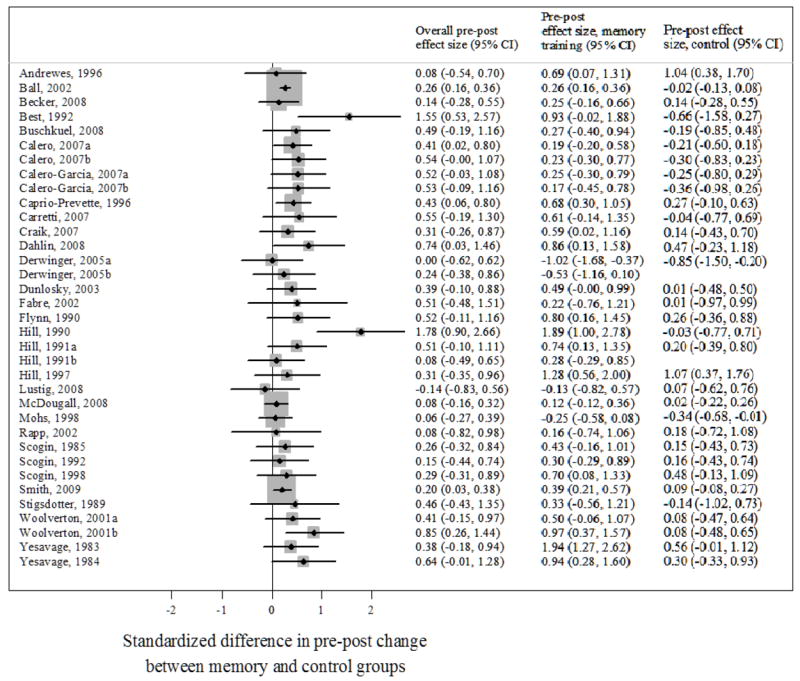
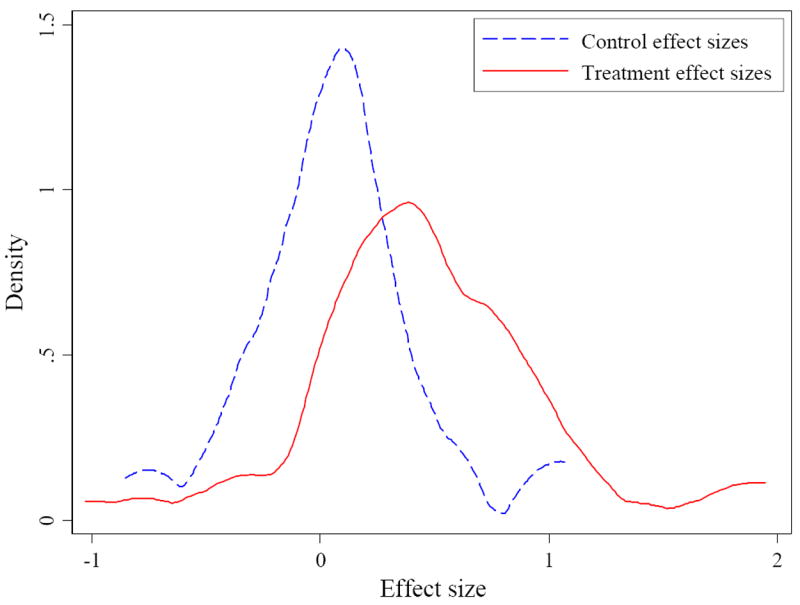
A systematic review and meta-analysis of memory training research was conducted to characterize the effect of memory strategies on memory performance among cognitively intact, community-dwelling older adults, and to identify characteristics of individuals and of programs associated with improved memory. The review identified 402 publications, of which 35 studies met criteria for inclusion. The overall effect size estimate, representing the mean standardized difference in pre-post change between memory-trained and control groups, was 0.31 standard deviations (SD; 95% confidence interval (CI): 0.22, 0.39). The pre-post training effect for memory-trained interventions was 0.43 SD (95% CI: 0.29, 0.57) and the practice effect for control groups was 0.06 SD (95% CI: 0.05, 0.16). Among 10 distinct memory strategies identified in studies, meta-analytic methods revealed that training multiple strategies was associated with larger training gains (p=0.04), although this association did not reach statistical significance after adjusting for multiple comparisons. Treatment gains among memory-trained individuals were not better after training in any particular strategy, or by the average age of participants, session length, or type of control condition. These findings can inform the design of future memory training programs for older adults.
Conflict of interest statement
No authors have any conflicts of interest.
Figures
References
-
- Acevedo A, Loewenstein DA. Nonpharmacological cognitive interventions in aging and dementia. Journal of Geriatric Psychiatry and Neurology. 2007;20:239–249. - PubMed
-
- Andrewes DG, Kinsella G, Murphy M. Using a memory handbook to improve everyday memory in community-dwelling older adults with memory complaints. Experimental Aging Research. 1996;22:305–322. - PubMed
-
- Ball K, Berch DB, Helmers KF, Jobe JB, Leveck MD, Marsiske M, Morris JN, Rebok GW, Smith DM, Tennstedt SL, Unverzagt FW, Willis SL. Effects of cognitive training interventions with older adults: a randomized controlled trial. Journal of the American Medical Association. 2002;288:2271–2281. - PMC - PubMed
-
- Belleville S. Cognitive training for persons with mild cognitive impairment. International Psychogeriatrics. 2008;20:57–66. - PubMed
Publication types
MeSH terms
Grants and funding
LinkOut - more resources
Full Text Sources
Medical
Miscellaneous
