


Human embryonic stem cell-derived GABA neurons correct locomotion deficits in quinolinic acid-lesioned mice
- PMID: 22424902
- PMCID: PMC3322292
- DOI: 10.1016/j.stem.2012.01.021
Human embryonic stem cell-derived GABA neurons correct locomotion deficits in quinolinic acid-lesioned mice
Abstract
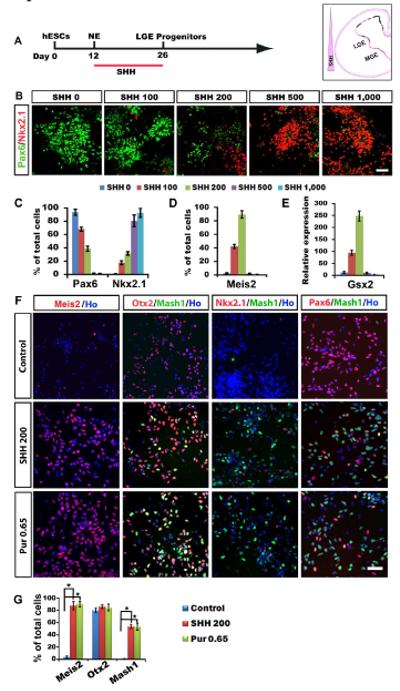
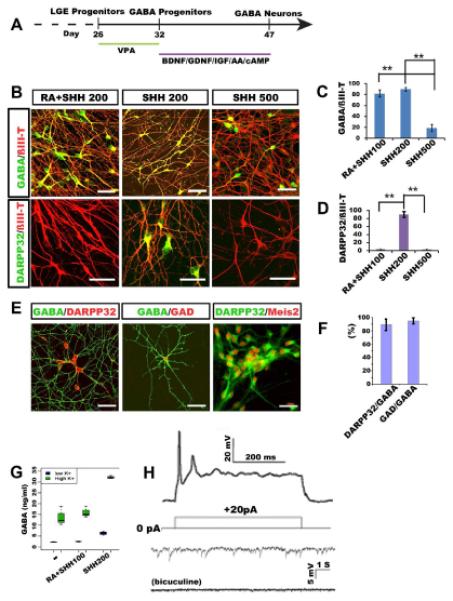
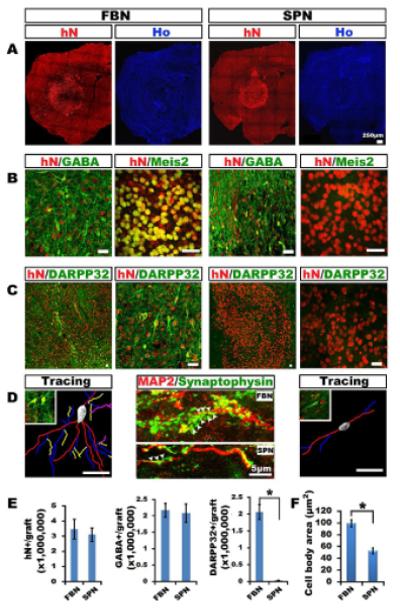
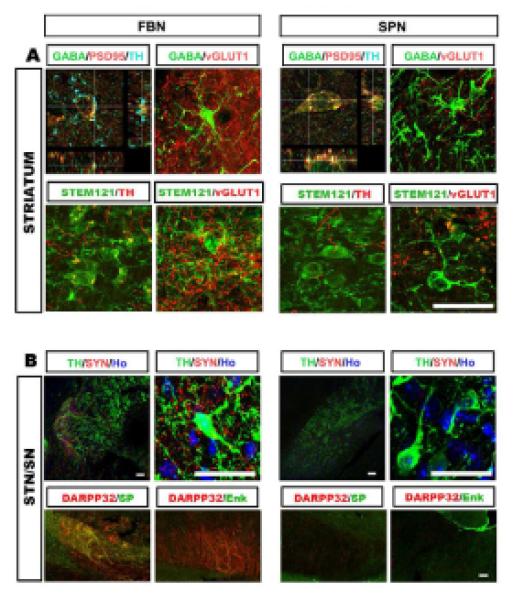
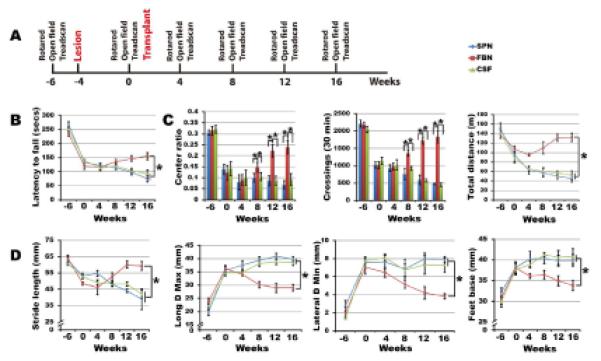
Degeneration of medium spiny GABA neurons in the basal ganglia underlies motor dysfunction in Huntington's disease (HD), which presently lacks effective therapy. In this study, we have successfully directed human embryonic stem cells (hESCs) to enriched populations of DARPP32-expressing forebrain GABA neurons. Transplantation of these human forebrain GABA neurons and their progenitors, but not spinal GABA cells, into the striatum of quinolinic acid-lesioned mice results in generation of large populations of DARPP32(+) GABA neurons, which project to the substantia nigra as well as receiving glutamatergic and dopaminergic inputs, corresponding to correction of motor deficits. This finding raises hopes for cell therapy for HD.
Copyright © 2012 Elsevier Inc. All rights reserved.
Figures
Comment in
-
Generation of transplantable striatal projection neurons from human ESCs.Cell Stem Cell. 2012 Apr 6;10(4):349-50. doi: 10.1016/j.stem.2012.03.004. Cell Stem Cell. 2012. PMID: 22482498
References
-
- Bachoud-Levi A, Bourdet C, Brugieres P, Nguyen JP, Grandmougin T, Haddad B, Jeny R, Bartolomeo P, Boisse MF, Barba GD, et al. Safety and tolerability assessment of intrastriatal neural allografts in five patients with Huntington’s disease. Exp Neurol. 2000;161:194–202. - PubMed
-
- Bachoud-Levi AC, Gaura V, Brugieres P, Lefaucheur JP, Boisse MF, Maison P, Baudic S, Ribeiro MJ, Bourdet C, Remy P, et al. Effect of fetal neural transplants in patients with Huntington’s disease 6 years after surgery: a long-term follow-up study. Lancet Neurol. 2006;5:303–309. - PubMed
Publication types
MeSH terms
Substances
Grants and funding
LinkOut - more resources
Full Text Sources
Other Literature Sources
Medical
