


Functional connectivity in the cognitive control network and the default mode network in late-life depression
- PMID: 22425432
- PMCID: PMC3340472
- DOI: 10.1016/j.jad.2011.12.002
Functional connectivity in the cognitive control network and the default mode network in late-life depression
Abstract
Background: Abnormalities have been identified in the Cognitive Control Network (CCN) and the Default Mode Network (DMN) during episodes of late-life depression. This study examined whether functional connectivity at rest (FC) within these networks characterizes late-life depression and predicts antidepressant response.
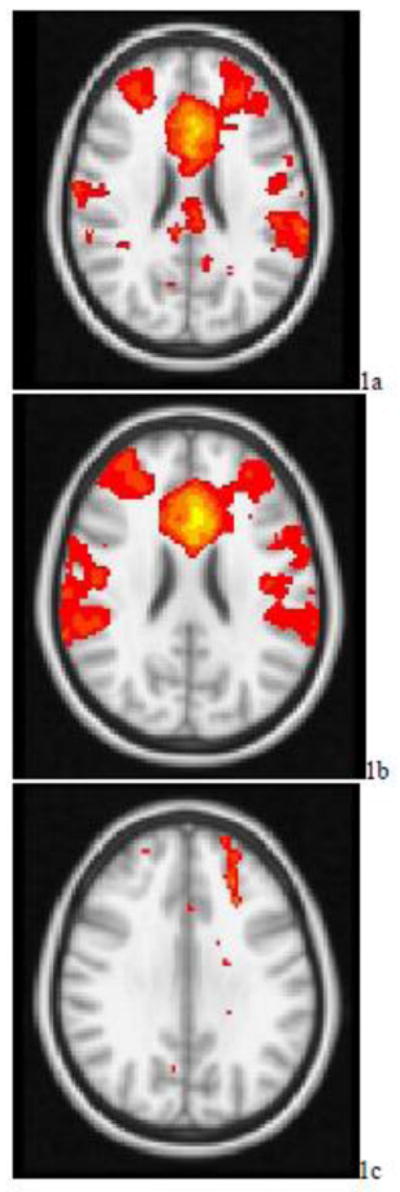
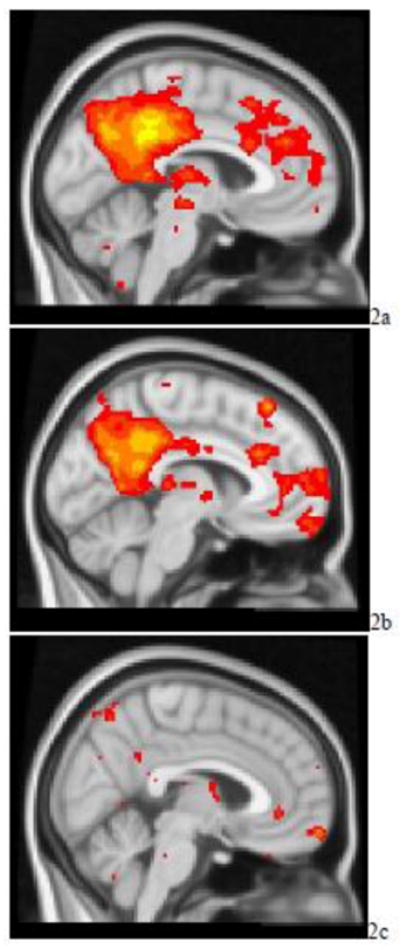
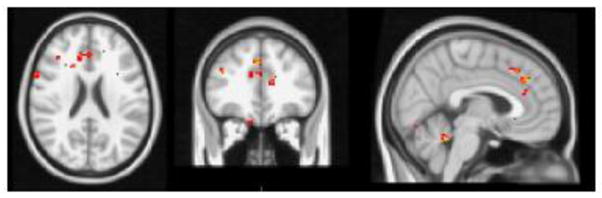
Methods: 26 non-demented, non-MCI older adults were studied. Of these, 16 had major depression and 10 had no psychopathology. Depressed patients were treated with escitalopram (target dose 20 mg) for 12 weeks after a 2-week placebo phase. Resting state time series was determined prior to treatment. FC within the CCN was determined by placing seeds in the dACC and the DLPFC bilaterally. FC within the DMN was assessed from a seed placed in the posterior cingulate.
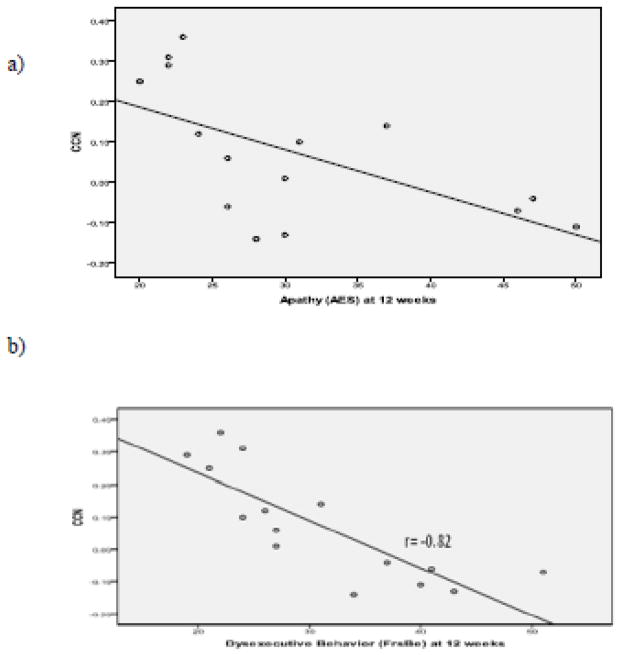
Results: Low resting FC within the CCN and high resting FC within the DMN distinguished depressed from normal elderly subjects. Beyond this "double dissociation", low resting FC within the CCN predicted low remission rate and persistence of depressive symptoms and signs, apathy, and dysexecutive behavior after treatment with escitalopram. In contrast, resting FC within the DMN was correlated with pessimism but did not predict treatment response.
Conclusions: If confirmed, these findings may serve as a signature of the brain's functional topography characterizing late-life depression and sustaining its symptoms. By identifying the network abnormalities underlying biologically meaningful characteristics (apathy, dysexecutive behavior, pessimism) and sustaining late-life depression, these findings can provide a novel target on which new somatic and psychosocial treatments can be tested.
Published by Elsevier B.V.
Conflict of interest statement
CONFLICTS OF INTEREST
Dr. Alexopoulos received grant support from Forest Pharmaceuticals and has been a member of speakers’ bureaus of Astra Zeneca, Avanir, Forest, Merck, and Lundbeck. He holds equity of Johnson and Johnson. Dr. Lim serves on the Scientific Advisory Board for Shire Corp, a biopharmaceutical company. No other authors report conflicts of interest.
Figures
References
-
- ALEXOPOULOS GS, KIOSSES DN, CHOI SJ, MURPHY CF, LIM KO. Frontal white matter microstructure and treatment response of late-life depression: a preliminary study. Am J Psychiatry. 2002;159:1929–32. - PubMed
-
- ALEXOPOULOS GS, KIOSSES DN, HEO M, MURPHY CF, SHANMUGHAM B, GUNNING-DIXON F. Executive dysfunction and the course of geriatric depression. Biol Psychiatry. 2005;58:204–10. - PubMed
Publication types
MeSH terms
Substances
Grants and funding
LinkOut - more resources
Full Text Sources
Other Literature Sources
Medical
