


Intrahepatic diacylglycerol content is associated with hepatic insulin resistance in obese subjects
- PMID: 22425588
- PMCID: PMC3564653
- DOI: 10.1053/j.gastro.2012.03.003
Intrahepatic diacylglycerol content is associated with hepatic insulin resistance in obese subjects
Abstract
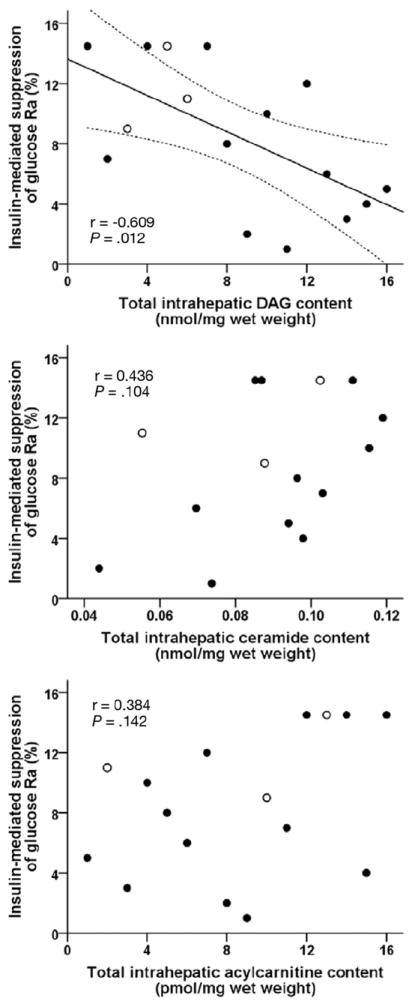
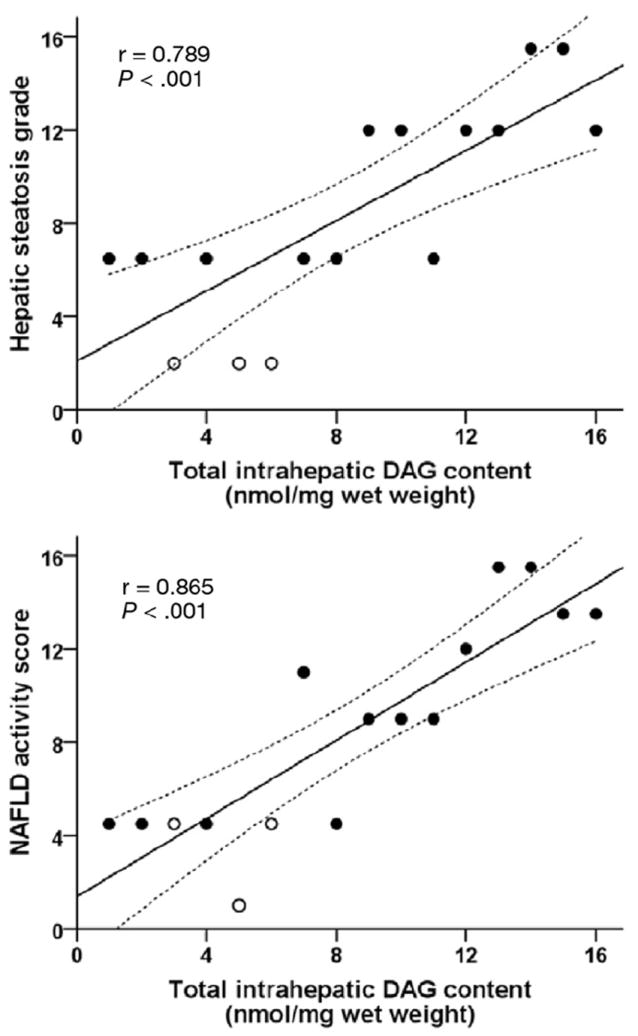
Data from studies in animal models indicate that certain lipid metabolites, particularly diacylglycerol, ceramide, and acylcarnitine, disrupt insulin action. We evaluated the relationship between the presence of these metabolites in the liver (assessed by mass spectrometry) and hepatic insulin sensitivity (assessed using a hyperinsulinemic-euglycemic clamp with stable isotope tracer infusion) in 16 obese adults (body mass index, 48 ± 9 kg/m²). There was a negative correlation between insulin-mediated suppression of hepatic glucose production and intrahepatic diacylglycerol (r = -0.609; P = .012), but not with intrahepatic ceramide or acylcarnitine. These data indicate that intrahepatic diacylglycerol is an important mediator of hepatic insulin resistance in obese people with nonalcoholic fatty liver disease.
Copyright © 2012 AGA Institute. Published by Elsevier Inc. All rights reserved.
Conflict of interest statement
Conflicts of interest
The authors disclose no conflicts.
Figures
References
Publication types
MeSH terms
Substances
Grants and funding
- T32 HL007456/HL/NHLBI NIH HHS/United States
- DK089503/DK/NIDDK NIH HHS/United States
- DK 37948/DK/NIDDK NIH HHS/United States
- P30 DK056341/DK/NIDDK NIH HHS/United States
- UL1 RR024992/RR/NCRR NIH HHS/United States
- P41 GM103422/GM/NIGMS NIH HHS/United States
- P30 DK089503/DK/NIDDK NIH HHS/United States
- UL1 TR000448/TR/NCATS NIH HHS/United States
- RR024992/RR/NCRR NIH HHS/United States
- R01 DK037948/DK/NIDDK NIH HHS/United States
- RR-00954/RR/NCRR NIH HHS/United States
- P30 DK020579/DK/NIDDK NIH HHS/United States
- DK 56341/DK/NIDDK NIH HHS/United States
- P41 RR000954/RR/NCRR NIH HHS/United States
LinkOut - more resources
Full Text Sources
