Clinical Trial
. 2012;7(3):e32863.
doi: 10.1371/journal.pone.0032863. Epub 2012 Mar 12.

Innate immune deficiency of extremely premature neonates can be reversed by interferon-γ

Affiliations
Clinical Trial

Innate immune deficiency of extremely premature neonates can be reversed by interferon-γ

Pierre Tissières et al. PLoS One. 2012.

Abstract

Background: Bacterial sepsis is a major threat in neonates born prematurely, and is associated with elevated morbidity and mortality. Little is known on the innate immune response to bacteria among extremely premature infants.

Methodology/principal findings: We compared innate immune functions to bacteria commonly causing sepsis in 21 infants of less than 28 wks of gestational age, 24 infants born between 28 and 32 wks of gestational age, 25 term newborns and 20 healthy adults. Levels of surface expression of innate immune receptors (CD14, TLR2, TLR4, and MD-2) for Gram-positive and Gram-negative bacteria were measured in cord blood leukocytes at the time of birth. The cytokine response to bacteria of those leukocytes as well as plasma-dependent opsonophagocytosis of bacteria by target leukocytes was also measured in the presence or absence of interferon-γ. Leukocytes from extremely premature infants expressed very low levels of receptors important for bacterial recognition. Leukocyte inflammatory responses to bacteria and opsonophagocytic activity of plasma from premature infants were also severely impaired compared to term newborns or adults. These innate immune defects could be corrected when blood from premature infants was incubated ex vivo 12 hrs with interferon-γ.

Conclusion/significance: Premature infants display markedly impaired innate immune functions, which likely account for their propensity to develop bacterial sepsis during the neonatal period. The fetal innate immune response progressively matures in the last three months in utero. Ex vivo treatment of leukocytes from premature neonates with interferon-γ reversed their innate immune responses deficiency to bacteria. These data represent a promising proof-of-concept to treat premature newborns at the time of delivery with pharmacological agents aimed at maturing innate immune responses in order to prevent neonatal sepsis.


Conflict of interest statement

Competing Interests: The authors have declared that no competing interests exist.

Figures

Figure 1
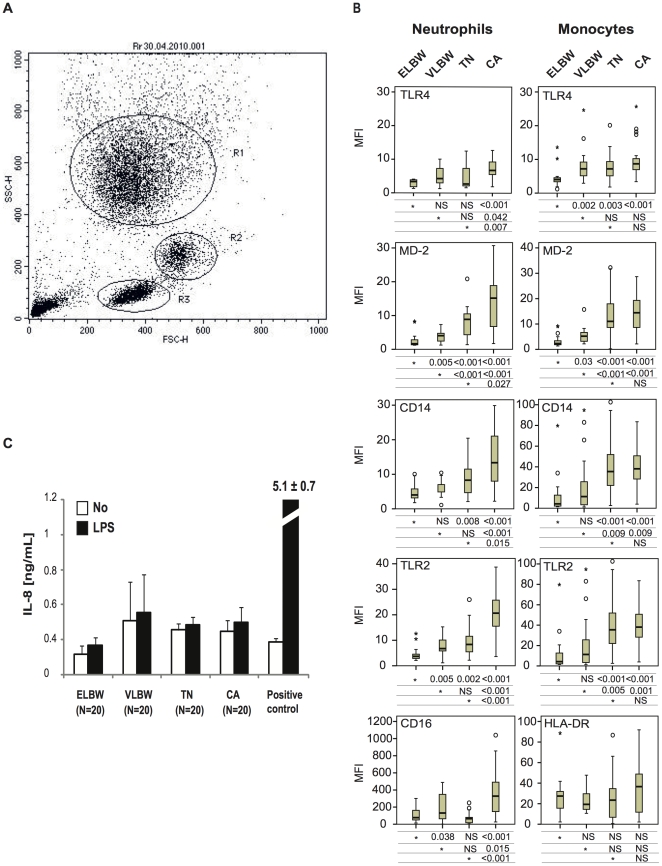
Figure 1. TLR2, TLR4, CD14, and MD-2 surface expression of blood leukocytes and plasma soluble MD-2 activity from premature infants, term newborns, and control adults.
(A) Representative flow cytometry plot showing forward and side-scatter characteristics gating used to identify neutrophils (R1), and monocytes (R2). (B) Surface expression of TLR4, MD-2, CD14 and TLR2 of phagocytes (neutrophils and monocytes) from extremely low birth weight infants (ELBW, born before 28 wks of gestational age, N = 18), very low birth weight infants (VLBW, born between 28–32 wks of gestational age, N = 17), term newborn (TN, N = 25), and control adult (CA, N = 20). In addition the expression of the Fcγ receptor CD16 on neutrophils and the major histocompatibility HLA-DR on monocytes are shown. Receptor expression was measured by flow cytometry, and expressed as mean fluorescence index (MFI, geo mean receptor/geo mean IgG control). Errors bars are means ± SEM, On each line, a reference group (*) is compared to other groups and respective P value expressed using Mann-Whitney U test. (C) Plasma soluble MD-2 activity was measured as the capacity of plasma to support TLR4-HEK293 cell activation after a 30 ng/mL LPS challenge . Human recombinant soluble MD-2 (1 µg/mL) was used as a positive control. (ELBW, extremely low birth weight premature infants born before 28 wks of gestational age N = 20; VLBW, very low birth weight premature infants born between 28–32 wks of gestational age, N = 20; TN, term newborns, N = 20; CA, control adults, N = 20). Errors bars are means ± SEM.
Figure 2
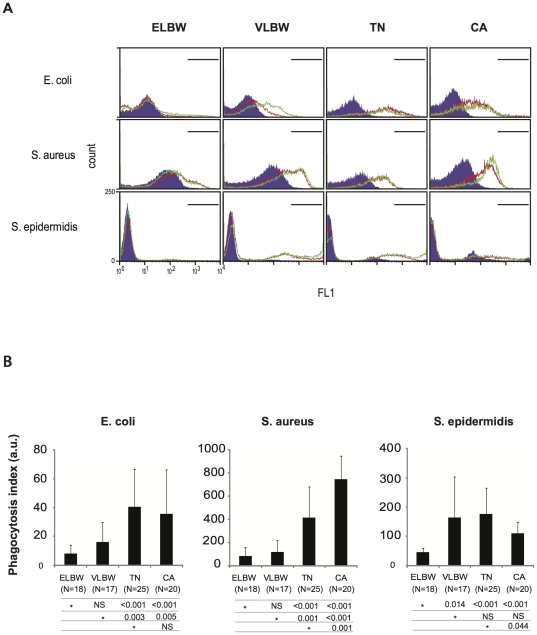
Figure 2. Phagocytosis of bacteria by newborn and adult neutrophils, and plasma opsonic activity.
(A) Phagocytosis of fluorescent E.coli, S.aureus, and S.epidermidis by neutrophils from one representative subject from each group (ELBW, extremely low birth weight premature infants born before 28 wks of gestational age; VLBW, very low birth weight premature infants born between 28–32 wks of gestational age; TN, term newborns; and CA, control adults). Phagocytosis was measured by flow cytometry after 10 min (red lines) and 20 min (green lines) incubation with bacteria opsonised with autologous plasma. Neutrophils pre-incubated with the phagocytosis blocker cytochalasin D are presented with filled curves (negative control). (B) The opsonic capacity of patient's plasma using neutrophil-like human HL-60 cells is tested. Fluorescent E.coli, S.aureus, and S.epidermidis were opsonised with autologous plasma and incubated 40 min with DMSO-differentiated HL-60 cells. Intracellular fluorescence (phagocytosis of bacteria) was measured by flow cytometry and expressed as mean phagocytic index (± SEM) of the four groups (ELBW, extremely low birth weight premature infants born before 28 wks of gestational age N = 21; VLBW, very low birth weight premature infants born between 28–32 wks of gestational age, N = 24; TN, term newborns, N = 25; CA, control adults, N = 20). On each line, a reference group (*) is compared to other groups and respective P value expressed using Mann-Whitney U test.
Figure 3
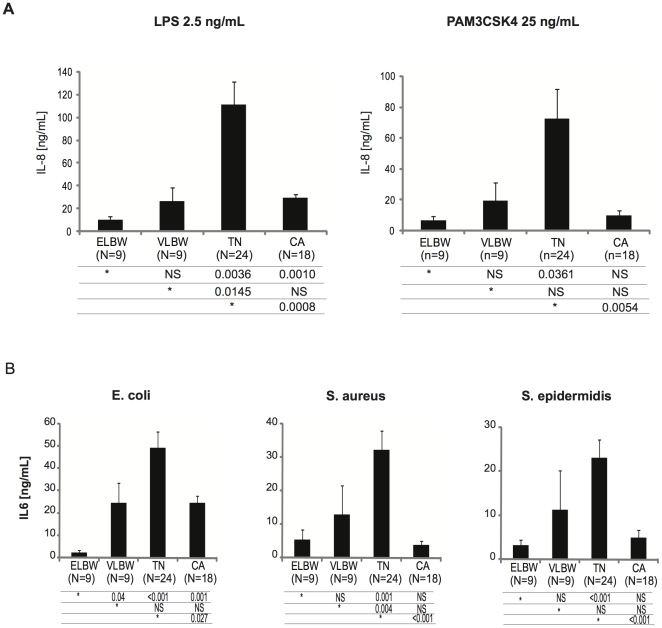
Figure 3. Whole blood response to bacterial agonists and heat-killed bacteria.
(A) Whole blood obtained from subjects of the four groups (ELBW, extremely low birth weight premature infants born before 28 wks of gestational age, N = 9; VLBW, very low birth weight premature infants born between 28–32 wks of gestational age, N = 9; TN, term newborns, N = 18; CA, control adults, N = 24) were stimulated 12 hrs with LPS (2.5 ng/mL) or PAM3CSK4 (25 ng/mL). Interleukin-8 levels (mean ± SEM) were quantified by ELISA in conditioned plasma. On each line, a reference group (*) is compared to other groups and respective P value expressed using Mann-Whitney U test. (B) Whole blood obtained from subjects of the four groups (ELBW, extremely low birth weight premature infants born before 28 wks of gestational age, N = 9; VLBW, very low birth weight premature infants born between 28–32 wks of gestational age, N = 9; TN, term newborns, N = 18; CA, control adults, N = 24) were stimulated 12 hrs with heat-killed bacteria (3.7×10⁶ E. coli, S. epidermidis, and 1.56×10⁶ S. aureus). Interleukin-6 levels (mean ± SEM) were quantified by ELISA in conditioned plasma. On each line, a reference group (*) is compared to other groups and respective P value expressed using Mann-Whitney U test.
Figure 4
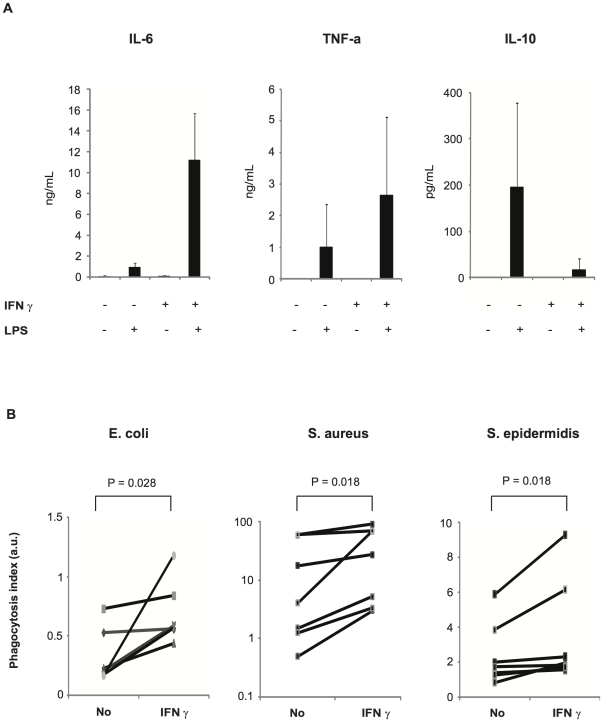
Figure 4. LPS responsiveness of leukocytes and opsonic capacity of plasma from premature infants with and without the addition of interferon-γ.
(A) Whole blood from 7 extremely premature infants (born before 28 wks of gestational age) was treated ex vivo or not for 12 hrs with interferon (IFN)-γ. LPS was then added for an additional 12 hrs and IL-6, TNF-α, and IL-10 were measured (mean ± SEM) in conditioned plasma. (B) The plasma from whole blood obtained in seven extremely premature infants (born before 28 wks of gestational age) treated ex vivo or not with for 12 hrs with IFN-γ was incubated with fluorescent E.coli, S.aureus and S.epidermidis (opsonisation). Opsonised bacteria were then incubated with neutrophil-like HL-60 cells for 40 min; intracellular fluorescence was measured by flow cytometry, and expressed as mean phagocytic index (± SEM). Statistical significance was tested with Wilcoxon matched-pairs signed rank test.

References

    1. Stoll BJ, Hansen N, Fanaroff AA, Wright LL, Carlo WA, et al. Late-onset sepsis in very low birth weight neonates: the experience of the NICHD Neonatal Research Network. Pediatrics. 2002;110:285–291. - PubMed
    1. Venkatesh MP, Placencia F, Weisman LE. Coagulase-negative staphylococcal infections in the neonate and child: an update. Semin Pediatr Infect Dis. 2006;17:120–127. - PubMed
    1. Stoll BJ, Hansen NI, Adams-Chapman I, Fanaroff AA, Hintz SR, et al. Neurodevelopmental and growth impairment among extremely low-birth-weight infants with neonatal infection. Jama. 2004;292:2357–2365. - PubMed
    1. Hilgendorff A, Schmidt R, Bohnert A, Merz C, Bein G, et al. Host defence lectins in preterm neonates. Acta Paediatr. 2005;94:794–799. - PubMed
    1. Dyke MP, Forsyth KD. Plasma fibronectin levels in extremely preterm infants in the first 8 weeks of life. J Paediatr Child Health. 1994;30:36–39. - PubMed

Publication types

MeSH terms