


Clinical case-study describing the use of skin-perichondrium-cartilage graft from the auricular concha to cover large defects of the nose
- PMID: 22429738
- PMCID: PMC3323463
- DOI: 10.1186/1746-160X-8-10
Clinical case-study describing the use of skin-perichondrium-cartilage graft from the auricular concha to cover large defects of the nose
Abstract
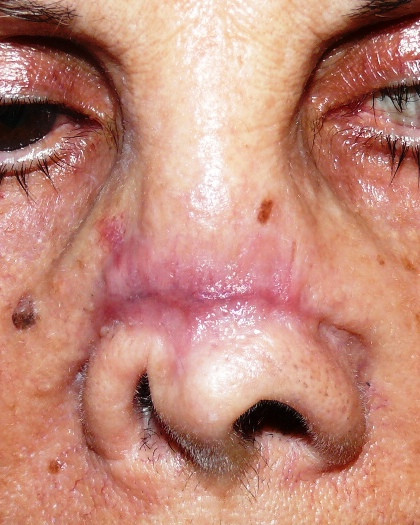
Background: The composite graft from the conchal cartilage is a graft that is often used, especially in surgery on the nose, due to its capacity to resolve problems of cover and tissue deficit, arising from the removal of neoplasms or as the result of trauma, burns or following over-aggressive rhinoplasty. We have started to use skin-perichondrium-cartilage graft from the ear to cover large areas of the nose with very satisfying results as well as we describe in the reported clinical case.
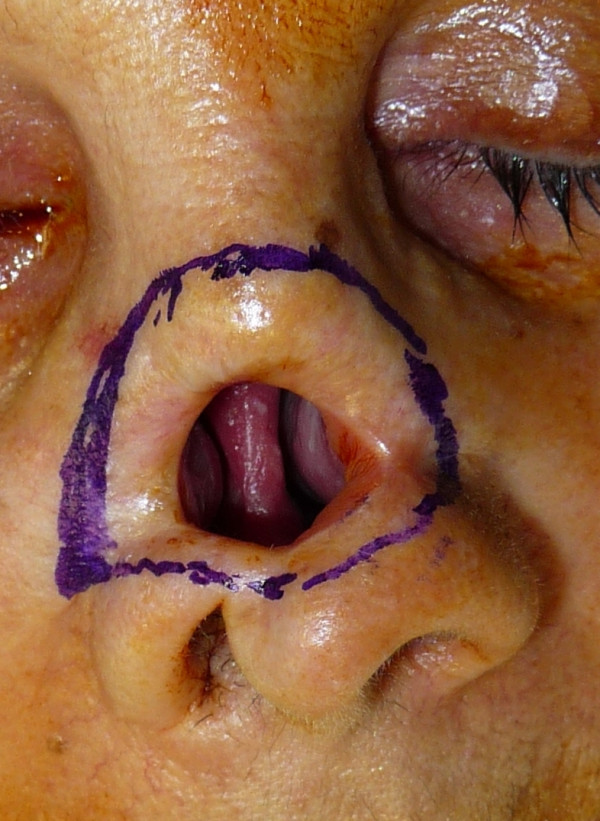
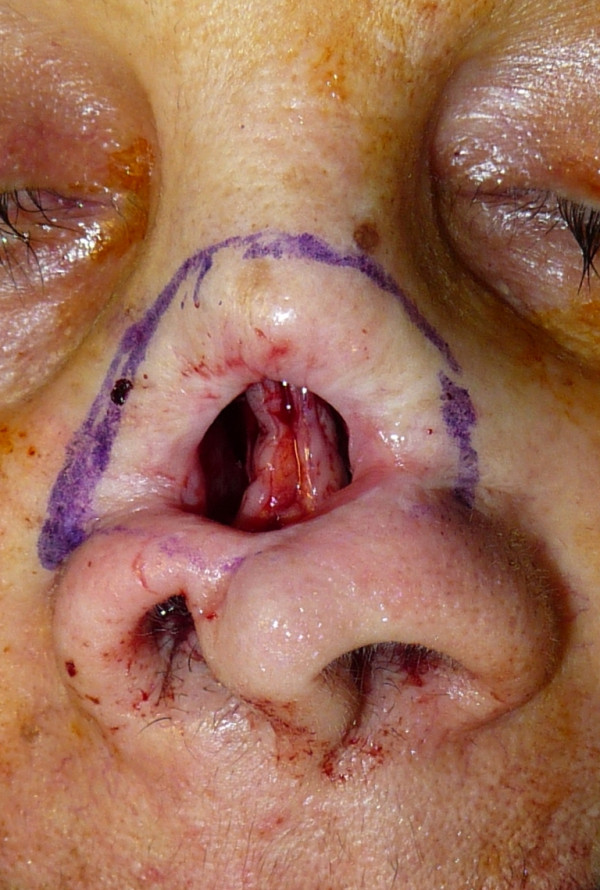
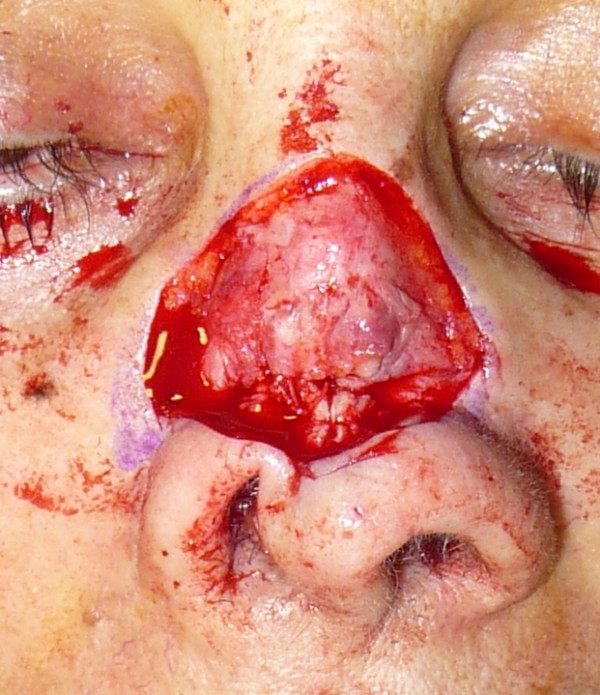
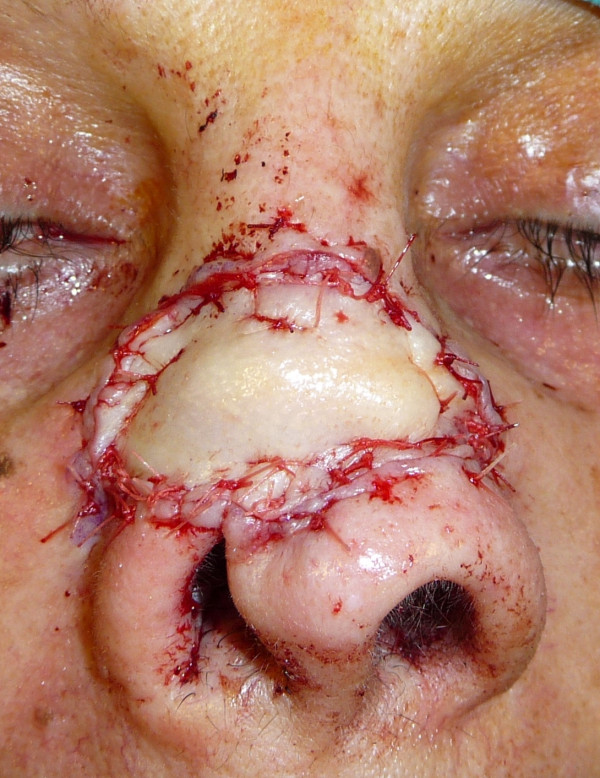
Methods: The operation consisted of reconstruction of the cartilaginous nasal septum, which had previously been removed, using two vestibular labial mucosa flaps to reconstruct the mucosa, and cartilage from the ear conch for the cartilaginous septum. After this, the skin edges of the fistula were turned to recreate the inner lining of the nose and form a vascular base of wide area to accept the composite graft. The case concerns a female 74-year old patient who had undergone several oncological surgery for a relapsing basal cell carcinoma on the dorsum of the nose. The operation consisted of reconstruction of the cartilaginous nasal septum using two vestibular labial mucosa flaps to reconstruct the mucosa, and cartilage from the ear conch for the cartilaginous septum.
Results: The perichondrial cutaneous graft has shown in this surgical case very favorable peculiarities that make it usable even in facial plastic surgery.
Conclusions: We believe that the positive experience that we achieved in the use of composite grafts for the reconstruction of large areas of the nose could be interesting for others surgeons.
Figures
References
Publication types
MeSH terms
LinkOut - more resources
Full Text Sources
Medical
