


Brain computer interfaces, a review
- PMID: 22438708
- PMCID: PMC3304110
- DOI: 10.3390/s120201211
Brain computer interfaces, a review
Abstract
A brain-computer interface (BCI) is a hardware and software communications system that permits cerebral activity alone to control computers or external devices. The immediate goal of BCI research is to provide communications capabilities to severely disabled people who are totally paralyzed or 'locked in' by neurological neuromuscular disorders, such as amyotrophic lateral sclerosis, brain stem stroke, or spinal cord injury. Here, we review the state-of-the-art of BCIs, looking at the different steps that form a standard BCI: signal acquisition, preprocessing or signal enhancement, feature extraction, classification and the control interface. We discuss their advantages, drawbacks, and latest advances, and we survey the numerous technologies reported in the scientific literature to design each step of a BCI. First, the review examines the neuroimaging modalities used in the signal acquisition step, each of which monitors a different functional brain activity such as electrical, magnetic or metabolic activity. Second, the review discusses different electrophysiological control signals that determine user intentions, which can be detected in brain activity. Third, the review includes some techniques used in the signal enhancement step to deal with the artifacts in the control signals and improve the performance. Fourth, the review studies some mathematic algorithms used in the feature extraction and classification steps which translate the information in the control signals into commands that operate a computer or other device. Finally, the review provides an overview of various BCI applications that control a range of devices.
Keywords: artifact; brain-computer interface (BCI); brain-machine interface; collaborative sensor system; electroencephalography (EEG); neuroimaging; rehabilitation.
Figures
References
-
- Khalid M.B., Rao N.I., Rizwan-i-Haque I., Munir S., Tahir F. Towards a Brain Computer Interface Using Wavelet Transform with Averaged and Time Segmented Adapted Wavelets. Proceedings of the 2nd International Conference on Computer, Control and Communication (IC4’09) Karachi; Sindh, Pakistan. February 2009; pp. 1–4.
-
- Wolpaw J.R., Birbaumer N., McFarland D.J., Pfurtscheller G., Vaughan T.M. Brain-computer interfaces for communication and control. Clin. Neurophysiol. 2002;113:767–791. - PubMed
-
- Konrad P., Shanks T. Implantable brain computer interface: Challenges to neurotechnology translation. Neurobiol. Dis. 2010;38:369–375. - PubMed
-
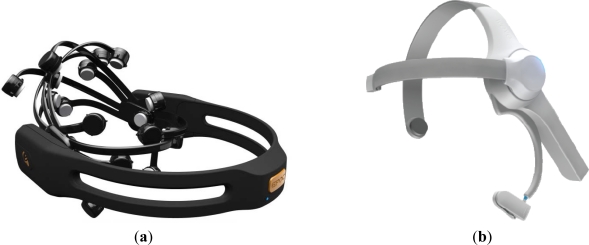
- Emotiv—Brain Computer Interface Technology Available online: http://www.emotiv.com (accessed on 12 July 2011).
Publication types
MeSH terms
LinkOut - more resources
Full Text Sources
Other Literature Sources
