Prevalence and population structure of Staphylococcus aureus nasal carriage in healthcare workers in a general population. The Tromsø Staph and Skin Study
- PMID: 22440487
- PMCID: PMC3518280
- DOI: 10.1017/S0950268812000465
Prevalence and population structure of Staphylococcus aureus nasal carriage in healthcare workers in a general population. The Tromsø Staph and Skin Study
Abstract
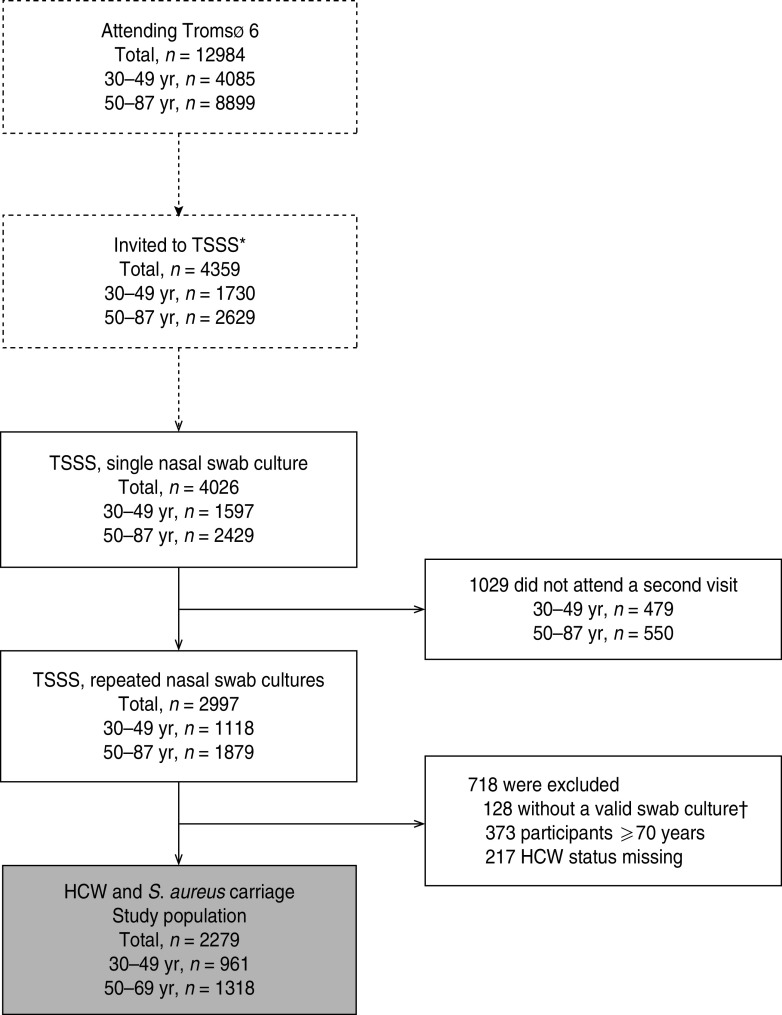
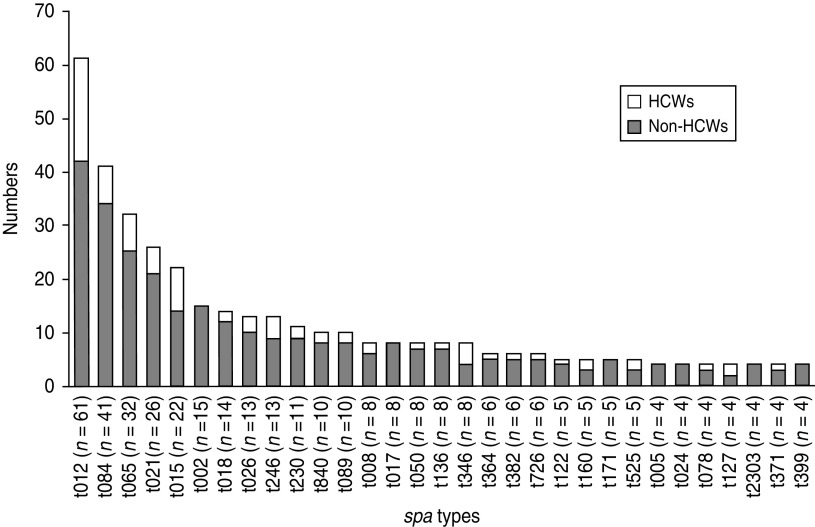
Healthcare workers (HCWs) may be a reservoir for Staphylococcus aureus transmission to patients. We examined whether HCW status is associated with S. aureus nasal carriage and population structure (spa types) in 1302 women (334 HCWs) and 977 men (71 HCWs) aged 30-69 years participating in the population-based Tromsø Study in 2007-2008. Multivariable logistic regression models were used. While no methicillin-resistant S. aureus (MRSA) was isolated, overall, 26·2% of HCWs and 26·0% of non-HCWs were S. aureus nasal carriers. For women overall and women residing with children, the odds ratios for nasal carriage were 1·54 [95% confidence interval (CI) 1·09-2·19] and 1·86 (95% CI 1·14-3·04), respectively, in HCWs compared to non-HCWs. Moreover, HCWs vs. non-HCWs had a 2·17 and 3·16 times higher risk of spa types t012 and t015, respectively. This supports the view that HCWs have an increased risk of S. aureus nasal carriage depending on gender, family status and spa type.
Figures
References
-
- Diekema DJ, et al. Survey of infections due to Staphylococcus species: frequency of occurrence and antimicrobial susceptibility of isolates collected in the United States, Canada, Latin America, Europe, and the Western Pacific region for the SENTRY Antimicrobial Surveillance Program, 1997–1999. Clinical Infectious Diseases 2001; 32 (Suppl 2): 114–132. - PubMed
-
- Kirkland KB, et al. The impact of surgical-site infections in the 1990s: attributable mortality, excess length of hospitalization, and extra costs. Infection Control Hospital Epidemiology 1999; 20: 725–730. - PubMed
-
- Kock R, et al. Methicillin-resistant Staphylococcus aureus (MRSA): burden of disease and control challenges in Europe. Eurosurveillance 2010; 15: 19688. - PubMed
-
- Pittet D, Wenzel RP. Nosocomial bloodstream infections. Secular trends in rates, mortality, and contribution to total hospital deaths. Archives of Internal Medicine 1995; 155: 1177–1184. - PubMed
-
- von Eiff C, et al. Nasal carriage as a source of Staphylococcus aureus bacteremia. Study Group. New England Journal of Medicine 2001; 344: 11–16. - PubMed
Publication types
MeSH terms
LinkOut - more resources
Full Text Sources
Other Literature Sources
Medical