Contribution of alternatively activated macrophages to allergic lung inflammation: a tale of mice and men
- PMID: 22440980
- PMCID: PMC6741623
- DOI: 10.1159/000336025
Contribution of alternatively activated macrophages to allergic lung inflammation: a tale of mice and men
Abstract
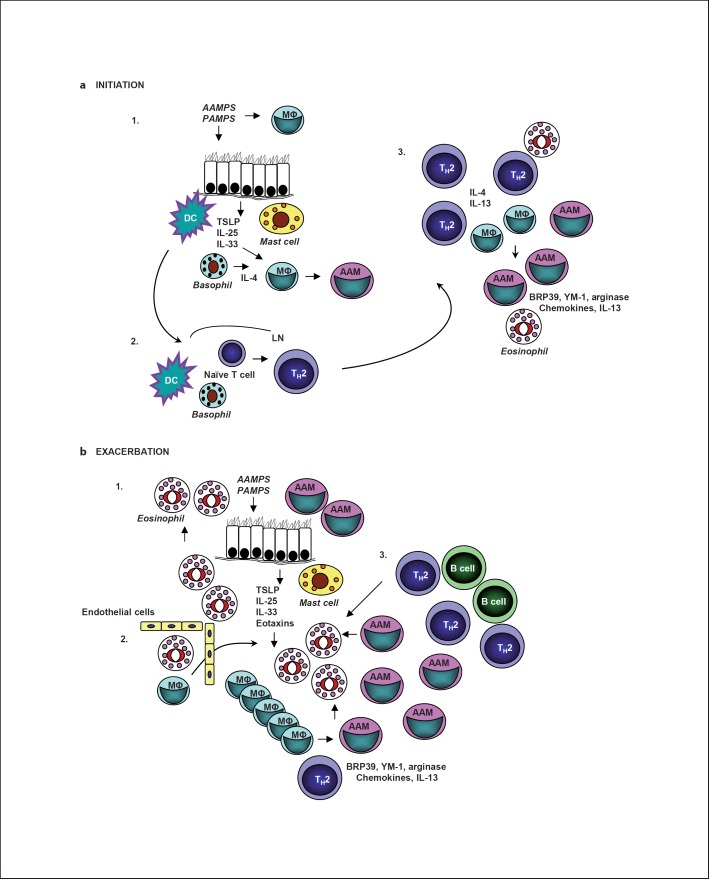
The concept that macrophages play an active role in inflammatory responses began its development in the late 1800s with the now iconic studies by Elie Metchnikoff using starfish larvae and Daphnia [reviewed in Kaufmann SHE: Nat Immunol 2008;9:705-712 and Cavaillon JM: J Leukoc Biol 2011;90:413-424]. Based on his observation of the phagocyte response to a foreign body (rose thorn) and yeast, he proposed that phagocytes acted in host defense and were active participants in the inflammatory process. Flash forward more than 100 years and we find that these basic tenets hold true. However, it is now appreciated that macrophages come in many different flavors and can adopt a variety of nuanced phenotypes depending on the tissue environment in which the macrophage is found. In this brief review, we discuss the role of one type of macrophage termed the alternatively activated macrophage (AAM), also known as the M2 type of macrophage, in regulating allergic lung inflammation and asthma. Recent studies using mouse models of allergic lung inflammation and samples from human asthma patients contribute to the emerging concept that AAMs are not just bystanders of the interleukin (IL)-4- and IL-13-rich environment found in allergic asthma but are also active players in orchestrating allergic lung disease.
Copyright © 2012 S. Karger AG, Basel.
Figures
References
-
- Busse WW, Rosenwasser LJ. Mechanisms of asthma. J Allergy Clin Immunol. 2003;111((3 suppl)):S799–S804. - PubMed
-
- Global Initiative for Asthma: Global strategy for asthma management and prevention 2010 http://www.ginasthma.com.
-
- Kaufmann SHE. Immunology's foundation: the 100 year anniversary of the Nobel prize to Paul Erlich and Elie Metchnikoff. Nat Immunol. 2008;9:705–712. - PubMed
-
- Cavaillon JM. The historical milestones in the understanding of leukoctye biology initiated by Elie Metchnikoff. J Leukoc Biol. 2011;90:413–424. - PubMed
Publication types
MeSH terms
Substances
Grants and funding
LinkOut - more resources
Full Text Sources
Medical
Miscellaneous