. 2012 Jun;63(10):3603-16.
doi: 10.1093/jxb/ers028. Epub 2012 Mar 21.

Identification of lipids and lipid-binding proteins in phloem exudates from Arabidopsis thaliana

Affiliations

Identification of lipids and lipid-binding proteins in phloem exudates from Arabidopsis thaliana

Brandon S Guelette et al. J Exp Bot. 2012 Jun.

Abstract

The phloem plays a crucial role in assimilate and nutrient transport, pathogen response, and plant growth and development. Yet, few species have yielded pure phloem exudate and, if proteins need to be analysed, those species may not have sequenced genomes, making identification difficult. The enrichment of Arabidopsis thaliana phloem exudate in amounts large enough to allow for metabolite and protein analysis is described. Using this method, it was possible to identify 65 proteins present in the Arabidopsis phloem exudate. The majority of these proteins could be grouped by response to pathogens, stress, or hormones, carbon metabolism, protein interaction, modification, and turnover, and transcription factors. It was also possible to detect 11 proteins that play a role in lipid/fatty acid metabolism (aspartic protease, putative 3-β-hydroxysteroid dehydrogenase, UDP-sulphoquinovose synthase/SQD1, lipase, PIG-P-like protein: phosphatidylinositol-N-acetylglucosaminyltransferase), storage (glycine-rich protein), binding (annexin, lipid-associated family protein, GRP17/oleosin), and/or signalling (annexin, putative lipase, PIG-P-like protein). Along with putative lipid-binding proteins, several lipids and fatty acids could be identified. Only a few examples exist of lipids (jasmonic acid, oxylipins) or lipid-binding proteins (DIR1, acyl-CoA-binding protein) in the phloem. Finding hydrophobic compounds in an aqueous environment is not without precedence in biological systems: human blood contains a variety of lipids, many of which play a significant role in human health. In blood, lipids are transported while bound to proteins. The present findings of lipids and lipid-binding proteins in phloem exudates suggest that a similar long-distance lipid signalling exists in plants and may play an important role in plant growth and development.


Figures
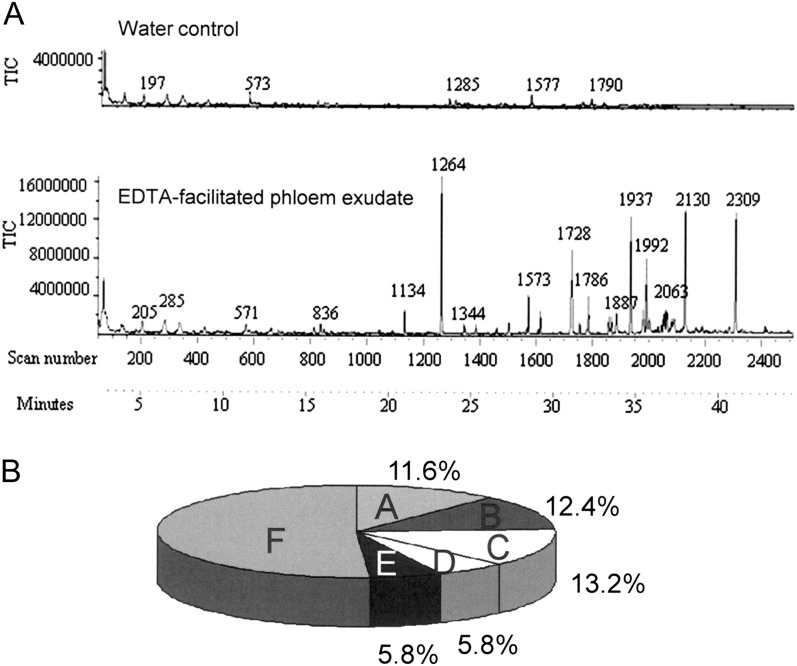
Fig. 1.
Fig. 1.
(A) Gas chromatogram showing the separation of metabolites from the chloroform phase of Arabidopsis thaliana phloem exudates. The bottom panel displays metabolites present in the exudates of petioles incubated first in EDTA to prevent the sealing of the phloem. The top panel demonstrates the absence of any major metabolite peaks if the petioles were incubated in water (water control). The water control was fitted to the same scale as the EDTA extract. Both panels are a typical representative of three biological replicates. (B) Distribution of metabolites detected in Arabidopsis phloem exudate. They were grouped into amino acids (A), sugars and sugar derivatives (B), fatty acids/-esters (C), organic acids and phosphates (D), others (E), and unknowns (F).
Fig. 2.
Fig. 2.
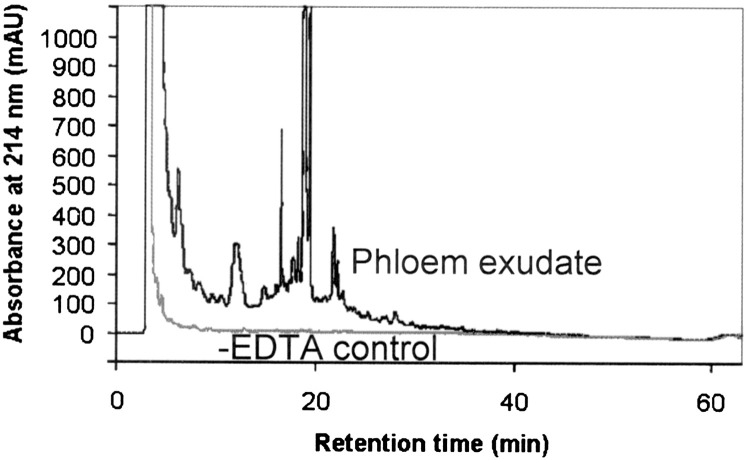
HPLC chromatogram of Arabidopsis phloem exudates extracted into water after previous incubation with EDTA (black) or without EDTA (water control; grey).
Fig. 3.
Fig. 3.
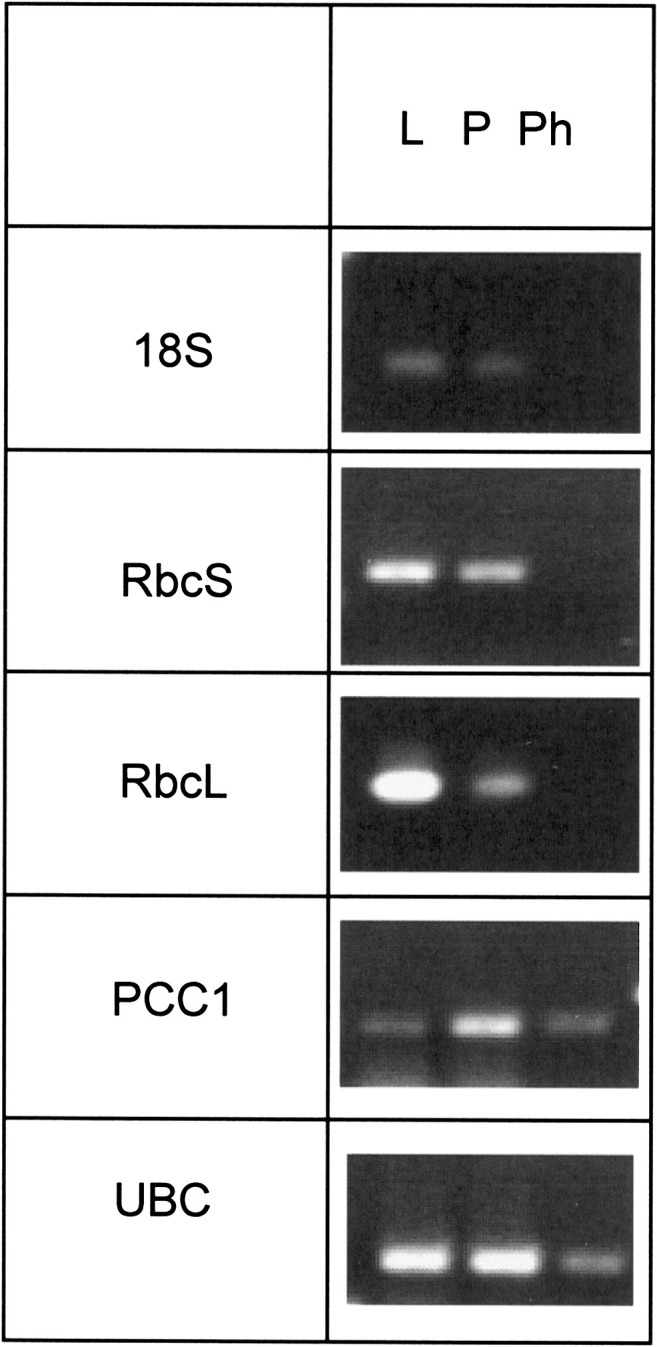
Presence of mRNAs for 18S, Rubisco small and large subunit (RbcS and RbcL), ubiquitin-conjugating enzyme (UBC), and PCC1 (pathogen and circadian controlled) in samples from leaf (L), petiole (P), and phloem exudates (Ph) as determined by RT-PCR. The picture shows a representative of three independent biological replicates.
Fig. 4.
Fig. 4.
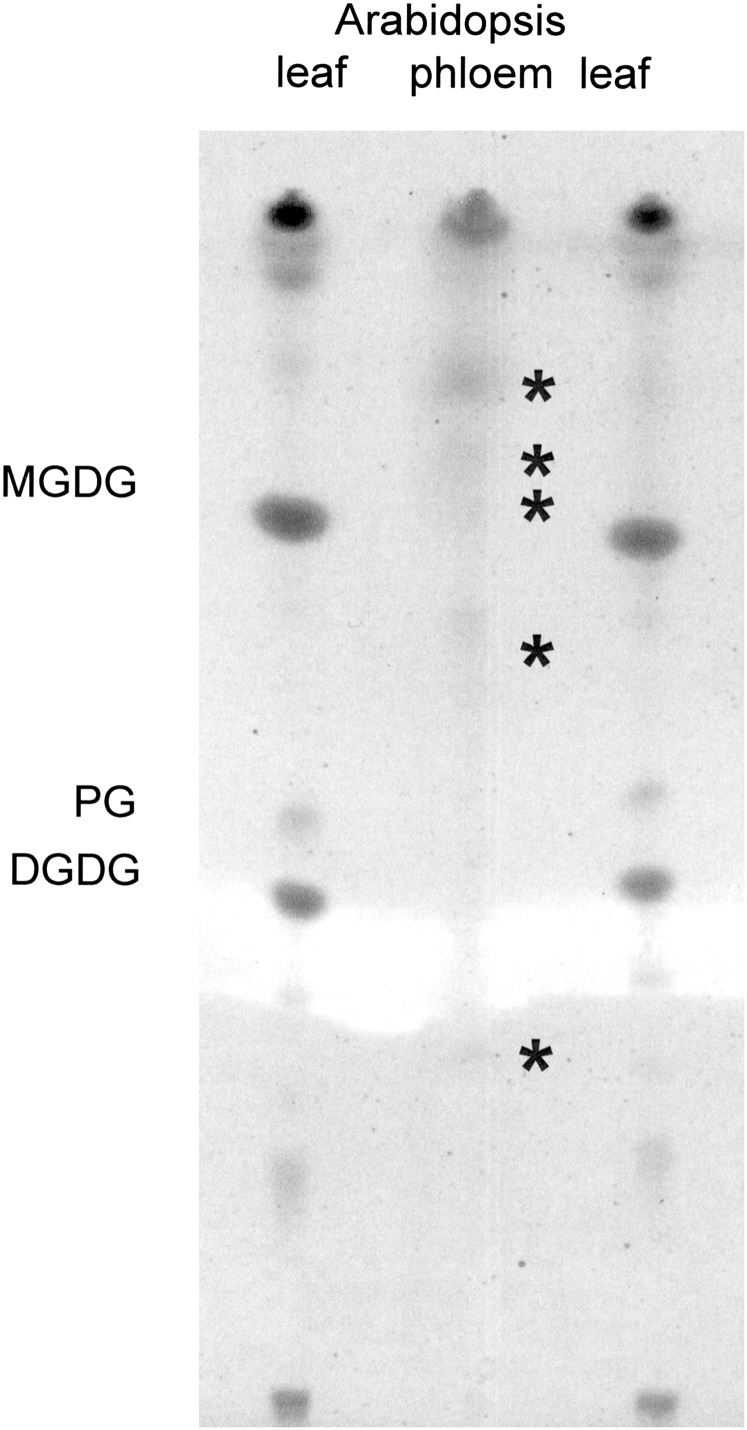
Thin-layer chromatogram comparing lipids from Arabidopsis leaves and phloem exudates. The asterisks indicate lipids specific for phloem exudates. PG, phosphatidylglycerol; MGDG, monogalactosyldiacyglycerol; DGDG, digalactosyldiacylglycerol.
Fig. 5.
Fig. 5.
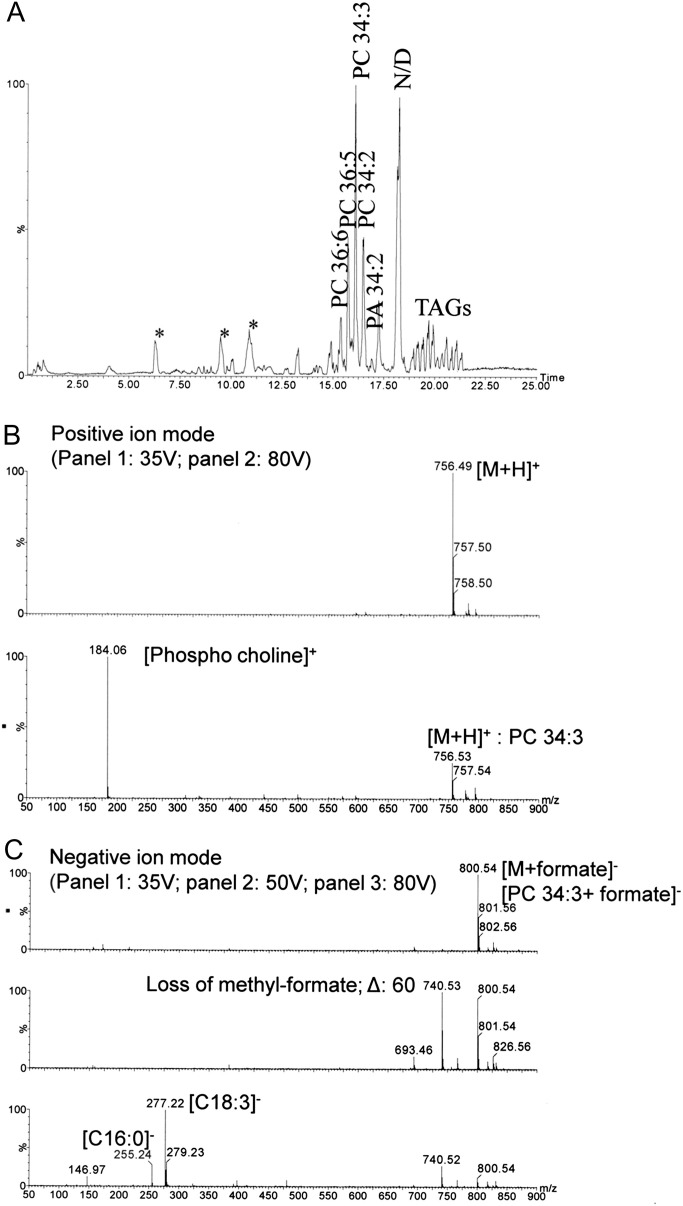
(A) Lipid profile of phloem exudates of Arabidopsis (chloroform phase) using LC-MS/positive ion mode. Mass spectra of the lipid at a retention time of 16.1 min were generated at aperture 1 voltages of 35, 50, and 80 V in both positive (B) and negative (C) ion mode to show lipid fragmentation. PC, phosphatidylcholine; PA, phosphatidic acid; TAG, triacyl glycerol; *, detergent; N/D, not determined due to multiple peaks in the spectra. Chromatograms are representatives of three biological replicates for each sample.
Fig. 6.
Fig. 6.
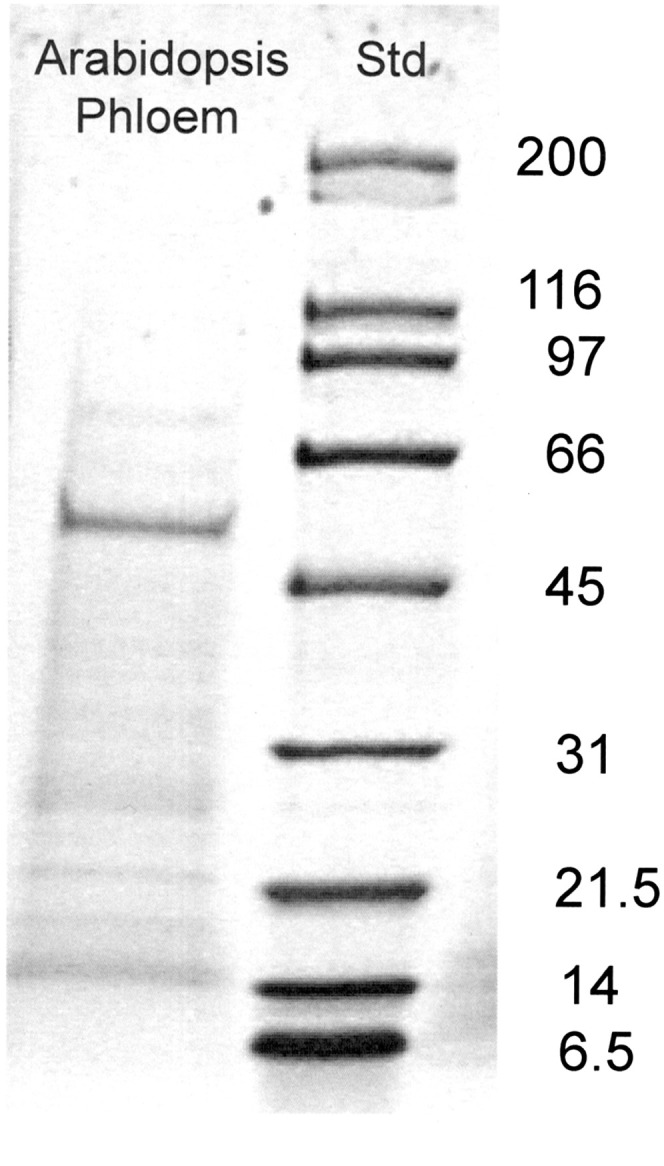
SDS–PAGE of proteins from Arabidopsis phloem exudate.
Fig. 7.
Fig. 7.
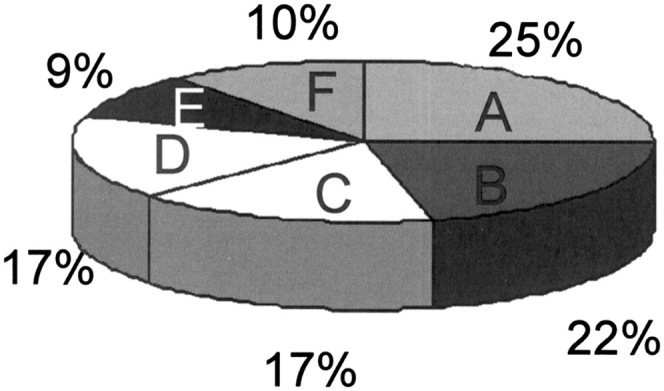
Distribution of proteins detected in Arabidopsis phloem exudate. Proteins were grouped by function into pathogen/stress response (A), carbohydrate metabolism (B), protein binding/modification/metabolism (C), lipid/fatty acid binding/metabolism/signalling/storage (D), DNA/RNA/nucleotide binding (E), and others/unknown function (F).

References

    1. An HL, Roussot C, Suárez-López P, et al. CONSTANS acts in the phloem to regulate a systemic signal that induces photoperiodic flowering of Arabidopsis. Development. 2004;131:3615–3626. - PubMed
    1. Ananieva EA, Gillaspy GE. Switches in nutrient and inositol signaling. Plant Signaling and Behavior. 2009;4:304–306. - PMC - PubMed
    1. Andrawis A, Solomon M, Delmer DP. Cotton fiber annexins—a potential role in the regulation of callose synthase. The Plant Journal. 1993;3:763–772. - PubMed
    1. Aoki K, Kragler F, Xoconostle-Cázares B, Lucas WJ. A subclass of plant heat shock cognate 70 chaperones carries a motif that facilitates trafficking through plasmodesmata. Proceedings of the National Academy of Sciences, USA. 2002;99:16342–16347. - PMC - PubMed
    1. Aoki K, Yamaya T, Sakakibara H. CmPP16-1-interacting phloem sap proteins are involved in the regulation of CmPP16-1 long-distance movement. Plant and Cell Physiology. 2005;46:S151.

Publication types