


Leptin, adiponectin and pulmonary diseases
- PMID: 22445899
- PMCID: PMC3399062
- DOI: 10.1016/j.biochi.2012.03.006
Leptin, adiponectin and pulmonary diseases
Abstract
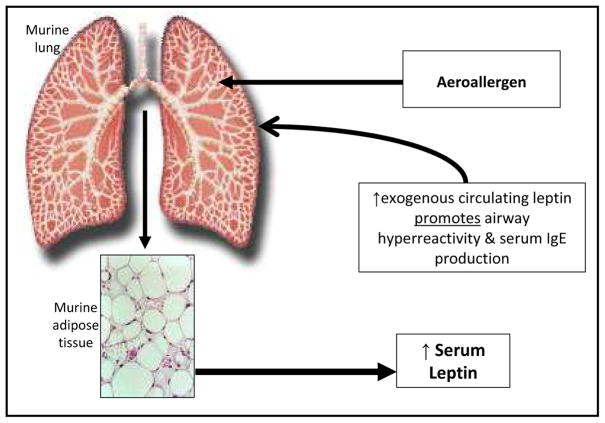
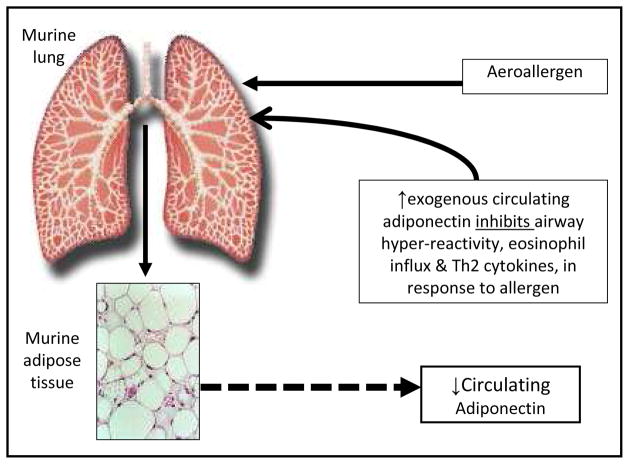
Adipose tissue produces leptin and adiponectin - energy-regulating adipokines that may also play a role in inflammatory pulmonary conditions, as suggested by some murine studies. Leptin and adiponectin and their respective receptors are expressed in the human lung. The association between systemic or airway leptin and asthma in humans is currently controversial, particularly among adults. The majority of the evidence among children however suggests that systemic leptin may be associated with greater asthma prevalence and severity, particularly among prepubertal boys and peripubertal/postpubertal girls. Systemic and airway leptin concentrations may also be disproportionately higher in chronic obstructive pulmonary disease (COPD) patients, particularly among women, and reflect greater airway inflammation and disease severity. Quite like leptin, the association between systemic and airway adiponectin and asthma in humans is also controversial. Some but not all studies, demonstrate that serum adiponectin concentrations are protective against asthma among premenopausal women and peripubertal girls. On the other hand, serum adiponectin concentrations are inversely associated with asthma severity among boys but positively associated among men. Further, systemic and airway adiponectin concentrations are higher in COPD patients than controls, as demonstrated by case-control studies of men. Systemic adiponectin is also positively associated with lung function in healthy adults but inversely associated with lung function in subjects with COPD. It is therefore possible that pro-inflammatory effects of adiponectin dominate under certain physiologic conditions and anti-inflammatory effects under others. The adipokine-lung disease literature has critical gaps that include a lack of adequately powered longitudinal or weight-intervention studies; inadequate adjustment for confounding effect of obesity; and unclear understanding of potential sex interactions. It is also uncertain whether adipokine derangements precede pulmonary disease or are a consequence of it. Future research will determine whether modulation of adipokines, independent of BMI, may allow novel ways to prevent or treat inflammatory pulmonary conditions.
Copyright © 2012 Elsevier Masson SAS. All rights reserved.
Conflict of interest statement
Akshay Sood, M.D., M.P.H. states that there is no personal or financial support or involvement with organization(s) with financial interest in the subject matter or any other actual or potential conflict of interest. Akshay Sood, M.D., M.P.H. also declares that he has materially participated in the article preparation including review of data, writing and editing of manuscript and creation of figures and has approved the final article.
Figures
References
-
- Masuzaki H, Ogawa Y, Sagawa N, Hosoda K, Matsumoto T, Mise H, Nishimura H, Yoshimasa Y, Tanaka I, Mori T, Nakao K. Nonadipose tissue production of leptin: leptin as a novel placenta-derived hormone in humans. Nat Med. 1997;3:1029–1033. - PubMed
-
- Bado A, Levasseur S, Attoub S, Kermorgant S, Laigneau JP, Bortoluzzi MN, Moizo L, Lehy T, Guerre-Millo M, Le Marchand-Brustel Y, Lewin MJ. The stomach is a source of leptin. Nature. 1998;394:790–793. - PubMed
-
- Larsson H, Ahren B. Short-term dexamethasone treatment increases plasma leptin independently of changes in insulin sensitivity in healthy women. J Clin Endocrinol Metab. 1996;81:4428–4432. - PubMed
-
- Messinis IE, Papageorgiou I, Milingos S, Asprodini E, Kollios G, Seferiadis K. Oestradiol plus progesterone treatment increases serum leptin concentrations in normal women. Hum Reprod. 2001;16:1827–1832. - PubMed
-
- Holness MJ, Munns MJ, Sugden MC. Current concepts concerning the role of leptin in reproductive function. Mol Cell Endocrinol. 1999;157:11–20. - PubMed
Publication types
MeSH terms
Substances
Grants and funding
LinkOut - more resources
Full Text Sources
Medical
