


Cost-effectiveness of conservative treatments for neck pain: a systematic review on economic evaluations
- PMID: 22447407
- PMCID: PMC3535241
- DOI: 10.1007/s00586-012-2272-5
Cost-effectiveness of conservative treatments for neck pain: a systematic review on economic evaluations
Abstract
Purpose: Various conservative interventions have been used for the treatment of non-specific neck pain. The aim of this systematic review was to investigate the cost-effectiveness of conservative treatments for non-specific neck pain.
Methods: Clinical and economic electronic databases, reference lists and authors' databases were searched up to 13 January 2011. Two reviewers independently selected studies for inclusion, performed the risk of bias assessment and data extraction.
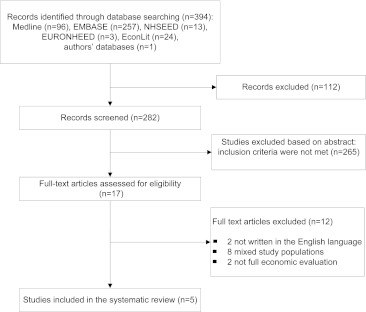
Results: A total of five economic evaluations met the inclusion criteria. All studies were conducted alongside randomised controlled trials and included a cost-utility analysis, and four studies also conducted a cost-effectiveness analysis. Most often, the economic evaluation was conducted from a societal or a health-care perspective. One study found that manual therapy was dominant over physiotherapy and general practitioner care, whilst behavioural graded activity was not cost-effective compared to manual therapy. The combination of advice and exercise with manual therapy was not cost-effective compared to advice and exercise only. One study found that acupuncture was cost-effective compared to a delayed acupuncture intervention, and another study found no differences on cost-effectiveness between a brief physiotherapy intervention compared to usual physiotherapy. Pooling of the data was not possible as heterogeneity existed between the studies on participants, interventions, controls, outcomes, follow-up duration and context related socio-political differences.
Conclusion: At present, the limited number of studies and the heterogeneity between studies warrant no definite conclusions on the cost-effectiveness of conservative treatments for non-specific neck pain.
Figures
References
Publication types
MeSH terms
LinkOut - more resources
Full Text Sources
Medical
Miscellaneous
