


Contrasting hippocampal and amygdalar expression of genes related to neural plasticity during escape from social aggression
- PMID: 22450262
- PMCID: PMC4372993
- DOI: 10.1016/j.physbeh.2012.03.005
Contrasting hippocampal and amygdalar expression of genes related to neural plasticity during escape from social aggression
Abstract
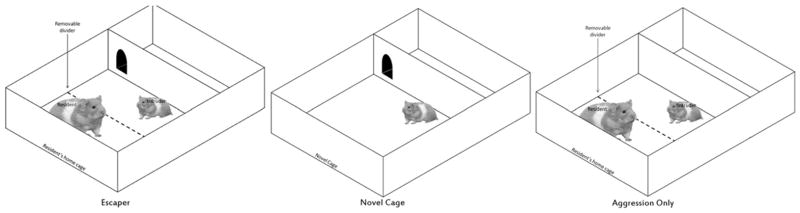
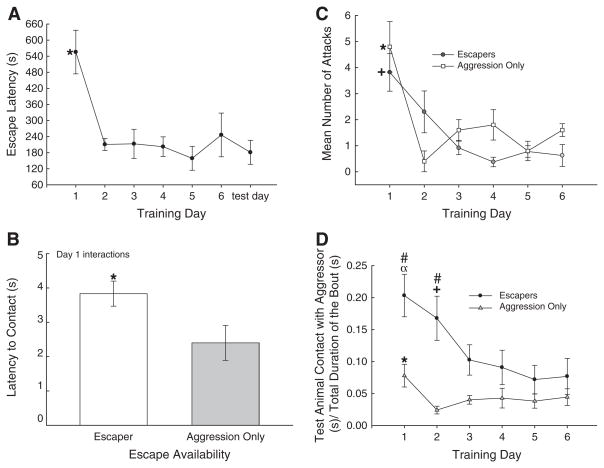
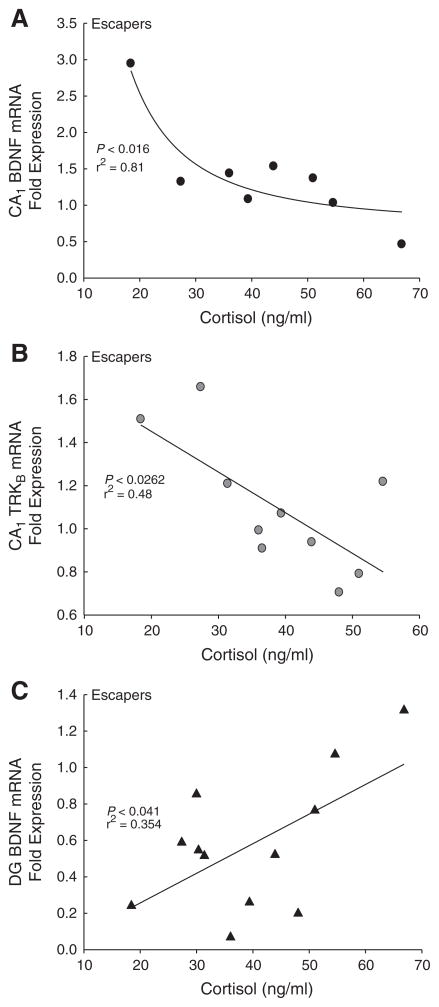
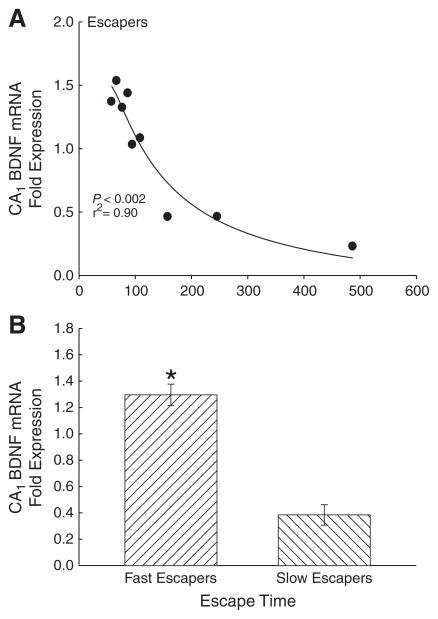
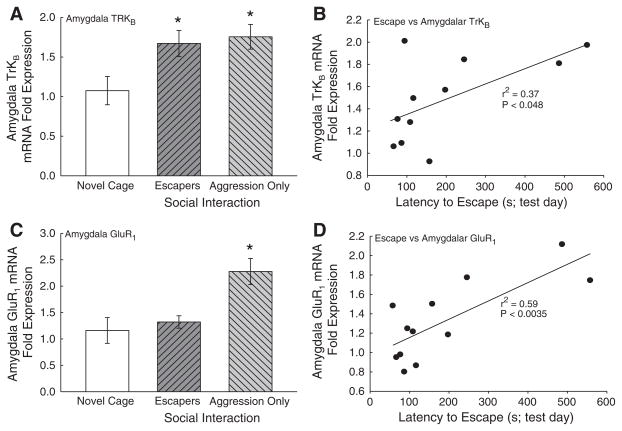
Social subjugation has widespread consequences affecting behavior and underlying neural systems. We hypothesized that individual differences in stress responsiveness were associated with differential expression of neurotrophin associated genes within the hippocampus and amygdala. To do this we examined the brains of hamsters placed in resident/intruder interactions, modified by the opportunity to escape from aggression. In the amygdala, aggressive social interaction stimulated increased BDNF receptor TrK(B) mRNA levels regardless of the ability to escape the aggressor. In contrast, the availability of escape limited the elevation of GluR(1) AMPA subunit mRNA. In the hippocampal CA(1), the glucocorticoid stress hormone, cortisol, was negatively correlated with BDNF and TrK(B) gene expression, but showed a positive correlation with BDNF expression in the DG. Latency to escape the aggressor was also negatively correlated with CA(1) BDNF expression. In contrast, the relationship between amygdalar TrK(B) and GluR(1) was positive with respect to escape latency. These results suggest that an interplay of stress and neurotrophic systems influences learned escape behavior. Animals which escape faster seem to have a more robust neurotrophic profile in the hippocampus, with the opposite of this pattern in the amygdala. We propose that changes in the equilibrium of hippocampal and amygdalar learning result in differing behavioral stress coping choices.
Copyright © 2012. Published by Elsevier Inc.
Figures
References
-
- Affleck G, Tennen H. Construing benefits from adversity: adaptational significance and dispositional underpinnings. J Pers. 1996;64(4):899–922. - PubMed
-
- Bartolomucci A, Palanza P, Sacerdote P, Panerai AE, Sgoifo A, Dantzer R, et al. Social factors and individual vulnerability to chronic stress exposure. Neurosci Bio-behav Rev. 2005;29(1):67–81. - PubMed
-
- Huhman KL, Solomon MB, Janicki M, Harmon AC, Lin SM, Israel JE, et al. Conditioned defeat in male and female Syrian hamsters. Hormones and Behavior. 2003;44(3):293–9. - PubMed
-
- Delville Y, David JT, Taravosh-Lahn K, Wommack JC. Stress and the development of agonistic behavior in golden hamsters. Hormones and Behavior. 2003;44(3):263–70. - PubMed
Publication types
MeSH terms
Substances
Grants and funding
LinkOut - more resources
Full Text Sources
Miscellaneous
