


Changes in brain volume and cognition in a randomized trial of exercise and social interaction in a community-based sample of non-demented Chinese elders
- PMID: 22451320
- PMCID: PMC3788823
- DOI: 10.3233/JAD-2012-120079
Changes in brain volume and cognition in a randomized trial of exercise and social interaction in a community-based sample of non-demented Chinese elders
Abstract
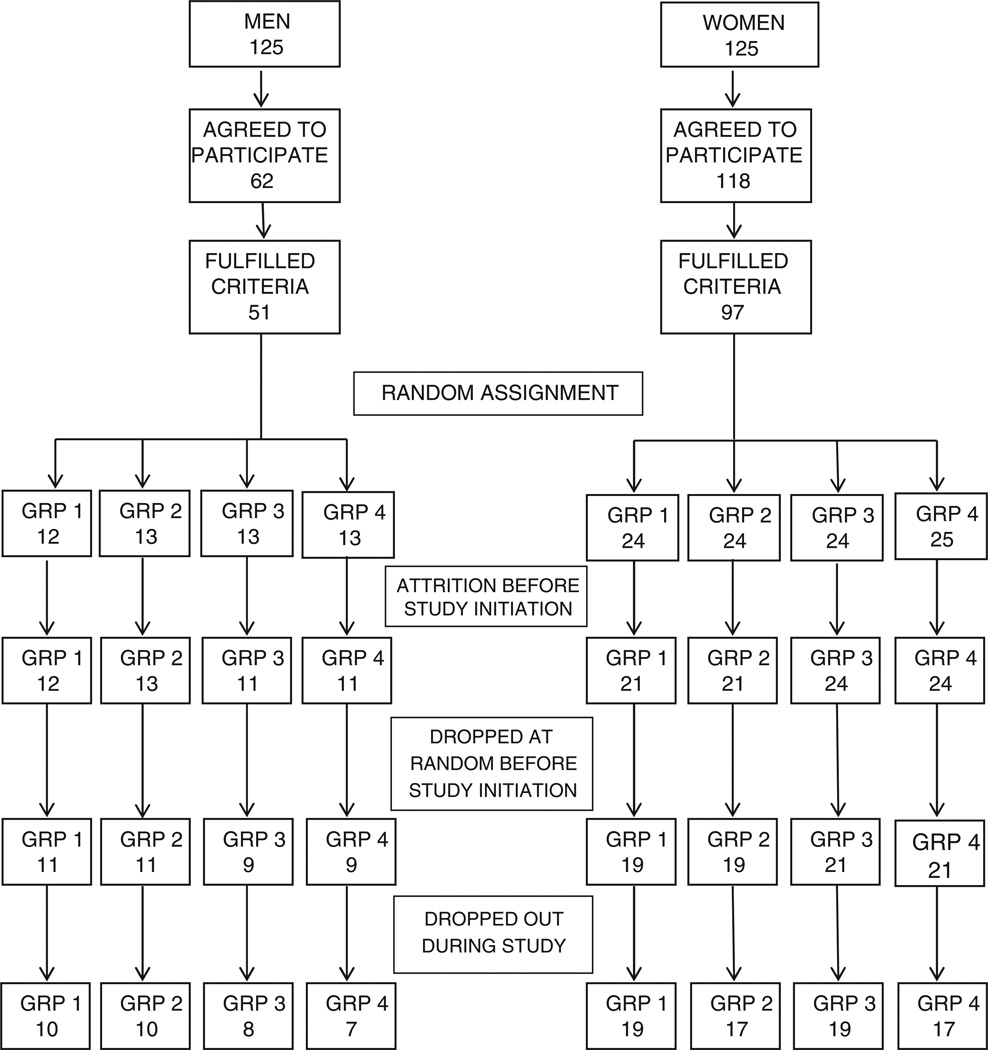
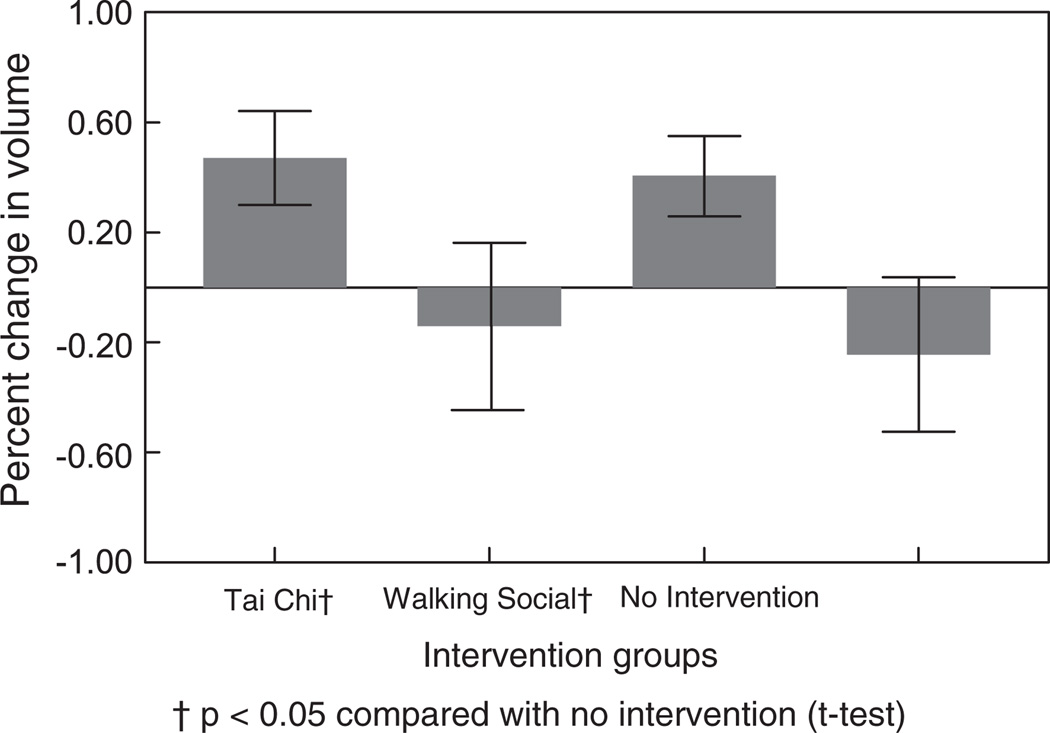
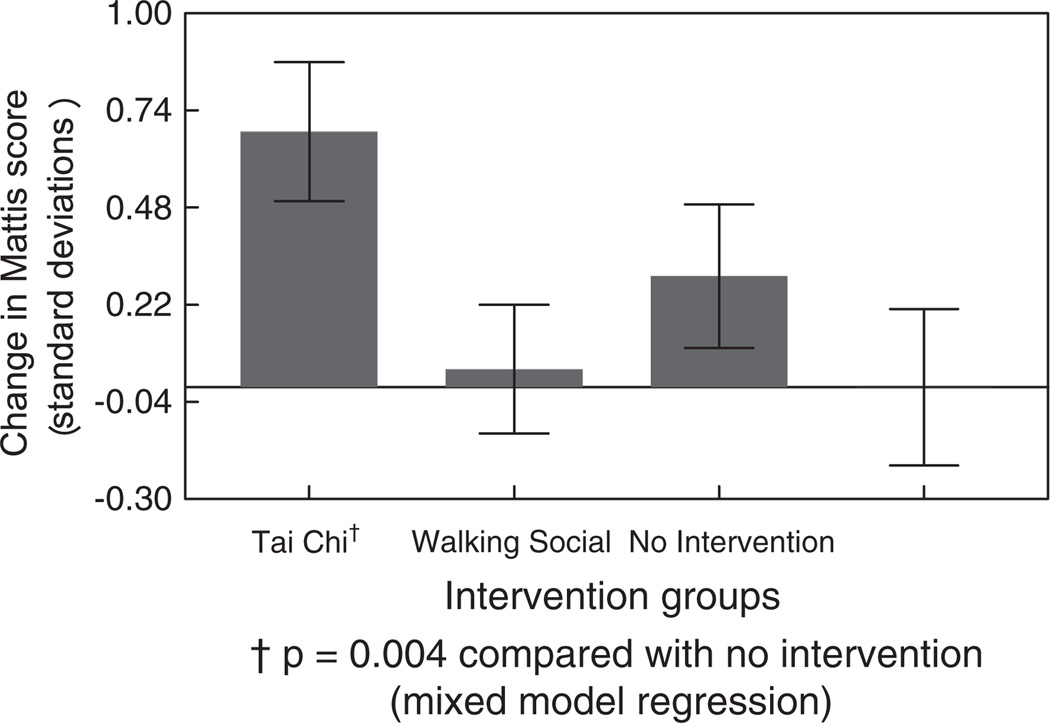
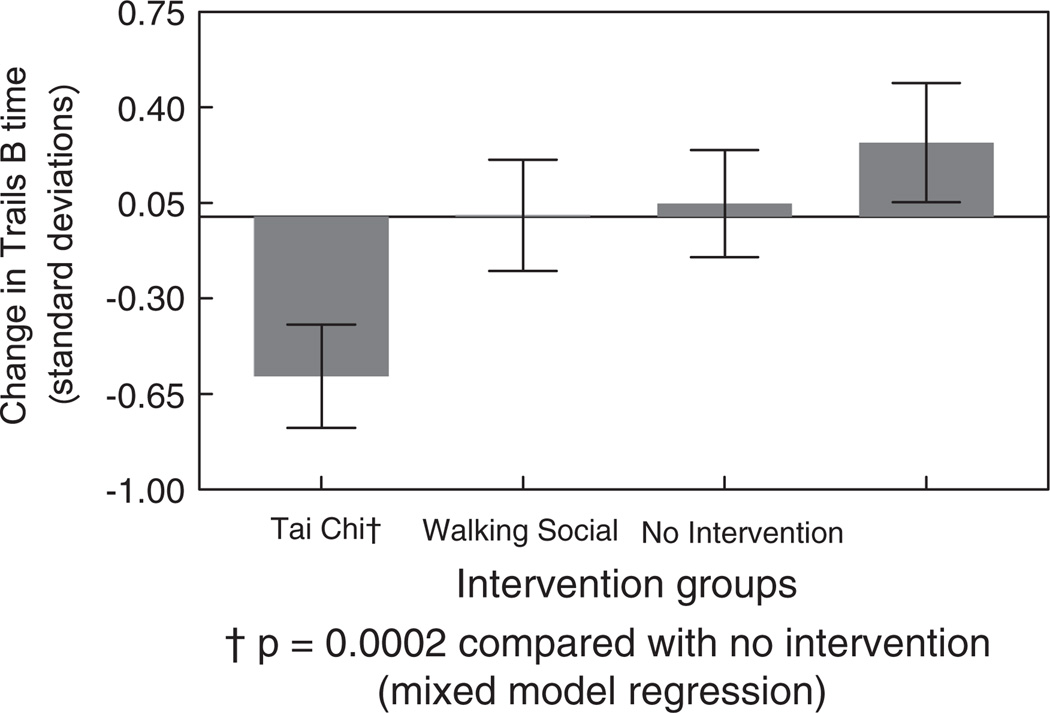
Physical exercise has been shown to increase brain volume and improve cognition in randomized trials of non-demented elderly. Although greater social engagement was found to reduce dementia risk in observational studies, randomized trials of social interventions have not been reported. A representative sample of 120 elderly from Shanghai, China was randomized to four groups (Tai Chi, Walking, Social Interaction, No Intervention) for 40 weeks. Two MRIs were obtained, one before the intervention period, the other after. A neuropsychological battery was administered at baseline, 20 weeks, and 40 weeks. Comparison of changes in brain volumes in intervention groups with the No Intervention group were assessed by t-tests. Time-intervention group interactions for neuropsychological measures were evaluated with repeated-measures mixed models. Compared to the No Intervention group, significant increases in brain volume were seen in the Tai Chi and Social Intervention groups (p < 0.05). Improvements also were observed in several neuropsychological measures in the Tai Chi group, including the Mattis Dementia Rating Scale score (p = 0.004), the Trailmaking Test A (p = 0.002) and B (p = 0.0002), the Auditory Verbal Learning Test (p = 0.009), and verbal fluency for animals (p = 0.01). The Social Interaction group showed improvement on some, but fewer neuropsychological indices. No differences were observed between the Walking and No Intervention groups. The findings differ from previous clinical trials in showing increases in brain volume and improvements in cognition with a largely non-aerobic exercise (Tai Chi). In addition, intellectual stimulation through social interaction was associated with increases in brain volume as well as with some cognitive improvements.
Figures
References
-
- Yoshitake T, Kiyohara Y, Kato I, Ohmura T, Iwamoto H, Nakayama K, Ohmori S, Nomiyama K, Kawano H, Ueda K. Incidence and risk factors of vascular dementia and Alzheimer’s disease in a defined elderly Japanese population: The Hisayama study. Neurology. 1995;45:1161–1168. - PubMed
-
- Laurin D, Verreault R, Lindsay J, MacPherson K, Rockwood K. Physical activity and risk of cognitive impairment and dementia in elderly persons. Arch Neurol. 2001;58:498–504. - PubMed
-
- Lindsay J, Laurin D, Verreault R, Hèbert R, Helliwell B, Hill GB, McDowell I. Risk factors for Alzheimer’s disease: A prospective analysis from the Canadian Study of Health and Aging. Am J Epidemiol. 2002;156:445–453. - PubMed
-
- Abbott RD, White LR, Ross GW, Masaki KH, Curb JD, Petro-vitch H. Walking and dementia in physically capable elderly men. JAMA. 2004;292:1447–1453. - PubMed
-
- Podewils LJ, Guallar E, Kuller LH, Fried LP, Lopez OL, Carlson M, Lyketsos CG. Physical activity, APOE genotype, and dementia risk: Findings from the Cardiovascular Health Cognition Study. Am J Epidemiol. 2005;161:639–651. - PubMed
