


The interactions of oxidative stress and inflammation with vascular dysfunction in ageing: the vascular health triad
- PMID: 22453933
- PMCID: PMC3636404
- DOI: 10.1007/s11357-012-9402-1
The interactions of oxidative stress and inflammation with vascular dysfunction in ageing: the vascular health triad
Abstract
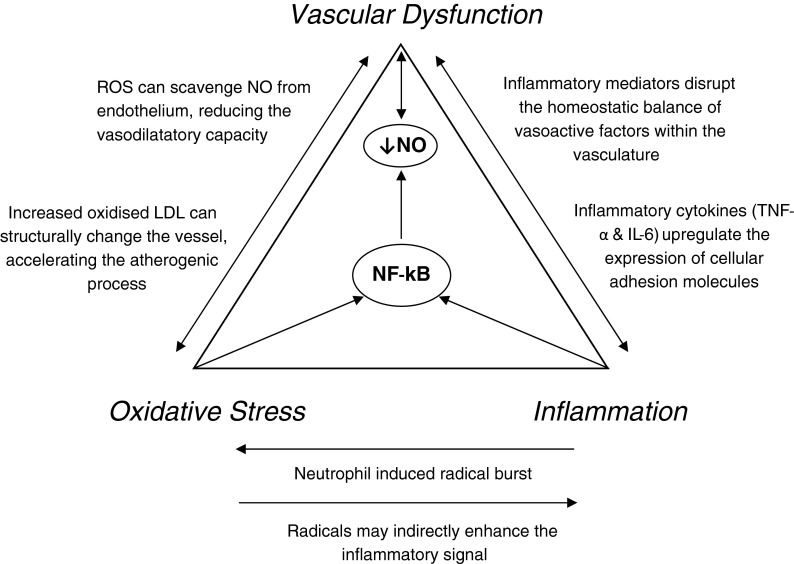
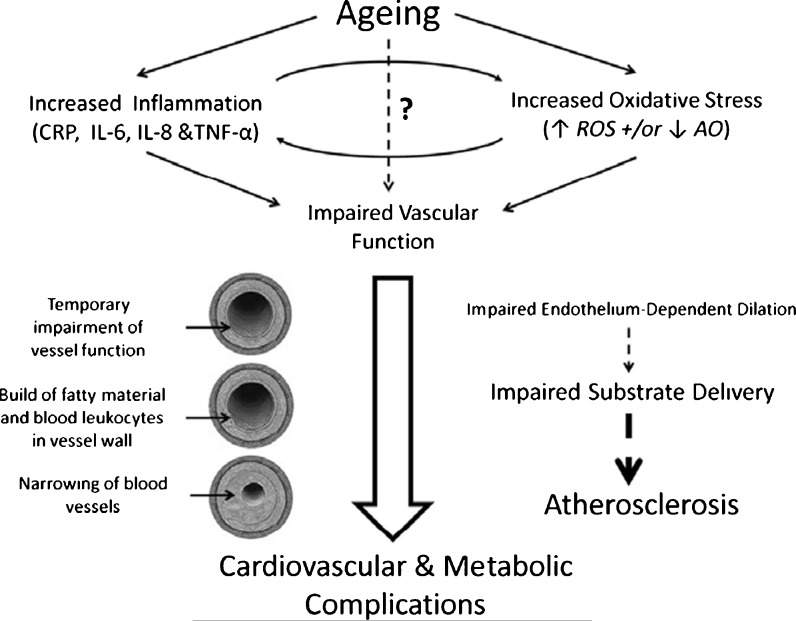
Oxidative stress and inflammation are increased with advancing age. Evidence suggests that oxidative stress and inflammation both lead to impaired vascular function. There is also evidence to suggest that inflammation may cause an increase in radical production leading to enhanced oxidative stress. In addition, oxidative stress may cause an increase in inflammation; however, the interactions between these factors are not fully understood. In this review, we propose the vascular health triad, which draws associations and interactions between oxidative stress and inflammation seen in ageing, and the consequences for vascular function. We review evidence suggesting that exercise may ameliorate the age-related decline in vascular function, through reductions in both oxidative stress and inflammation.
Figures
References
-
- Aldred S, Griffiths HR. Oxidation of protein in human low-density lipoprotein exposed to peroxyl radicals facilitates uptake by monocytes; protection by antioxidants in vitro. Environ Toxicol Pharmacol. 2004;15(2–3):111–117. - PubMed
-
- Bailey DM, Davies B, Young IS, Jackson MJ, Davison GW, Isaacson R, Richardson RS. EPR spectroscopic detection of free radical outflow from an isolated muscle bed in exercising humans. J Appl Physiol. 2003;94(5):1714–1718. - PubMed
-
- Bode-Böger SM, Muke J, Surdacki A, Brabant G, Böger RH, Frölich FC. Oral l-arginine improves endothelial function in healthy individuals older than 70 years. Vasc Med. 2003;8:77–81. - PubMed
Publication types
MeSH terms
Substances
LinkOut - more resources
Full Text Sources
Medical