. 2012;8(3):e1002612.
doi: 10.1371/journal.ppat.1002612. Epub 2012 Mar 22.

Thriving under stress: selective translation of HIV-1 structural protein mRNA during Vpr-mediated impairment of eIF4E translation activity

Affiliations

Thriving under stress: selective translation of HIV-1 structural protein mRNA during Vpr-mediated impairment of eIF4E translation activity

Amit Sharma et al. PLoS Pathog. 2012.

Abstract

Translation is a regulated process and is pivotal to proper cell growth and homeostasis. All retroviruses rely on the host translational machinery for viral protein synthesis and thus may be susceptible to its perturbation in response to stress, co-infection, and/or cell cycle arrest. HIV-1 infection arrests the cell cycle in the G2/M phase, potentially disrupting the regulation of host cell translation. In this study, we present evidence that HIV-1 infection downregulates translation in lymphocytes, attributable to the cell cycle arrest induced by the HIV-1 accessory protein Vpr. The molecular basis of the translation suppression is reduced accumulation of the active form of the translation initiation factor 4E (eIF4E). However, synthesis of viral structural proteins is sustained despite the general suppression of protein production. HIV-1 mRNA translation is sustained due to the distinct composition of the HIV-1 ribonucleoprotein complexes. RNA-coimmunoprecipitation assays determined that the HIV-1 unspliced and singly spliced transcripts are predominantly associated with nuclear cap binding protein 80 (CBP80) in contrast to completely-spliced viral and cellular mRNAs that are associated with eIF4E. The active translation of the nuclear cap binding complex (CBC)-bound viral mRNAs is demonstrated by ribosomal RNA profile analyses. Thus, our findings have uncovered that the maintenance of CBC association is a novel mechanism used by HIV-1 to bypass downregulation of eIF4E activity and sustain viral protein synthesis. We speculate that a subset of CBP80-bound cellular mRNAs contribute to recovery from significant cellular stress, including human retrovirus infection.


Conflict of interest statement

The authors have declared that no competing interests exist.

Figures
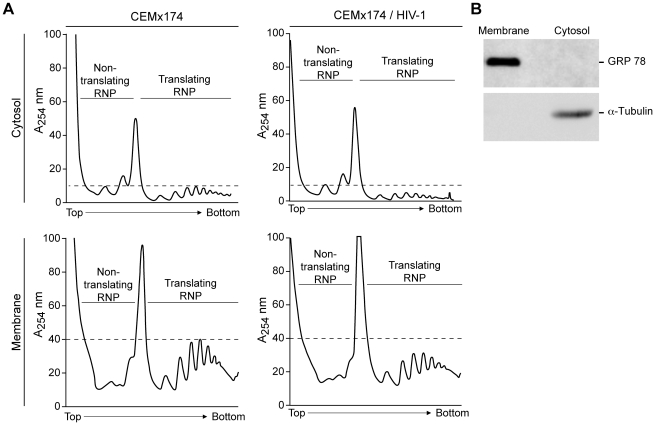
Figure 1
Figure 1. HIV-1 infection correlates with a subtle decrease in soluble and membrane-associated polyribosomes.
(A) Representative ribosomal RNA profile of mock or HIV-1-infected CEMx174 cells after sucrose gradient centrifugation and detection of the rRNA by absorbance at 254 nm. Labels designate the non-translating ribonucleoprotein complexes (RNPs) and adjacent peaks are 40S, 60S and 80S ribosome, respectively. The translating RNP contains the polyribosomes. (B) Immunoblot with endoplasmic reticulum marker, GRP78 and cytosolic marker, α-Tubulin showed effective fractionation of the membrane-associated and soluble cytosolic compartments of the infected CEMx174 cells.
Figure 2
Figure 2. HIV-1 suppresses lymphocyte translation but HIV-1 gag translation is sustained.
(A) Following HIV-1 infection and treatment with nocodazole (Noc) or cyclohexamide (CHX), CEMx174 cells were incubated with [35S]-cysteine/methionine for one hour and proteins were precipitated with TCA. [35S]-cysteine/methionine incorporation was measured by scintillation in three independent experiments and is presented with standard deviation. Asterisk indicates the significant reduction, p<0.05. Propidium iodide staining intensity and ModFit analysis demonstrates the number and percentage of cells in the G1 or G2/M phase of the cell cycle. Percentages are summarized below the plots. (B) CEMx174 cells received mock, nocadozole or CHX treatment. TCA precipitable counts and the cell cycle profiles were measured as described in (A). (C) Equivalent whole-cell extracts were resolved by SDS-PAGE and labeled proteins were detected by the phosphorimager analysis. Percentage cellular translation relative to the mock treatment or infection is summarized below the gel. Equivalent whole-cell extracts were subjected to immunoprecipitation after metabolic labeling and proteins were resolved by SDS-PAGE and phosphorimager analysis is presented. Positions of Gag p55, p37 and p24 are indicated.
Figure 3
Figure 3. HIV-1 accessory proteins Vpr and Vif are necessary for HIV-1-induced suppression of cellular translation.
(A) CEMx174 cells infected with HIV-1, VprX, ΔVifVprX (ΔVV) or mock-infected were incubated with or without nocodazole (Noc) and then metabolically labeled with [35S]-cysteine/methionine for one hour and proteins were precipitated with TCA. [35S]-cysteine/methionine incorporation was measured by scintillation in three independent experiments and is presented with standard deviation. Asterisk indicates the significant reduction (p<0.05) as summarized in text for all of the infections except ΔVifVprX (p = 0.8062). Nocadozole treatment significantly reduced the de novo protein synthesis in all of the infections. Propidium iodide staining intensity and ModFit analysis demonstrates the number and percentage of cells in the G1 or G2/M phase of the cell cycle. Percentages are summarized below the plots. (B) Comparison of de novo HIV-1 Gag and cellular Actin protein production with or without nocadozole treatment. CEMx174 cells were metabolically labeled with [35S]-cysteine/methionine for one hour, followed by immunoprecipitation with antisera to Gag and Actin. The immunoprecipitated proteins were resolved by SDS-PAGE and phosphorimager analysis is presented. Positions of Actin and Gag p55, p37 and p24 are indicated.
Figure 4
Figure 4. HIV-1 gag mRNA translation is resistant to suppression of global cellular translation.
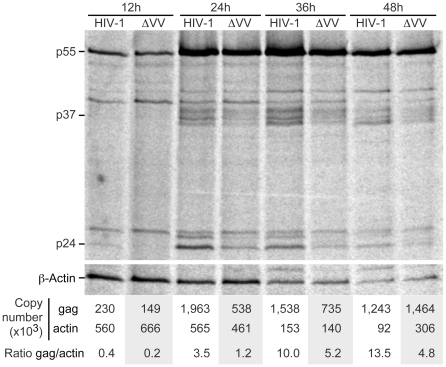
CEMx174 cells were infected with HIV-1 or ΔVifVprX (ΔVV) and evaluated at 12 hour intervals post-infection. At indicated intervals, replicate cultures were metabolically labeled with [35S]-cysteine/methionine for one hour and proteins immunoprecipitated with antisera to Gag and Actin. The immunoprecipitated proteins were resolved by SDS-PAGE and phosphorimager analysis is presented. Positions of Actin and Gag p55, p37 and p24 are indicated. In parallel, RNA was harvested and RT-qPCR with gag or actin primers was performed to measure RNA copy numbers. The ratio of the RNA copy numbers is presented.
Figure 5
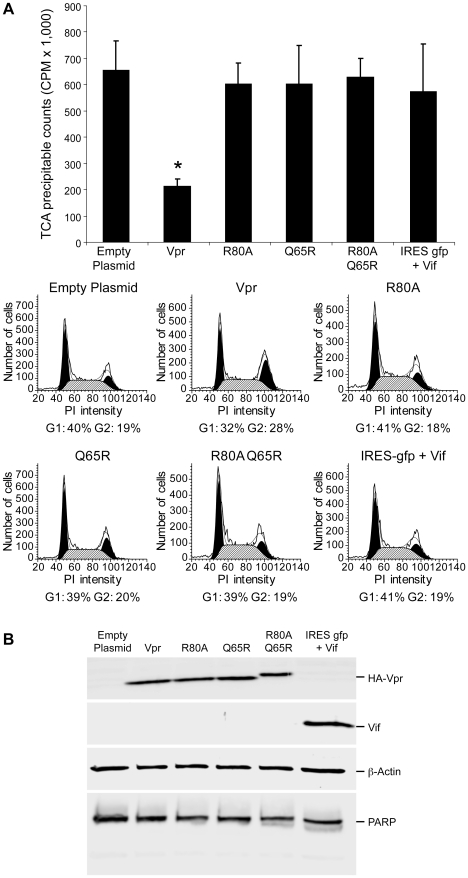
Figure 5. Vpr is sufficient for the cell cycle arrest and suppression of cellular translation.
(A) HEK 293 cells were transfected with IRESgfp (Empty plasmid), bicistronic VprIRESgfp expression plasmid that encodes Vpr or indicated substitution mutants, or IRESgfp plus Vif expression plasmid. GFP-positive cells were sorted and metabolically labeled with [35S]-cysteine/methionine for one hour, followed by TCA precipitation and scintillation. The histogram presents average TCA precipitable counts of the incorporated [35S] and the standard deviation from three independent experiments. Asterisk indicates a significant reduction in de novo protein synthesis (p = 0.0019) in response to Vpr. Propidium iodide staining intensity and ModFit analysis determined the number and percentage of cells in the G1 or G2/M phase of the cell cycle. Percentages are summarized below the plots. (B) Equivalent whole-cell extracts were immunoblotted with HA antibody to detect epitope tagged Vpr, and antiserum against Vif, PARP and β-Actin, respectively.
Figure 6
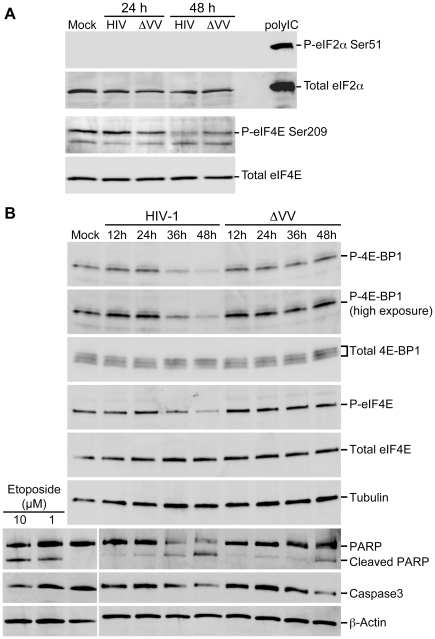
Figure 6. Suppression of cellular translation is attributable to HIV-1-dependent dephosphorylation of eIF4E and 4E-BP1.
(A) HEK 293 cells were transfected with HIV-1NL4-3 or ΔVifVprX (ΔVV) for 24 or 48 hour, as indicated. Equivalent whole-cell extracts were immunoblotted with antiserum against phospho-eIF2α Ser51, total eIF2α, phospho-eIF4E Ser209 or total eIF4E, respectively. (B) CEMx174 cells were infected with HIV-1 or ΔVifVprX (ΔVV) and evaluated at 12 hour intervals. Equivalent whole-cell extracts were immunoblotted with the indicated antiserum.
Figure 7
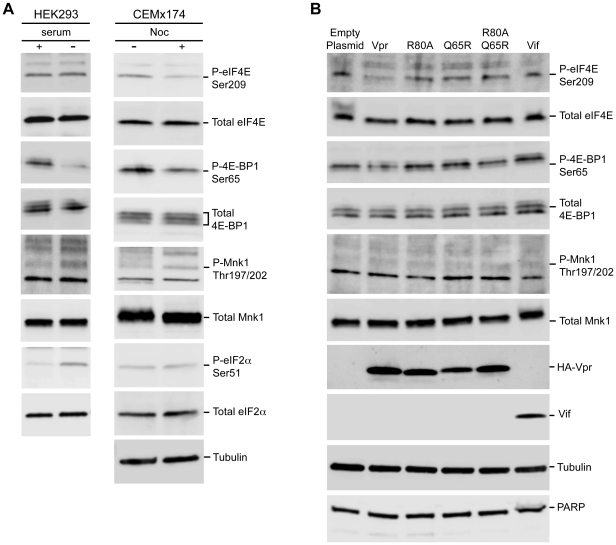
Figure 7. Vpr expression is sufficient to reduce the levels of phosphorylated eIF4E and 4E-BP1.
(A) Serum deprivation or pharmacological cell cycle arrest is sufficient to reduce accumulation of phosphorylated eIF4E and 4E-BP1. HEK 293 cells were incubated in complete medium (serum +) or in low serum medium (−serum) for 24 hour. Equivalent whole-cell extracts were harvested and immunoblotted with phospho-eIF4E Ser209, total eIF4E, phospho-4E-BP1 Ser65, total 4E-BP1, phospho-Mnk1 Thr197/202, total Mnk1, phospho-eIF2α Ser51 and total eIF2α, antibodies respectively (left panel). CEMx174 cells were incubated in complete medium that lacked or contained nocodazole (Noc) for 24 hour, and equivalent whole-cell extracts were immunoblotted with the indicated antiserum. (B) HEK 293 cells were transfected with expression plasmids encoding Vpr, indicated Vpr substitution mutant, or Vif, and whole-cell extracts were immunoblotted with the indicated antiserum.
Figure 8
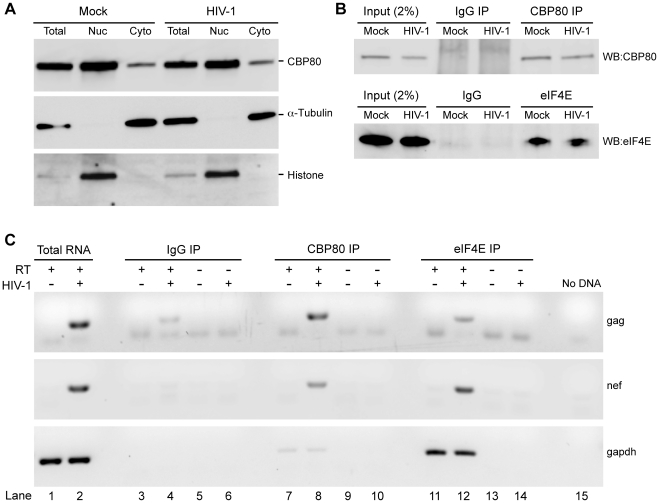
Figure 8. Cytoplasmic HIV-1 gag mRNA retains interaction with CBP80 in the cytoplasm.
(A) CEMx174 cells infected with HIV-1 or mock-infected were used to harvest total cellular protein (Total) and the nuclear (Nuc) and cytoplasmic (Cyto) compartments. Equivalent aliquots were immunoblotted with the indicated antiserum. (B) Cytoplasmic lysates from (A) were subjected to immunoprecipitation with CBP80 (top) or eIF4E (bottom) antibodies. Immunoblotting of equivalent aliquots of input and the immunoprecipitated material determined that the IP efficiency was similar between the lysates. Specificity of the IP was verified by using IgG isotype control. (C) Immunoprecipitates from (B) were used to harvest RNA, which were subjected to reverse transcription reactions with or without reverse transcriptase (RT + or −), followed by gene-specific PCR. Products were separated by agarose gel electrophoresis. The gag, nef or GAPDH amplification products from control Total RNA preparation (lanes 1, 2) and RNA-immunoprecipitates (lanes 3–15) are indicated. Lane 15 (No DNA) indicates PCR reaction contained water in place of cDNA.
Figure 9
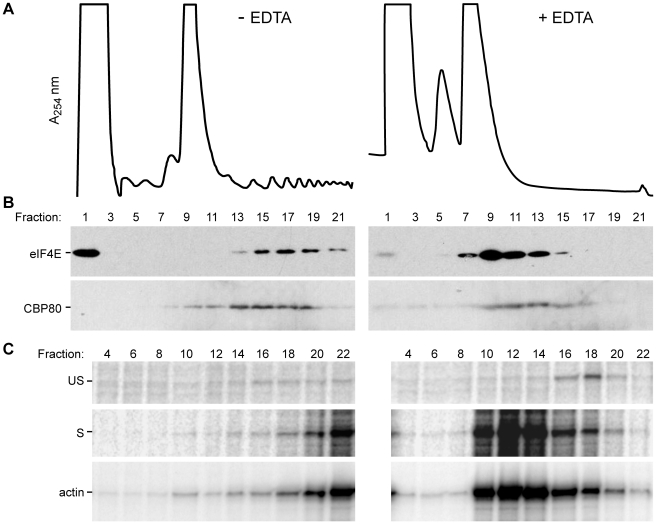
Figure 9. CBP80 and eIF4E co-sediment with the polyribosomes.
(A) HEK293 cells were transfected with HIV-1HxBruR−/RI− for 48 hour, cytoplasmic extracts were harvested, incubated in buffer with or without EDTA, and separated on 15–47.5% linear sucrose density gradients. Representative A254 ribosomal RNA profiles are indicated. (B) Lysates from every other fraction were immunoblotted with CBP80 and eIF4E antibodies. (C) RNA was isolated and subjected to RNase protection assays with 32P-labeled antisense RNA probe complementary to the HIV-1 5′ UTR and gag or actin, respectively. Detection products are the unspliced HIV-1 RNA (US), spliced HIV-1 transcripts (S) and cellular actin RNA.
Figure 10
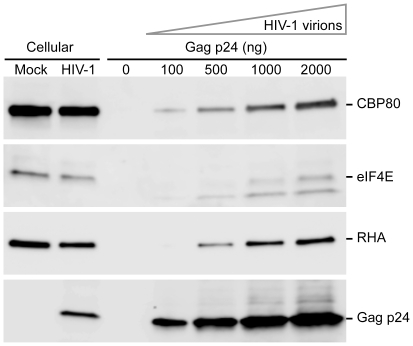
Figure 10. CBP80 is incorporated into HIV-1 virions.
Cellular protein and cell-free supernatant medium from CEMx174 cells or CEMx174/HIV-1 were harvested and subjected to immunoblot. Virions in the medium were collected by ultracentrifugation, subjected to Gag ELISA and the indicated aliquots (0 to 2000 ng) were evaluated with the indicated antisera.

References

    1. Pyronnet S, Sonenberg N. Cell-cycle-dependent translational control. Curr Opin Genet Dev. 2001;11:13–18. - PubMed
    1. Sivan G, Kedersha N, Elroy-Stein O. Ribosomal slowdown mediates translational arrest during cellular division. Mol Cell Biol. 2007;27:6639–6646. - PMC - PubMed
    1. Pyronnet S, Dostie J, Sonenberg N. Suppression of cap-dependent translation in mitosis. Genes Dev. 2001;15:2083–2093. - PMC - PubMed
    1. Sonenberg N, Hinnebusch AG. Regulation of translation initiation in eukaryotes: mechanisms and biological targets. Cell. 2009;136:731–745. - PMC - PubMed
    1. Holcik M, Sonenberg N. Translational control in stress and apoptosis. Nat Rev Mol Cell Biol. 2005;6:318–327. - PubMed

Publication types

MeSH terms

Substances