. 2012;8(3):e1002550.
doi: 10.1371/journal.pgen.1002550. Epub 2012 Mar 22.

APOBEC3G-induced hypermutation of human immunodeficiency virus type-1 is typically a discrete "all or nothing" phenomenon

Affiliations

APOBEC3G-induced hypermutation of human immunodeficiency virus type-1 is typically a discrete "all or nothing" phenomenon

Andrew E Armitage et al. PLoS Genet. 2012.

Abstract

The rapid evolution of Human Immunodeficiency Virus (HIV-1) allows studies of ongoing host-pathogen interactions. One key selective host factor is APOBEC3G (hA3G) that can cause extensive and inactivating Guanosine-to-Adenosine (G-to-A) mutation on HIV plus-strand DNA (termed hypermutation). HIV can inhibit this innate anti-viral defense through binding of the viral protein Vif to hA3G, but binding efficiency varies and hypermutation frequencies fluctuate in patients. A pivotal question is whether hA3G-induced G-to-A mutation is always lethal to the virus or if it may occur at sub-lethal frequencies that could increase viral diversification. We show in vitro that limiting-levels of hA3G-activity (i.e. when only a single hA3G-unit is likely to act on HIV) produce hypermutation frequencies similar to those in patients and demonstrate in silico that potentially non-lethal G-to-A mutation rates are ∼10-fold lower than the lowest observed hypermutation levels in vitro and in vivo. Our results suggest that even a single incorporated hA3G-unit is likely to cause extensive and inactivating levels of HIV hypermutation and that hypermutation therefore is typically a discrete "all or nothing" phenomenon. Thus, therapeutic measures that inhibit the interaction between Vif and hA3G will likely not increase virus diversification but expand the fraction of hypermutated proviruses within the infected host.


Conflict of interest statement

The authors have declared that no competing interests exist.

Figures
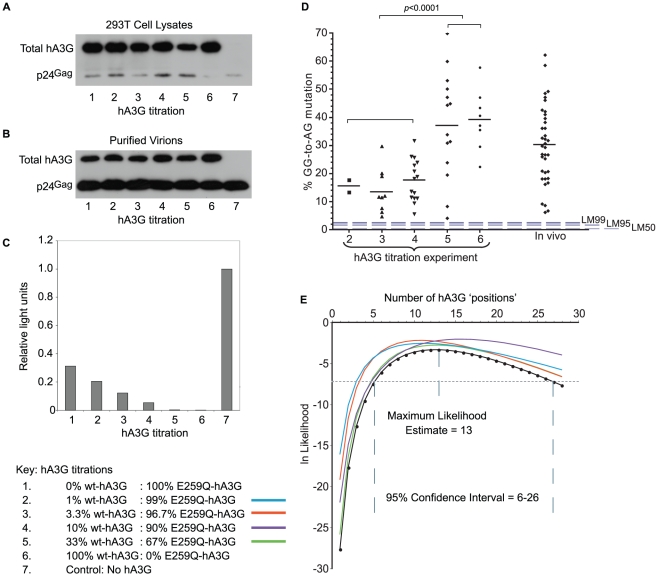
Figure 1
Figure 1. hA3G-induced mutation frequency in vitro and in vivo.
A, B. VSV-G pseudotyped Vif-deficient HIV-1 virions were harvested from supernatants of 293T cells transfected with plasmids encoding Δvif-HIV-1(IIIB), VSV-G envelope and variable amounts of wt- and non-editing E259Q-hA3G (Table 1). Total hA3G expression was examined using an antibody that binds to both wt- and E259Q-hA3G in immunoblots of both producer cell lysates (1A) and purified virions (1B) at each titration; the transfection efficiency of both editing and non-editing hA3G was comparable. HIV-1 p24 protein was used as a loading control. C. Relative single-cycle infectivities of viruses from each titration were quantified by infecting TZM-bl cells that express β-galactosidase under the control of an HIV-1 LTR with quantities of virus normalized by p24 ELISA. Infectivities were quantified using a β-galactosidase reporter assay. The light signal gave a read-out of β-galactosidase production, which was proportional to the infectivity of the infecting virus. Infectivities are expressed relative to that of VSV-G pseudotyped Δvif-HIV-1(IIIB) generated in the absence of any hA3G (condition 7). D. Using single genome amplification, HIV-1 env-3′LTR sequences were obtained from DNA isolated from cells infected with viruses from titration conditions 1–6. GG-to-AG (hA3G preferred dinucleotide) mutation rates were determined in each hypermutated virus from each condition relative to the known parental virus sequence; non-hypermutated sequences are not included in this analysis; each data point represents the editing rate in one sequence; for comparison with naturally occurring editing rates, GG-to-AG mutation rates were estimated in 39 patient-derived hypermutated sequences (“in vivo”); dashed lines represent LM50/LM95/LM99 editing rates from the in silico simulations described in Figure 3. E. We used the proportions of sequences carrying hA3G-type editing from each titration condition (Table 1 and Table 2) to generate a Maximum Likelihood Estimate of the number of “positions” in a virion potentially occupied by wt-hA3G units; colours denote the data set omitted from the calculations in order to examine if all titrations contributed equally to the estimation.
Figure 2
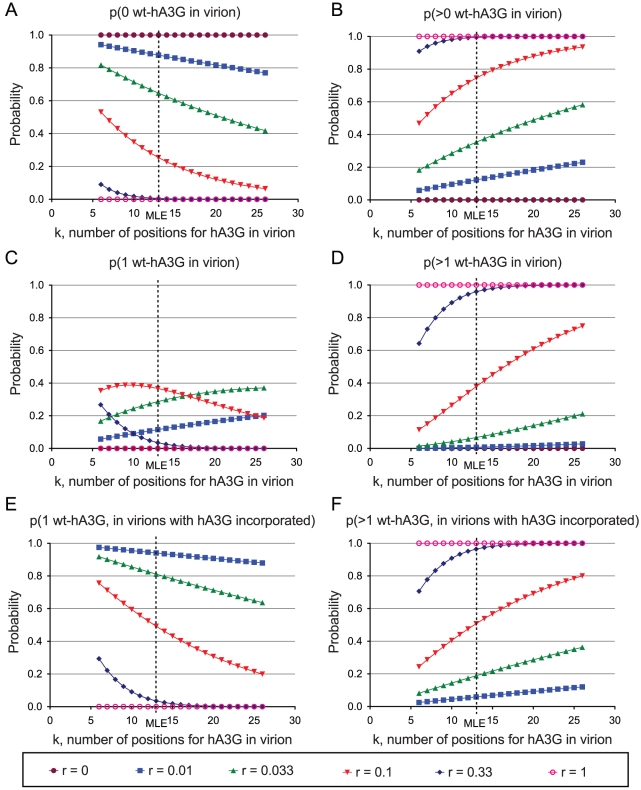
Figure 2. Probabilities of incorporation of editing wild-type hA3G units into progeny virions in the hA3G titration experiment.
The sensitivity of the MLE analysis in Figure 1E to each individual condition was assessed by re-estimating k after removing each state in turn. The values of ri, ni, and hi are shown in Table 2. In each case, k refers to the hypothetical number of positions within a virion that could be occupied by wt-hA3G units that can induce hypermutation; r denotes the proportion of wt-hA3G in the titration experiment (the proportion of non-editing E259Q-mutant hA3G is 1−r). Probabilities for each of the values of k spanning the 95% C.I. of the maximum likelihood estimate of the number of wt-hA3G units are shown (MLE = 13; 95% C.I. = 6–26), and are based on the binomial distribution. (A–D) Probabilities of virions incorporating (A) zero wt-hA3G units, (B) at least one wt-hA3G unit, (C) exactly one wt-hA3G unit, (D) two or more wt-hA3G units, for each model are shown. (E–F) graphs depicting the probability of hypermutation having been caused by (E) a single wt-hA3G unit, or (F) more than one wt-hA3G unit.
Figure 3
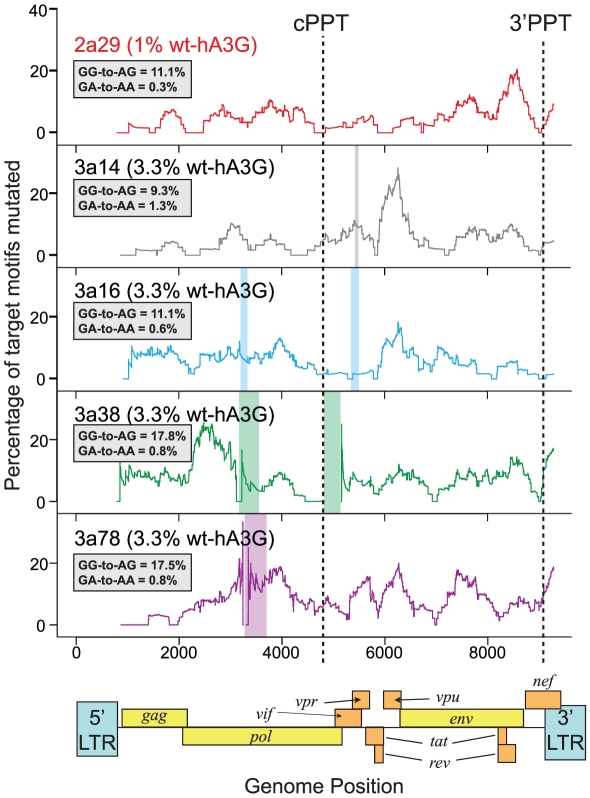
Figure 3. Hypermutation is induced throughout HIV-1 genomes mutated by one wt-hA3G unit.
We generated near-full length sequences (gag to 3′LTR) of a subset of hypermutated viruses from the lower wt-hA3G titrations (1% wt-hA3G:99% E259Q-hA3G (2a29) or 3.3% wt-hA3G: 96.7% E259Q-hA3G (3a14, 3a16, 3a38, 3a78)) and determined the induced mutations by comparing the sequences with the known parental virus sequence. Hypermutation profiles were made by calculating the number of GG and GA dinucleotides mutated to AG and AA, respectively, in 400bp sliding windows to the 3′ of the base under consideration. The positions of the central polypurine tract (cPPT) and 3′PPT are indicated; the overall GG-to-AG and GA-to-AA mutation rates in each sequence are indicated in the inset boxes. Colored rectangles indicate gaps in sequences.
Figure 4
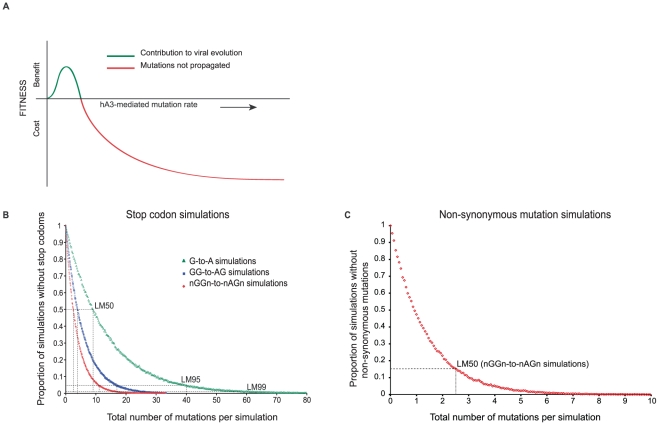
Figure 4. In silico simulation of hA3G-induced mutation in HIV(IIIB) open reading frames.
A. Proposed relationship between viral fitness benefit and cost and hA3G mutation rate modified from . When hA3G edits HIV-1 genomes above a particular editing rate, the mutational burden will be too high for the virus and a fitness cost is incurred, depicted in red. However, within a hypothetical window of hA3G activity, marked by the blue line, the extent of editing induced might be low enough for the virus to survive. The additional mutations may help the virus adapt faster in a fluctuating host environment and thus may be considered a viral fittness benefit. B. Each curve represents 100,000 in silico simulations of hA3G-induced mutation of the HIV(IIIB) open reading frames (the virus used in all in vitro experiments) at 100 incremental mutation rates, at which the proportion of sequences escaping in-frame stop codons was assessed. The number of mutations on the x-axis corresponds to the product of the mutation rate and the total number of available targets. Simulations using three different nucleotide targets were performed; (i) G-to-A mutation (n targets = 1362), (ii) GG-to-AG mutation (n targets = 667), and (iii) nGGn-to-nAGn mutation (n targets = 662, with 16 specific nGGn mutation rates from [20]). G-to-A simulations assumed that hA3G would recognized all Gn dinucleotide targets equally, GG-to-AG considered hA3G's preferred di-nucleotide target, while nGGn-to-nAGn simulations considered the 16 previously defined hA3G mutation rates and thus more accurately mirrored the specificity with which hA3G induces mutations in vivo. The number of mutations necessary to induce a stop codon in 50% of viral offspring (LM50) decreased as the accuracy of the hA3G target increased from a single G to a di-nucleotide motif and lastly to a tetra-nucleotide motif. LM50 mutation rates are shown and 95% confidence intervals (CI) are smaller than the data points. C. As in B however here the proportion of simulations without non-synonomous substitutions and the associated LM50 was determined using the defined nGGn-to-nAGn mutation preferences .

References

    1. Rambaut A, Posada D, Crandall KA, Holmes EC. The causes and consequences of HIV evolution. Nat Rev Genet. 2004;5:52–61. - PubMed
    1. Hache G, Mansky LM, Harris RS. Human APOBEC3 proteins, retrovirus restriction, and HIV drug resistance. AIDS Rev. 2006;8:148–57. - PubMed
    1. Malim MH. APOBEC proteins and intrinsic resistance to HIV-1 infection. Philos Trans R Soc Lond B Biol Sci. 2009;364:675–87. - PMC - PubMed
    1. Simon V, Zennou V, Murray D, Huang Y, Ho DD, et al. Natural variation in Vif: differential impact on APOBEC3G/3F and a potential role in HIV-1 diversification. PLoS Pathog. 2005;1:e6. doi: 10.1371/journal.ppat.0010006. - DOI - PMC - PubMed
    1. Zhang H, Yang B, Pomerantz RJ, Zhang C, Arunachalam SC, et al. The cytidine deaminase CEM15 induces hypermutation in newly synthesized HIV-1 DNA. Nature. 2003;424:94–8. - PMC - PubMed

Publication types

MeSH terms

Substances