


Global gene expression profiling confirms the molecular fidelity of primary tumor-based orthotopic xenograft mouse models of medulloblastoma
- PMID: 22459127
- PMCID: PMC3337308
- DOI: 10.1093/neuonc/nos061
Global gene expression profiling confirms the molecular fidelity of primary tumor-based orthotopic xenograft mouse models of medulloblastoma
Abstract
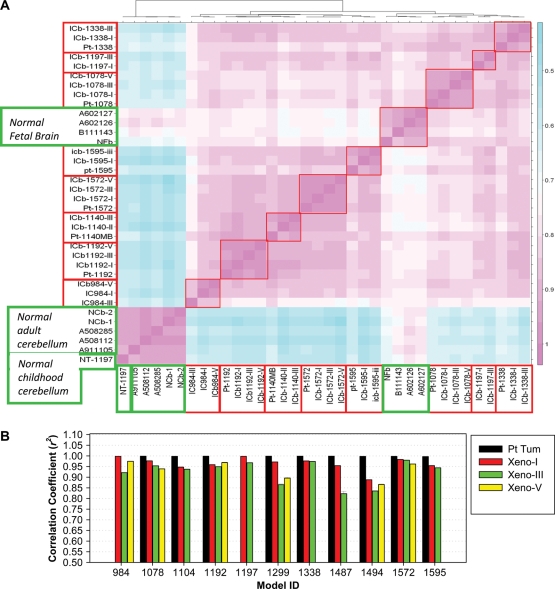
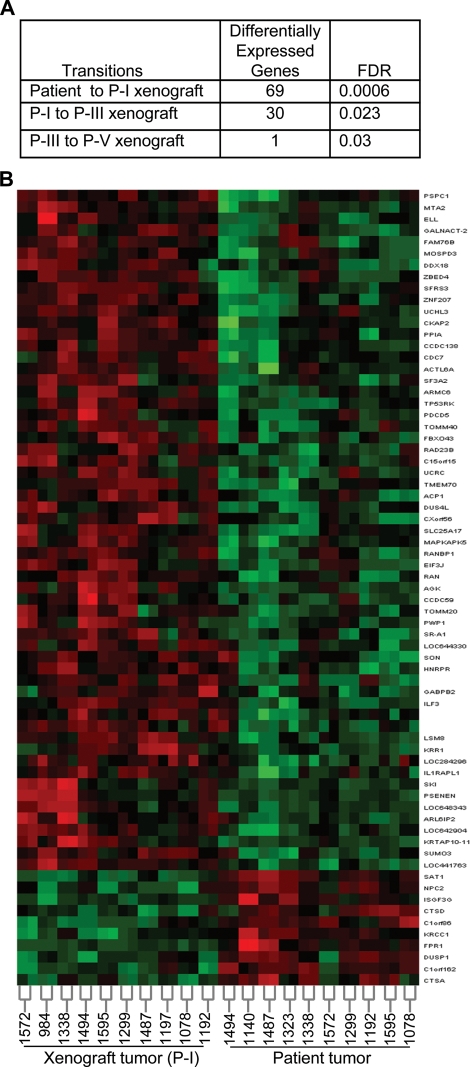
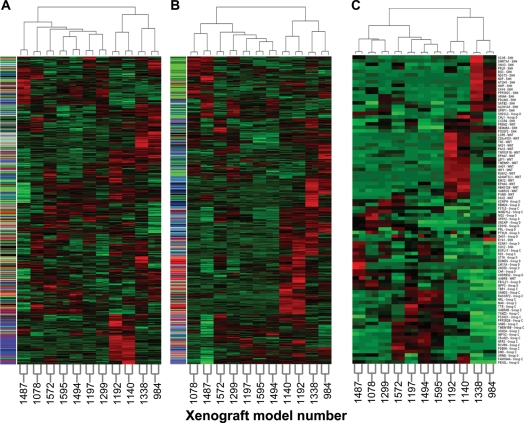
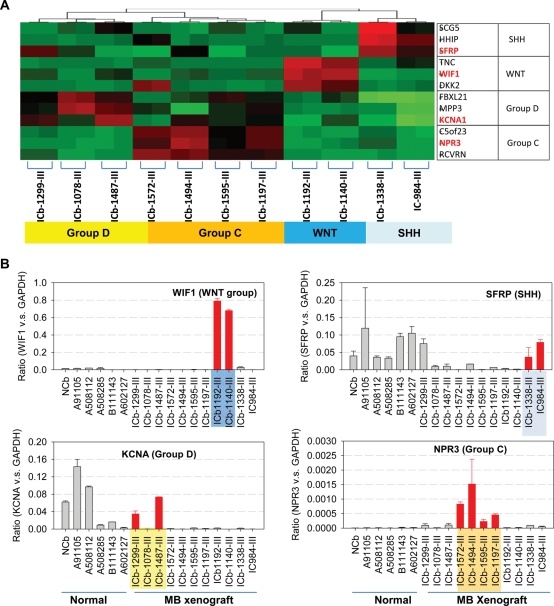
We previously showed that primary tumor-based orthotopic xenograft mouse models of medulloblastoma replicated the histopathological phenotypes of patients' original tumors. Here, we performed global gene expression profiling of 11 patient-specific xenograft models to further determine whether the xenograft tumors were molecularly accurate during serial subtransplantations in mouse brains and whether they represented all the molecular subtypes of medulloblastoma that were recently described. Analysis of the transcriptomes of 9 pairs of matched passage I xenografts and patients' tumors revealed high correlation coefficients (r(2) > 0.95 in 5 models, > 0.9 in 3 models, and > 0.85 in 1 model) and only identified 69 genes in which expressions were altered (FDR = 0.0023). Subsequent pair-wise comparisons between passage I, III, and V xenografts from the 11 models further showed that no dramatic alterations were introduced (r(2) > 0.9 in 8 models and > 0.8 in 3 models). The genetic abnormalities of each model were then identified through comparison with control RNAs from 5 normal cerebella and 2 fetal brains. Hierarchical clustering using 3 previously published molecular signatures showed that our models span the whole spectrum of molecular subtypes, including SHH (n = 2), WNT (n = 2), and the most recently identified group C (n = 4) and group D (n = 3). In conclusion, we demonstrated that the 11 orthotopic medulloblastoma xenograft models were molecularly faithful to the primary tumors, and our comprehensive collection of molecularly distinct animal models should serve as a valuable resource for the development of new targeted therapies for medulloblastoma.
Figures
References
-
- Strother D, Ashley D, Kellie SJ, et al. Feasibility of four consecutive high-dose chemotherapy cycles with stem-cell rescue for patients with newly diagnosed medulloblastoma or supratentorial primitive neuroectodermal tumor after craniospinal radiotherapy: results of a collaborative study. J Clin Oncol. 2001;19:2696–2704. - PubMed
-
- Taylor RE, Bailey CC, Robinson K, et al. Results of a randomized study of preradiation chemotherapy versus radiotherapy alone for nonmetastatic medulloblastoma: The International Society of Paediatric Oncology/United Kingdom Children's Cancer Study Group PNET-3 Study. J Clin Oncol. 2003;21:1581–1591. doi:10.1200/JCO.2003.05.116. - DOI - PubMed
-
- Taylor RE, Bailey CC, Robinson KJ, et al. Outcome for patients with metastatic (M2–3) medulloblastoma treated with SIOP/UKCCSG PNET-3 chemotherapy. Eur J Cancer. 2005;41:727–734. doi:10.1016/j.ejca.2004.12.017. - DOI - PubMed
-
- Dunkel IJ, Gardner SL, Garvin JH, Jr, Goldman S, Shi W, Finlay JL. High-dose carboplatin, thiotepa, and etoposide with autologous stem cell rescue for patients with previously irradiated recurrent medulloblastoma. Neuro Oncol. 2010;12:297–303. doi:10.1093/neuonc/nop031. - DOI - PMC - PubMed
-
- Gajjar A, Pizer B. Role of high-dose chemotherapy for recurrent medulloblastoma and other CNS primitive neuroectodermal tumors. Pediatr Blood Cancer. 2010;54:649–651. doi:10.1002/pbc.22378. - DOI - PubMed
Publication types
MeSH terms
Substances
LinkOut - more resources
Full Text Sources
Medical
Molecular Biology Databases
