


The use of an early alert system to improve compliance with sepsis bundles and to assess impact on mortality
- PMID: 22461981
- PMCID: PMC3296210
- DOI: 10.1155/2012/980369
The use of an early alert system to improve compliance with sepsis bundles and to assess impact on mortality
Abstract
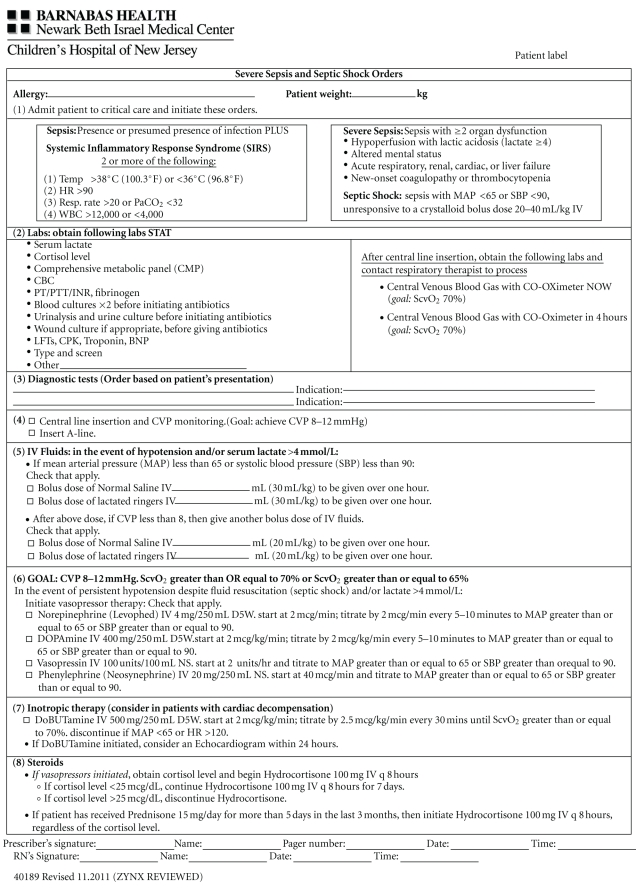
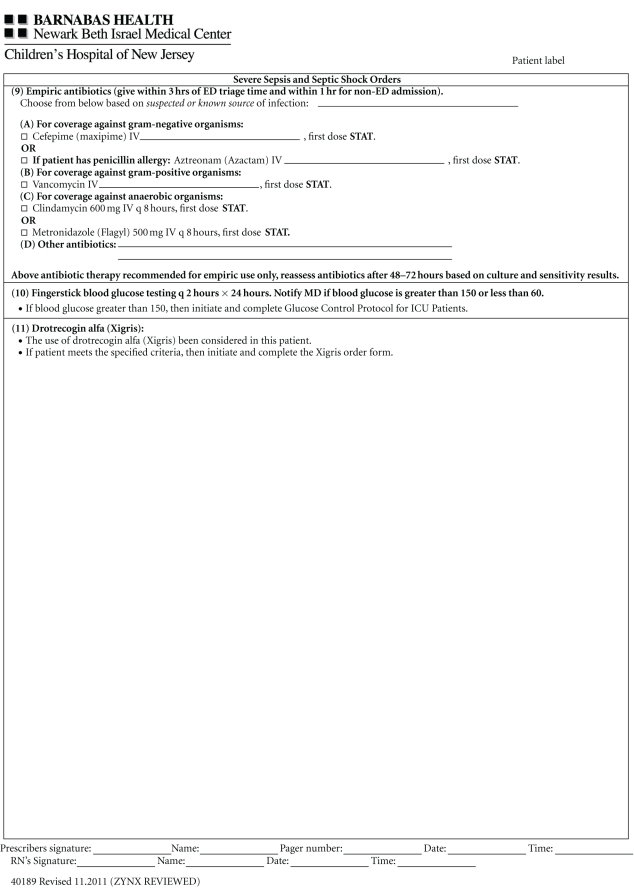
Introduction. Diagnostic and therapeutic guidelines, organized as sepsis bundles, have been shown to improve mortality, but timely and consistent implementation of these can be challenging. Our study examined the use of a screening tool and an early alert system to improve bundle compliance and mortality. Methods. A screening tool was used to identify patients with severe sepsis or septic shock and an overhead alert system known as Code SMART (Sepsis Management Alert Response Team) was activated at the physician's discretion. Data was collected for 6 months and compliance with bundle completion and mortality were compared between the Code SMART and non-Code SMART groups. Results. Fifty eight patients were enrolled -34 Code SMART and 24 non-Code SMART. The Code SMART group achieved greater compliance with timely antibiotic administration (P < 0.001), lactate draw (P < 0.001), and steroid use (P = 0.02). Raw survival and survival adjusted for age, leucopenia, and severity of illness scores, were greater in the Code SMART group (P < 0.05, P = 0.03, and P = 0.01). Conclusions. A screening tool and an alert system can improve compliance with sepsis bundle elements and improve survival from severe sepsis and septic shock.
References
-
- Martin GS, Mannino DM, Eaton S, Moss M. The epidemiology of sepsis in the United States from 1979 through 2000. New England Journal of Medicine. 2003;348(16):1546–1554. - PubMed
-
- Dellinger RP, Levy MM, Carlet JM, et al. Surviving sepsis campaign: international guidelines for management of severe sepsis and septic shock. Critical Care Medicine. 2008;36(1):296–327. - PubMed
-
- Zambon M, Ceola M, Almeida-de-Castro R, Gullo A, Vincent JL. Implementation of the Surviving Sepsis Campaign guidelines for severe sepsis and septic shock: we could go faster. Journal of Critical Care. 2008;23(4):455–460. - PubMed
-
- Coba V, Whitmill M, Mooney R, et al. Resuscitation bundle compliance in severe sepsis and septic shock: improves survival, is better late than never. Journal of Intensive Care Medicine. 2011;26(5):304–313. - PubMed
-
- Lefrant JY, Muller L, Raillard A, et al. Reduction of the severe sepsis or septic shock associated mortality by reinforcement of the recommendations bundle: a multicenter study. Annales Francaises d’Anesthesie et de Reanimation. 2010;29(9):621–628. - PubMed
LinkOut - more resources
Full Text Sources
Medical
