


How to improve walking, balance and social participation following stroke: a comparison of the long term effects of two walking aids--canes and an orthosis TheraTogs--on the recovery of gait following acute stroke. A study protocol for a multi-centre, single blind, randomised control trial
- PMID: 22462692
- PMCID: PMC3342107
- DOI: 10.1186/1471-2377-12-18
How to improve walking, balance and social participation following stroke: a comparison of the long term effects of two walking aids--canes and an orthosis TheraTogs--on the recovery of gait following acute stroke. A study protocol for a multi-centre, single blind, randomised control trial
Abstract
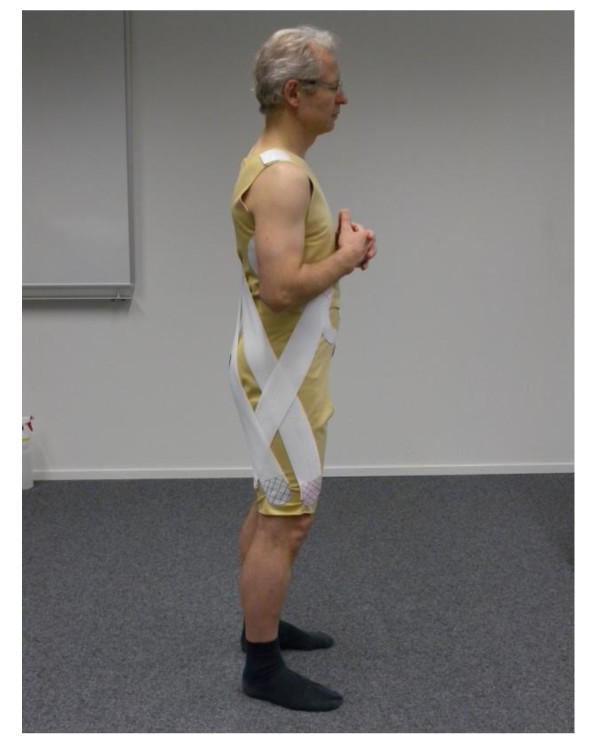
Background: Annually, some 9000 people in Switzerland suffer a first time stroke. Of these 60% are left with moderate to severe walking disability. Evidence shows that rehabilitation techniques which emphasise activity of the hemiplegic side increase ipsilesional cortical plasticity and improve functional outcomes. Canes are commonly used in gait rehabilitation although they significantly reduce hemiplegic muscle activity. We have shown that an orthosis "TheraTogs" (a corset with elasticated strapping) significantly increases hemiplegic muscle activity during gait. The aim of the present study is to investigate the long term effects on the recovery of gait, balance and social participation of gait rehabilitation with TheraTogs compared to gait rehabilitation with a cane following first time acute stroke.
Methods/design: Multi-centre, single blind, randomised trial with 120 patients after first stroke. When subjects have reached Functional Ambulation Category 3 they will be randomly allocated into TheraTogs or cane group. TheraTogs will be applied to support hip extensor and abductor musculature according to a standardised procedure. Cane walking held at the level of the radial styloid of the sound wrist. Subjects will walk throughout the day with only the assigned walking aid. Standard therapy treatments and usual care will remain unchanged and documented. The intervention will continue for five weeks or until patients have reached Functional Ambulation category 5. Outcome measures will be assessed the day before begin of intervention, the day after completion, 3 months, 6 months and 2 years.
Primary outcome: Timed "up and go" test, secondary outcomes: peak surface EMG of gluteus maximus and gluteus medius, activation patterns of hemiplegic leg musculature, temporo-spatial gait parameters, hemiplegic hip kinematics in the frontal and sagittal planes, dynamic balance, daily activity measured by accelerometry, Stroke Impact Scale. Significance levels will be 5% with 95% CI's. IntentionToTreat analyses will be performed. Descriptive statistics will be presented.
Discussion: This study could have significant implications for the clinical practice of gait rehabilitation after stroke, particularly the effect and appropriate use of walking aids.The results could be important for the development of clinical guidelines and for the socio-economic costs of post-stroke care.
Trial registration number: ClinicalTrials.gov NCT01366729.
References
-
- Geschwindner HM, Rettke H, van den Heuvel WJ, Halfens RJ, Dassen T. Rehabilitation in acute stroke patients in German-speaking Switzerland. Swiss Med Wkly. 2007;137(13-14):205–211. - PubMed
-
- van de Port IG, Kwakkel G, van Wijk I, Lindeman E. Susceptibility to deterioration of mobility long-term after stroke: a prospective cohort study. Stroke. 2006;37(1):167–171. - PubMed
Publication types
MeSH terms
Associated data
LinkOut - more resources
Full Text Sources
Medical
