


International prevalence of adolescent non-suicidal self-injury and deliberate self-harm
- PMID: 22462815
- PMCID: PMC3348041
- DOI: 10.1186/1753-2000-6-10
International prevalence of adolescent non-suicidal self-injury and deliberate self-harm
Abstract
Background: The behaviours of non-suicidal self-injury (NSSI) and deliberate self-harm (DSH) are prevalent among adolescents, and an increase of rates in recent years has been postulated. There is a lack of studies to support this postulation, and comparing prevalence across studies and nations is complicated due to substantial differences in the methodology and nomenclature of existing research.
Methods: We conducted a systematic review of current (2005 - 2011) empirical studies reporting on the prevalence of NSSI and DSH in adolescent samples across the globe.
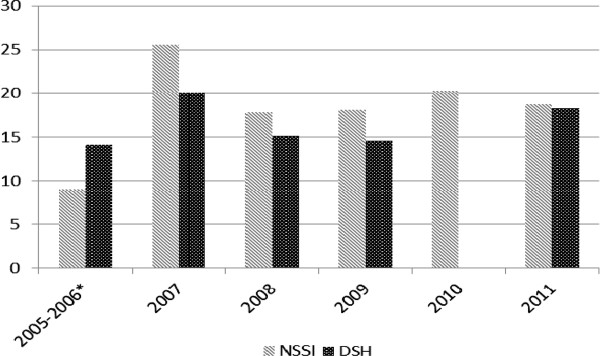
Results: Fifty-two studies fulfilling the inclusion criteria were obtained for analysis. No statistically significant differences were found between NSSI (18.0% SD = 7.3) and DSH (16.1% SD = 11.6) studies. Assessment using single item questions led to lower prevalence rates than assessment with specific behaviour checklists. Mean prevalence rates have not increased in the past five years, suggesting stabilization.
Conclusion: NSSI and DSH have a comparable prevalence in studies with adolescents from different countries. The field would benefit from adopting a common approach to assessment to aide cross-cultural study and comparisons.
Figures
References
-
- Nock MK. Self-injury. Ann Rev Clin Psychol. 2010;6:15.1–15.25. - PubMed
LinkOut - more resources
Full Text Sources
Miscellaneous
