


Awareness of and behaviors related to child-to-mother transmission of cytomegalovirus
- PMID: 22465669
- PMCID: PMC4494733
- DOI: 10.1016/j.ypmed.2012.03.009
Awareness of and behaviors related to child-to-mother transmission of cytomegalovirus
Abstract
Objective: Congenital cytomegalovirus (CMV) infection is a common cause of hearing loss and intellectual disability. We assessed CMV knowledge and the frequency of women's behaviors that may enable CMV transmission to inform strategies for communicating prevention messages to women.
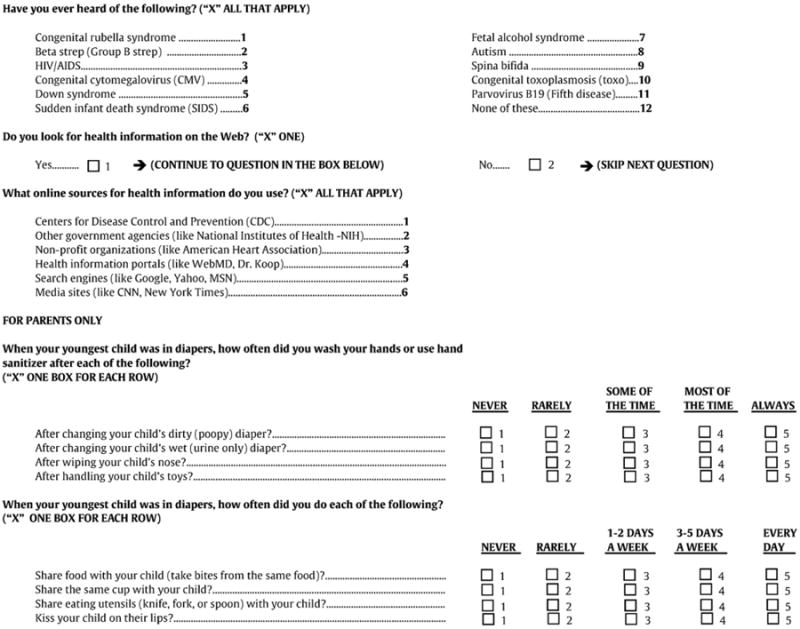
Methods: We analyzed survey responses from 4184 participants (2181 women, 2003 men) in the 2010 HealthStyles survey, a national mail survey designed to be similar to the United States population.
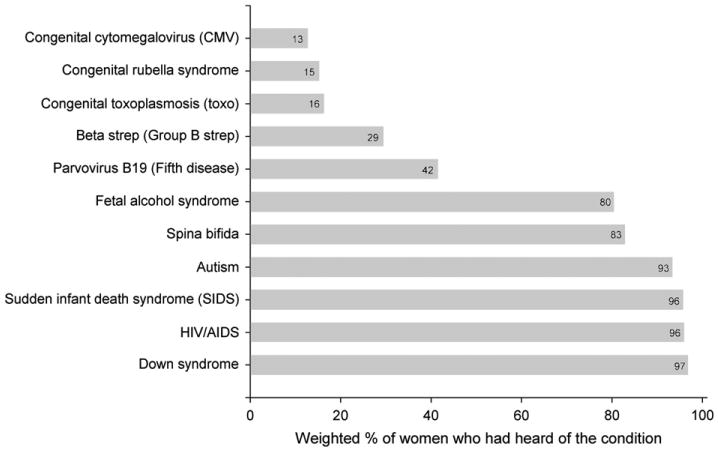
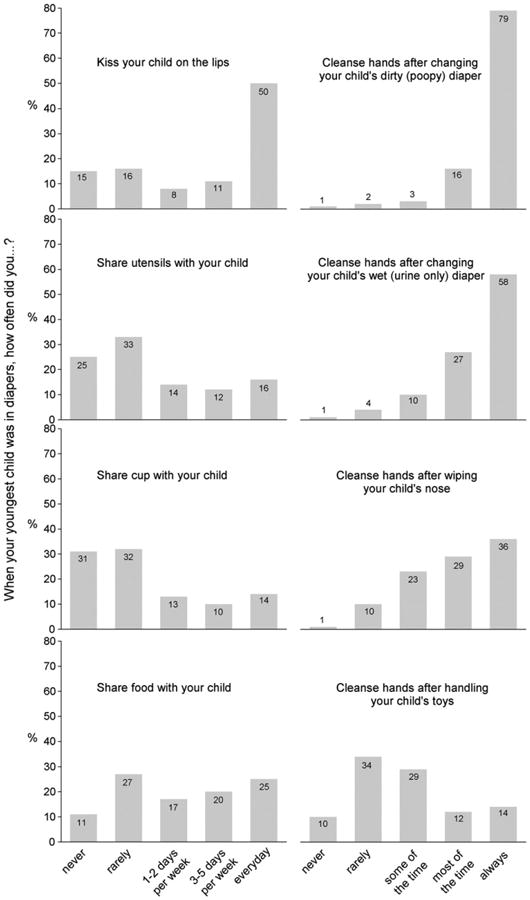
Results: Only 7% of men and 13% of women had heard of congenital CMV. Women with children under age 19 (n=918) practiced the following risk behaviors at least once per week while their youngest child was still in diapers: kissing on the lips (69%), sharing utensils (42%), sharing cups (37%), and sharing food (62%). Women practiced protective, hand cleansing behaviors most of the time or always after: changing a dirty diaper (95%), changing a wet diaper (85%), or wiping the child's nose (65%), but less commonly after handling the child's toys (26%).
Conclusions: Few women are aware of CMV and most regularly practice behaviors that may place them at risk when interacting with young children. Women should be informed of practices that can reduce their risk of CMV infection during pregnancy.
Published by Elsevier Inc.
Figures
References
-
- Adler SP, Finney JW, Manganello AM, Best AM. Prevention of child-to-mother transmission of cytomegalovirus by changing behaviors: a randomized controlled trial. Pediatr Infect Dis J. 1996;15:240–246. - PubMed
-
- Adler SP, Finney JW, Manganello AM, Best AM. Prevention of child-to-mother transmission of cytomegalovirus among pregnant women. J Pediatr. 2004;145:485–491. - PubMed
-
- Bate SL, Cannon MJ. A social marketing approach to building a behavioral intervention for congenital cytomegalovirus. Health Promot Pract. 2011;12:349–360. - PubMed
MeSH terms
Grants and funding
LinkOut - more resources
Full Text Sources
Other Literature Sources
Medical
