Identification of porcine rotavirus-like genotype P[6] strains in Taiwanese children
- PMID: 22466032
- PMCID: PMC8167839
- DOI: 10.1099/jmm.0.042499-0
Identification of porcine rotavirus-like genotype P[6] strains in Taiwanese children
Abstract
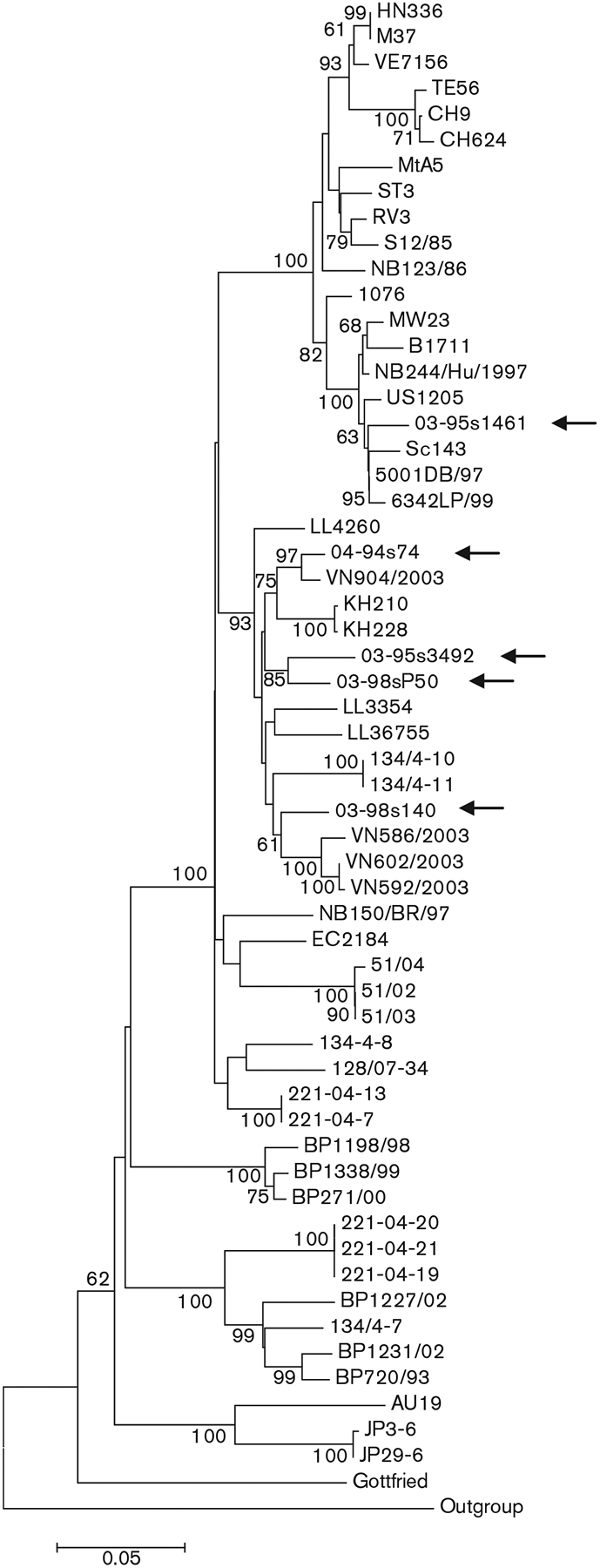
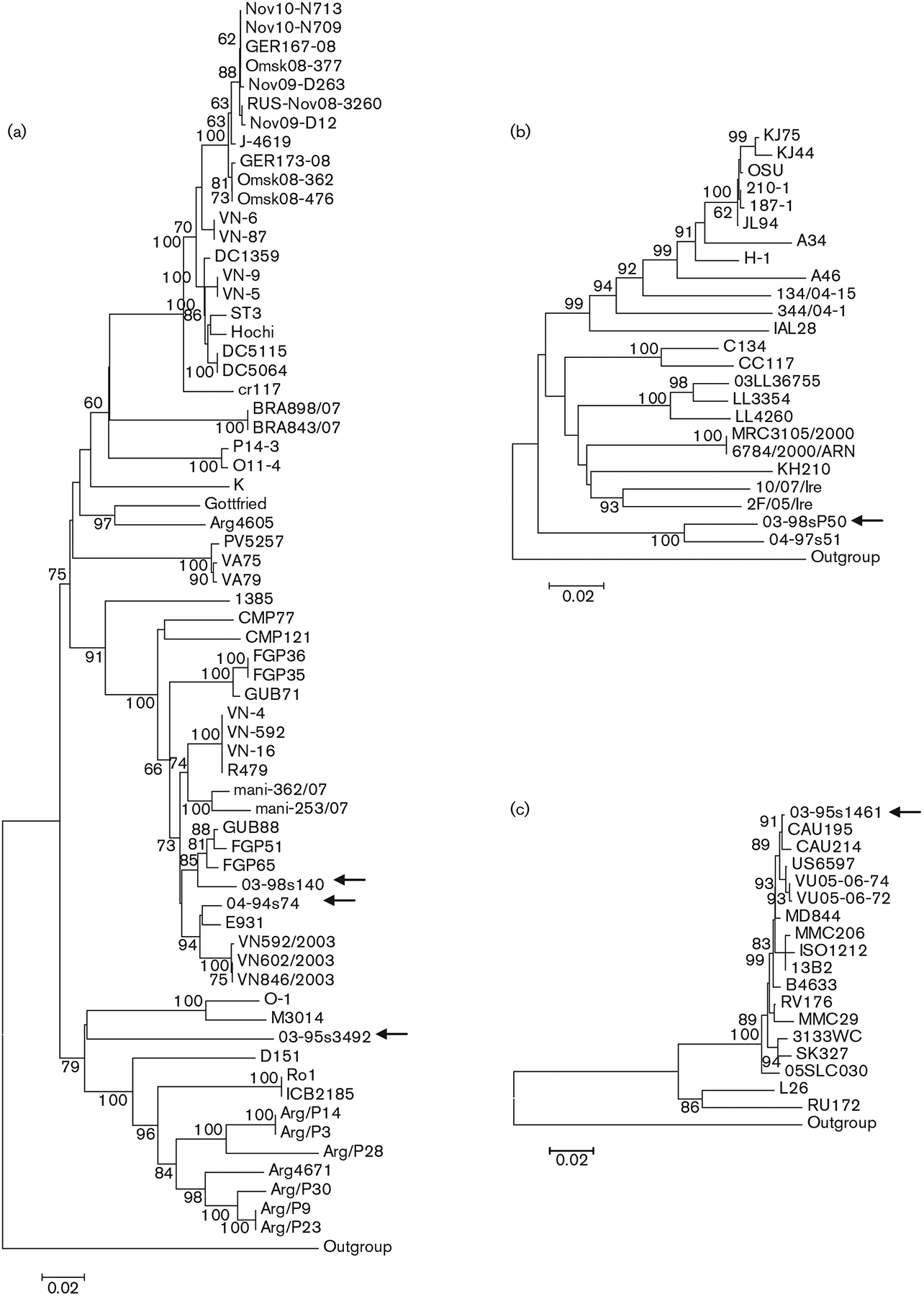
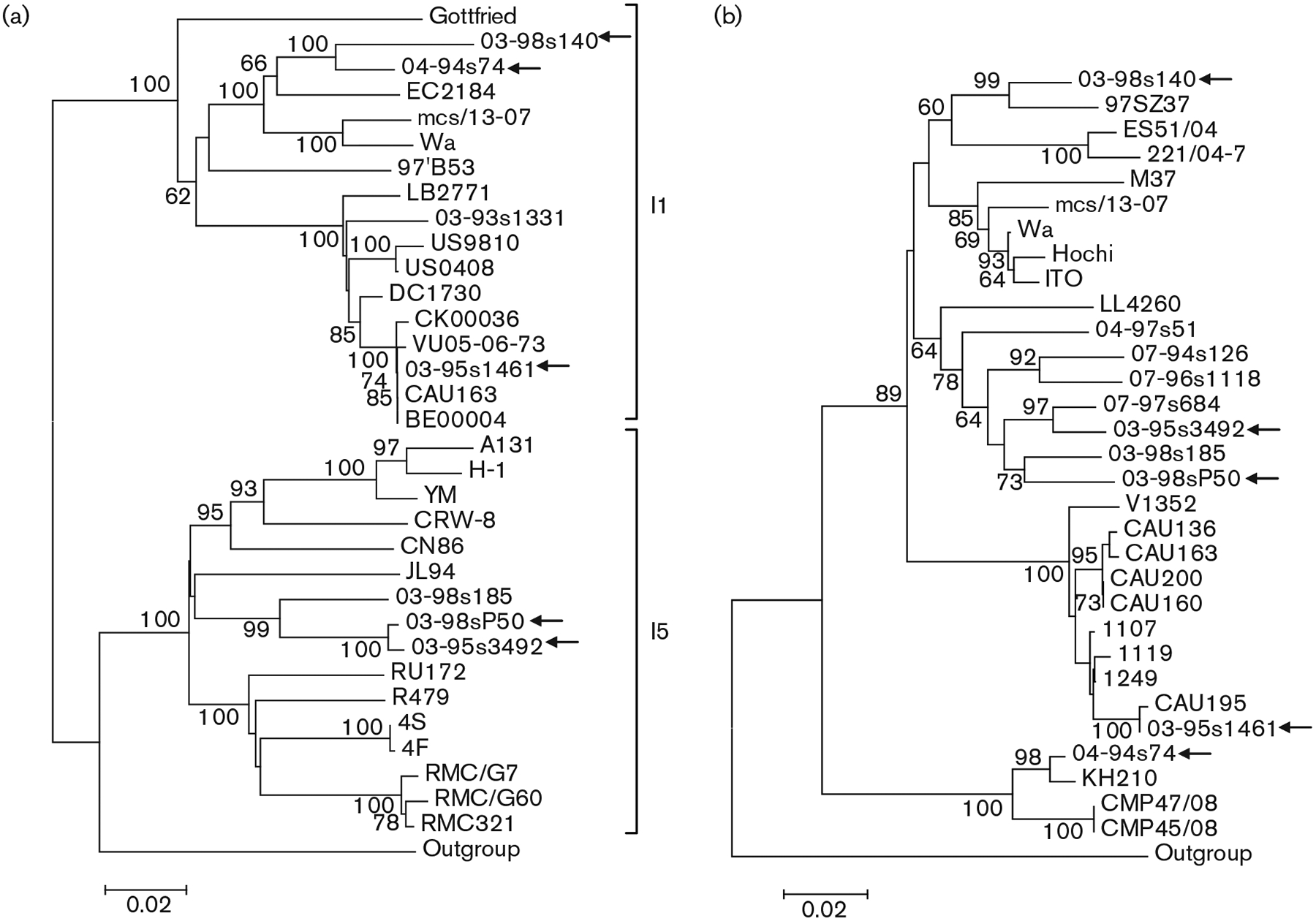
The molecular characterization of genotype P[6] rotavirus strains collected from children admitted to hospital with acute dehydrating diarrhoea during a 6-year surveillance period in Taiwan is described in this study. In total, three G4P[6] strains, one G5P[6] and one G12P[6] were characterized by sequencing and phylogenetic analysis of the VP4, VP7, VP6 and NSP4 genes. Whilst all four genes of the single Taiwanese G12P[6] strain clustered with the respective genes of globally common human rotavirus strains, the G4 and G5 strains showed remarkable similarities to porcine rotavirus strains and putative porcine-origin human P[19] strains reported previously from Taiwan. The overall proportion of porcine rotavirus-like strains in Taiwan remains around 1 % among hospitalized children; however, the circulation and sporadic transmission of these heterotypic strains from pigs to humans could pose a public-health concern. Therefore, continuation of strain monitoring is needed in the vaccine era to detect any possible vaccine breakthrough events associated with the introduction of such heterologous rotavirus strains.
Figures
References
-
- Bányai K, Esona MD, Kerin TK, Hull JJ, Mijatovic S, Vásconez N, Torres C, de Filippis AM, Foytich KR & Gentsch JR (2009a). Molecular characterization of a rare, human–porcine reassortant rotavirus strain, G11P[6], from Ecuador. Arch Virol 154, 1823–1829. - PubMed
-
- Bányai K, Bogdán Á, Domonkos G, Kisfali P, Molnár P, Tóth A, Melegh B, Martella V, Gentsch JR & Szucs G (2009b). Genetic diversity and zoonotic potential of human rotavirus strains, 2003– 2006, Hungary. J Med Virol 81, 362–370. - PubMed
-
- Bányai K, László B, Duque J, Steele AD, Nelson EAS, Gentsch JR & Parashar UD (2012). Systematic review of regional and temporal trends in global rotavirus strain diversity in the pre rotavirus vaccine era: insights for understanding the impact of rotavirus vaccination programs. Vaccine 30 (Suppl. 1), A122–A130. - PubMed
Publication types
MeSH terms
Substances
Grants and funding
LinkOut - more resources
Full Text Sources
Medical