


How does capacity building of health managers work? A realist evaluation study protocol
- PMID: 22466036
- PMCID: PMC3330260
- DOI: 10.1136/bmjopen-2012-000882
How does capacity building of health managers work? A realist evaluation study protocol
Abstract
Introduction: There has been a lot of attention on the role of human resource management interventions to improve delivery of health services in low- and middle-income countries. However, studies on this subject are few due to limited research on implementation of programmes and methodological difficulties in conducting experimental studies on human resource interventions. The authors present the protocol of an evaluation of a district-level capacity-building intervention to identify the determinants of performance of health workers in managerial positions and to understand how changes (if any) are brought about.
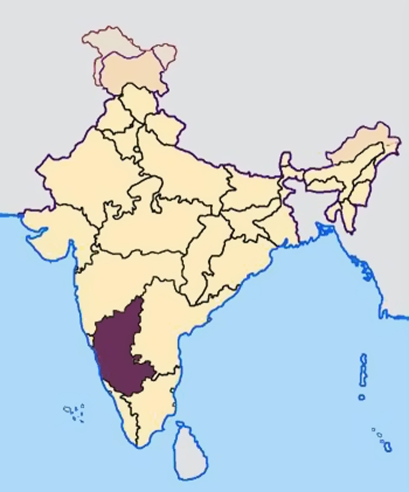
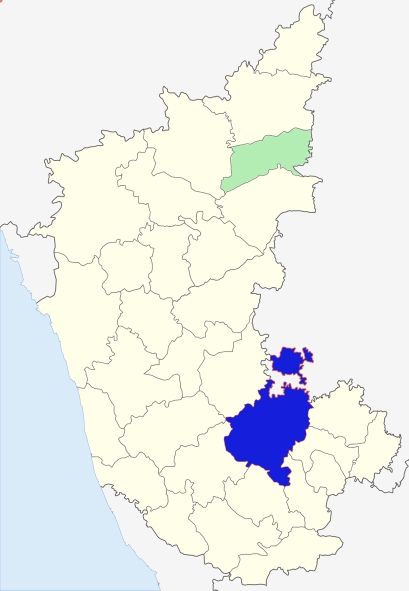
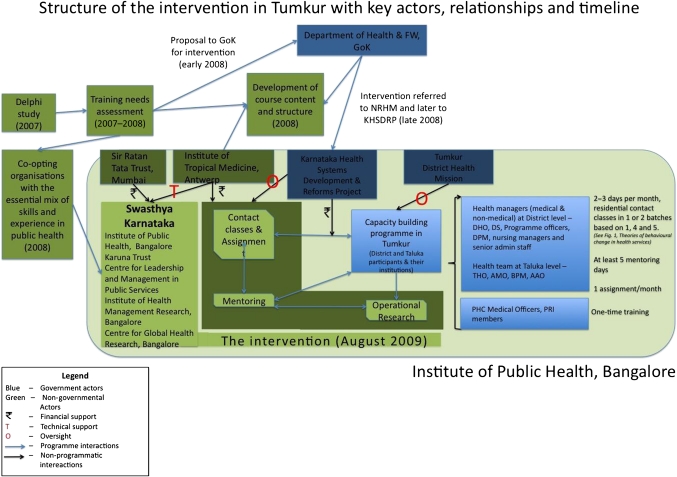
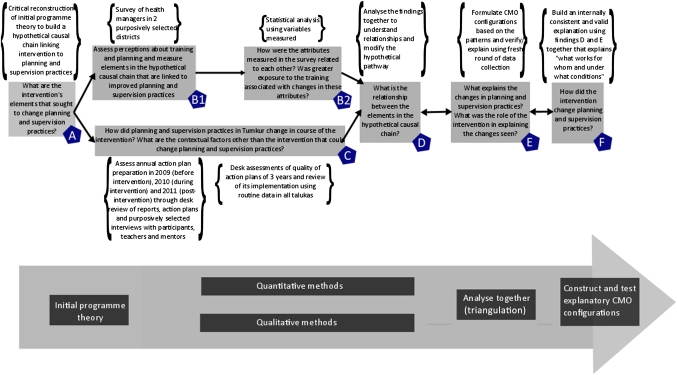
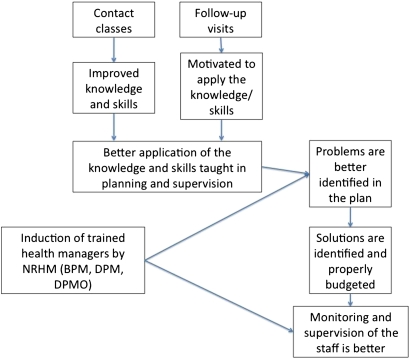
Methods and analysis: The aim of this study is to understand how capacity building works. The authors will use realist evaluation to evaluate an intervention in Karnataka, India. The intervention is a capacity-building programme that seeks to improve management capacities of health managers at district and subdistrict levels through periodic classroom-based teaching and mentoring support at the workplace. The authors conducted interviews and reviewed literature on capacity building in health to draw out the programme theory of the intervention. Based on this, the authors formulated hypothetical pathways connecting the expected outcomes of the intervention (planning and supervision) to the inputs (contact classes and mentoring). The authors prepared a questionnaire to assess elements of the programme theory-organisational culture, self-efficacy and supervision. The authors shall conduct a survey among health managers as well as collect qualitative data through interviews with participants and non-participants selected purposively based on their planning and supervision performance. The authors will construct explanations in the form of context-mechanism-outcome configurations from the results. This will be iterative and the authors will use a realist evaluation framework to refine the explanatory theories that are based on the findings to explain and validate an improved theory on 'what works for whom and under what conditions'.
Discussion: The scope for applying realist evaluation to study human resource management interventions in health are discussed.
Conflict of interest statement
Figures
References
-
- Speybroeck N, Kinfu Y, Dal Poz MR, et al. Reassessing the Relationship Between Human Resources for Health, Intervention Coverage and Health Outcomes. Geneva, Switzerland: Background Papers for The World Health Report, 2006
-
- Kim K, Moody PM. More resources better health? A cross-national perspective. Soc Sci Med 1992;34:837–42 - PubMed
-
- Hertz E. Social and environmental factors and life expectancy, infant mortality, and maternal mortality rates: results of a cross-national comparison. Soc Sci Med 1994;39:105–14 - PubMed
LinkOut - more resources
Full Text Sources
