. 2012 Jun;470(6):1658-67.
doi: 10.1007/s11999-012-2318-3.

Prolonged bed rest as adjuvant therapy after complex reconstructive spine surgery

Affiliations

Prolonged bed rest as adjuvant therapy after complex reconstructive spine surgery

Rex A W Marco et al. Clin Orthop Relat Res. 2012 Jun.

Abstract

Background: The benefits of postoperative mobilization include decreased incidence of pulmonary complications, pressure ulcers, and progression of deep vein thrombosis. However, the complexity of certain spinal reconstructions and the patient's physiologic condition may preclude the possibility of early mobilization. Prolonged bed rest after spine surgery is controversial.

Questions/purposes: We evaluated the efficacy of prolonged bed rest after complex spine surgery to determine (1) patient characteristics that led to prescribing bed rest, (2) clinical and radiographic outcomes, (3) complications, and (4) estimated direct costs.

Methods: We retrospectively reviewed all 11 patients (median age, 50 years) who underwent complex spine surgery followed by prolonged bed rest between 2005 and 2010. All patients were deemed at high risk for developing pseudarthrosis or instrumentation failure without postoperative bed rest. One patient died of complications related to pulmonary tuberculosis at 4 months. The patients averaged 3 months of bed rest. Minimum followup was 24 months (median, 30 months; range, 4-52 months).

Results: All patients had (1) tenuous or limited fixation after correction of severe deformity, (2) previously failed spine reconstruction after early mobilization, or (3) limited treatment options if failure occurred again. No patient experienced pseudarthrosis, failure of instrumentation, thromboembolic disease, pressure ulcers, or pneumonia. One patient had a delayed union and one developed late urosepsis. The median cost of skilled nursing facilities during the period of bed rest was $16,702, while the median cost of home health nursing was $5712.

Conclusions: For patients with contraindications to early postoperative mobilization, prolonged bed rest may be useful to minimize the risk of complications that can occur with mobilization.

Level of evidence: Level IV, therapeutic study. See Instructions for Authors for a complete description of levels of evidence.


Figures
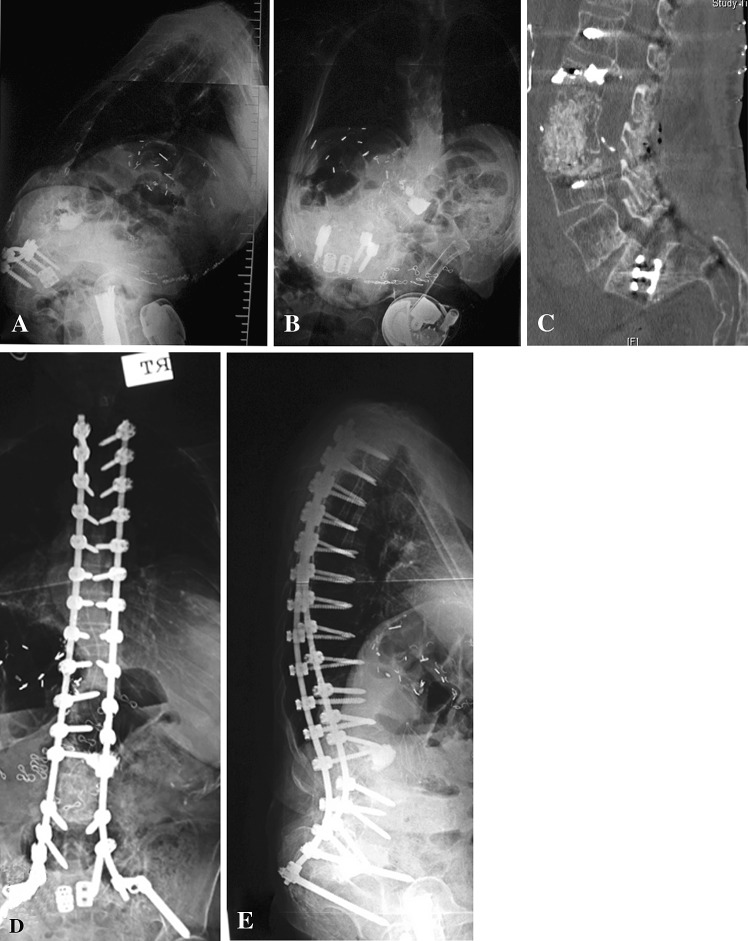
Fig. 1A–E
Fig. 1A–E
(A) A lateral radiograph shows the spine of a 55-year-old woman who presented with progressive back pain, osteoporosis, and severe sagittal imbalance after multiple previous operations on her spine. (B) An AP radiograph demonstrates scoliosis and coronal imbalance. (C) A sagittal CT scan shows the spine after a decancellation procedure at L2. (D) An AP radiograph shows the spine after posterior, anterior, posterior spinal fusion and instrumentation to the pelvis. Twelve weeks of prophylactic bed rest was prescribed because of her high likelihood to develop failure of her tenuous fixation and limited treatment options in the event of failure of this procedure. (E) A lateral radiograph at last followup demonstrates adequate sagittal alignment.
Fig. 2A–E
Fig. 2A–E
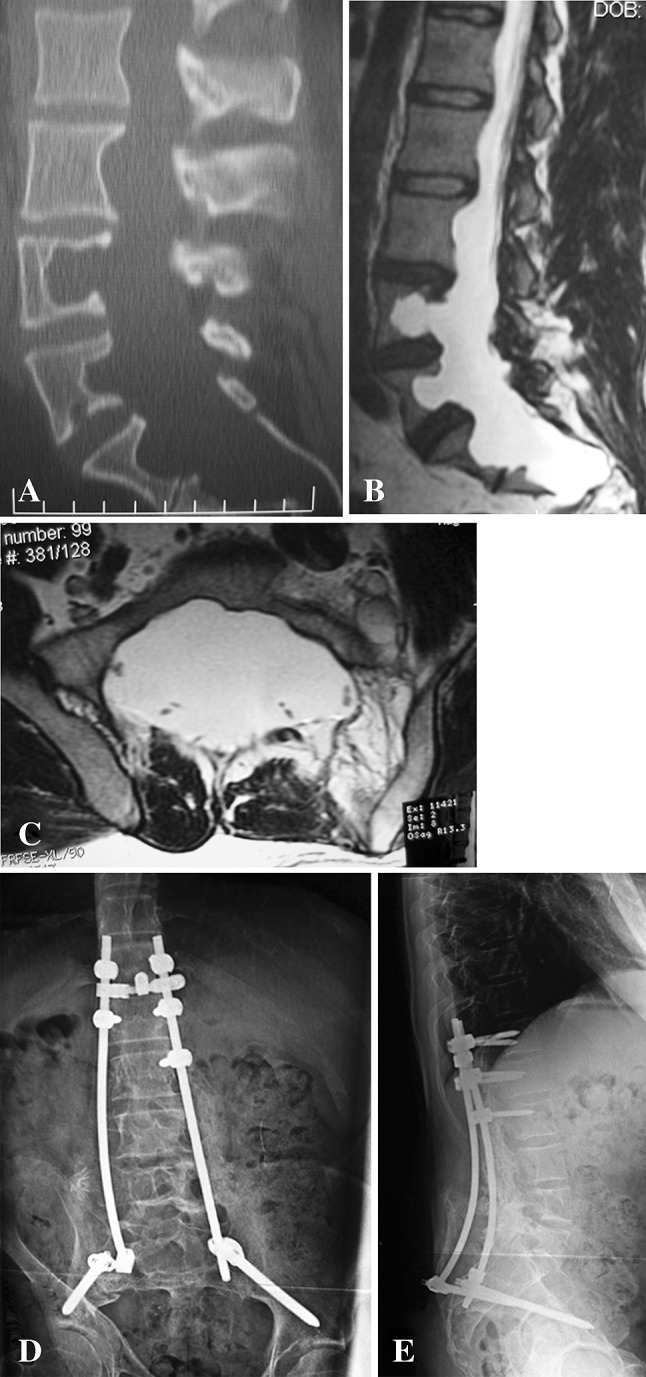
(A) A sagittal CT scan shows the spine of a 29-year-old man with neurofibromatosis and multilevel duralectasia who had presented with severe disabling pain with ambulation. (B) A sagittal T2-weighted MR image demonstrates duralectasia with erosion of the middle column of the L3, L4, L5, S1, and S2 vertebral bodies. (C) An axial T2-weighted MR image at S1 demonstrates severe duralectasia. (D) An AP plain radiograph shows the spine after posterior spinal fusion with instrumentation from T12 to the pelvis. Postoperative prophylactic bed rest was prescribed for 3 months due to the limited fixation, high risk of pseudarthrosis, and limited treatment options in the event of failure of this procedure. (E) A lateral plain radiograph at last followup when he was ambulating without assistive devices and plain radiographs showed maintenance of alignment without fractures of the bone, failure of instrumentation, or failure of fixation of the instrumentation.

References

    1. Allman RM, Goode PS, Patrick MM, Burst N, Bartolucci AA. Pressure ulcer risk factors among hospitalized patients with activity limitation. J Am Med Assoc. 1995;273:865–870. doi: 10.1001/jama.1995.03520350047027. - DOI - PubMed
    1. Arkin AM. Correction of structural changes in scoliosis by corrective plaster jackets and prolonged recumbency. J Bone Joint Surg Am. 1964;46:33–52. - PubMed
    1. Belavý DL, Miokovic T, Armbrecht G, Richardson CA, Rittweger J, Felsenberg D. Differential atrophy of the lower-limb musculature during prolonged bed-rest. Eur J Appl Physiol. 2009;107:489–499. doi: 10.1007/s00421-009-1136-0. - DOI - PubMed
    1. Bleeker MW, Groot PC, Rongen GA, Rittweger J, Felsenberg D, Smits P, Hopman MT. Vascular adaptation to deconditioning and the effect of an exercise countermeasure: results of the Berlin Bed Rest Study. J Appl Physiol. 2005;99:1293–1300. doi: 10.1152/japplphysiol.00118.2005. - DOI - PubMed
    1. Dang Y, Yen D, Hopman W. Postoperative bed rest improves the alignment of thoracolumbar burst fractures treated with the AO spinal fixator. Can J Surg. 2009;52:215–220. - PMC - PubMed