


Genome-wide peripheral blood leukocyte DNA methylation microarrays identified a single association with inflammatory bowel diseases
- PMID: 22467598
- PMCID: PMC3812910
- DOI: 10.1002/ibd.22956
Genome-wide peripheral blood leukocyte DNA methylation microarrays identified a single association with inflammatory bowel diseases
Abstract
Background: Crohn's disease (CD) and ulcerative colitis (UC) are common forms of inflammatory bowel disease (IBD). Monozygotic (MZ) twin discordance rates and epidemiologic data implicate that environmental changes and epigenetic factors may play a pathogenic role in IBD. DNA methylation (the methylation of cytosines within CpG dinucleotides) is an epigenetic modification, which can respond to environmental influences. We investigated whether DNA methylation might be connected with IBD in peripheral blood leukocyte (PBL) DNA by utilizing genome-wide microarrays.
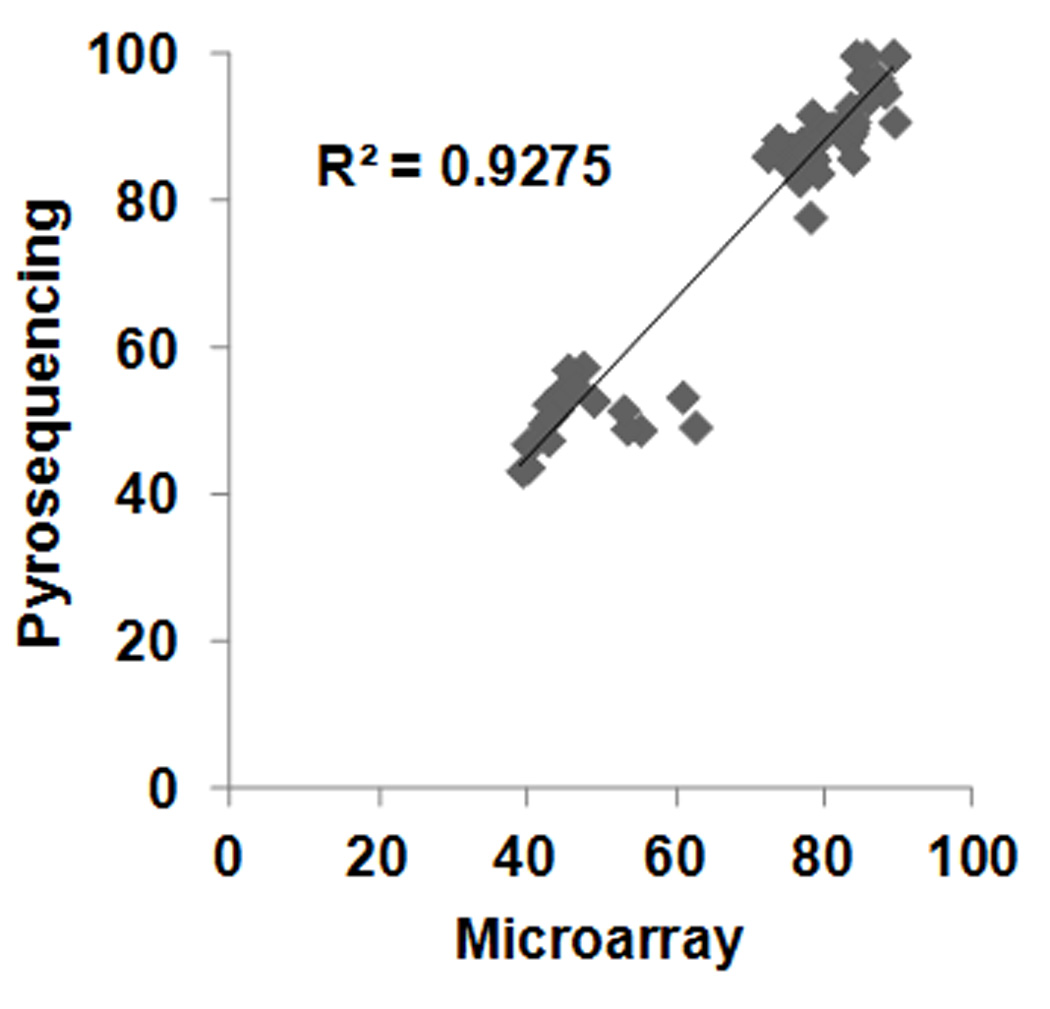
Methods: Two different high-throughput microarray-based methods for genome-wide DNA methylation analysis were employed. First, DNA isolated from MZ twin pairs concordant (CD: 4; UC: 3) and discordant (CD: 4; UC: 7) for IBD was interrogated by a custom-made methylation-specific amplification microarray (MSAM). Second, the recently developed Illumina Infinium HumanMethylation450 BeadChip arrays were used on 48 samples of PBL DNA from discordant MZ twin pairs (CD: 3; UC: 3) and treatment-naive pediatric cases of IBD (CD: 14; UC: 8), as well as controls (n = 14). The microarrays were validated with bisulfite pyrosequencing.
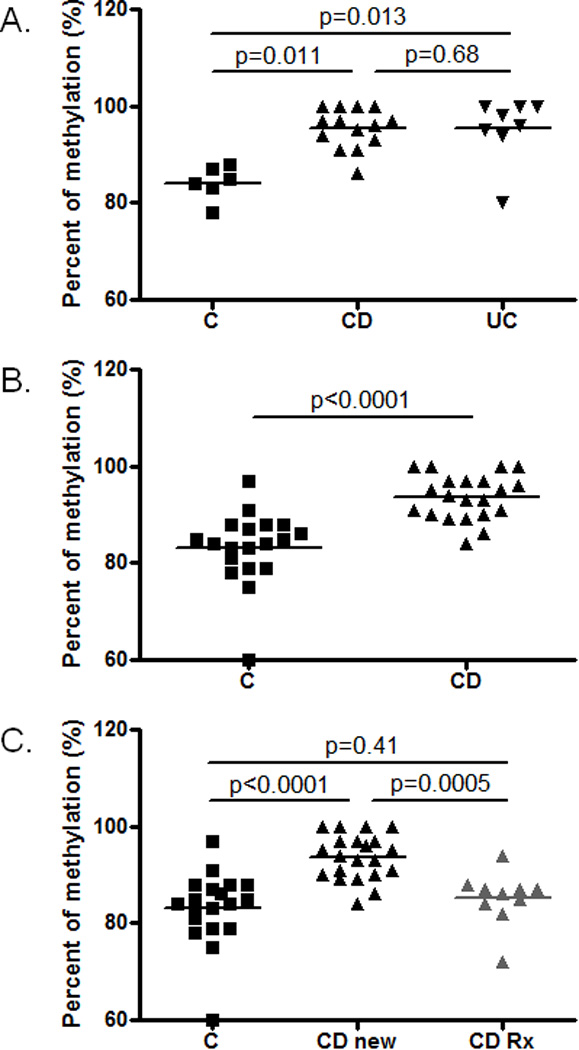
Results: The MSAMs did not yield significant IBD associations. The Methylation BeadChip approach identified a single DNA methylation association of IBD at TEPP (testis, prostate and placenta-expressed protein) when DNA isolated selectively from peripheral blood mononuclear cells was analyzed (8.6% increase in methylation between CD and control, FDR = 0.0065).
Conclusions: Microarray interrogation of IBD-dependent DNA methylation from PBLs appears to have limited ability to detect significant disease associations. More detailed and/or selective approaches may be useful for the elucidation of connections between the DNA methylome and IBD in the future.
Copyright © 2012 Crohn's & Colitis Foundation of America, Inc.
Figures
References
-
- Loftus EV., Jr Clinical epidemiology of inflammatory bowel disease: Incidence, prevalence, and environmental influences. Gastroenterology. 2004;126:1504–1517. - PubMed
-
- Park KT, Bass D. Inflammatory bowel disease-attributable costs and cost-effective strategies in the United States: A review. Inflamm Bowel Dis. 2011;17:1603–1609. - PubMed
-
- Benchimol EI, Guttmann A, Griffiths AM, Rabeneck L, Mack DR, Brill H, Howard J, Guan J, To T. Increasing incidence of paediatric inflammatory bowel disease in Ontario, Canada: evidence from health administrative data. Gut. 2009;58:1490–1497. - PubMed
-
- Abramson O, Durant M, Mow W, Finley A, Kodali P, Wong A, Tavares V, McCroskey E, Liu L, Lewis JD, Allison JE, Flowers N, Hutfless S, Velayos FS, Perry GS, Cannon R, Herrinton LJ. Incidence, Prevalence, and Time Trends of Pediatric Inflammatory Bowel Disease in Northern California, 1996 to 2006. J Pediatr. 2010;157:233.e1–239.e1. - PubMed
Publication types
MeSH terms
Grants and funding
LinkOut - more resources
Full Text Sources
Other Literature Sources
Molecular Biology Databases