


Childhood obesity prevention in rural settings: background, rationale, and study design of '4-Health,' a parent-only intervention
- PMID: 22471650
- PMCID: PMC3404898
- DOI: 10.1186/1471-2458-12-255
Childhood obesity prevention in rural settings: background, rationale, and study design of '4-Health,' a parent-only intervention
Abstract
Background: Childhood obesity in rural communities is a serious but understudied problem. The current experiment aims to assess a wide range of obesity risk factors among rural youth and to offer an 8-month intervention program for parents to reduce obesity risk in their preteen child.
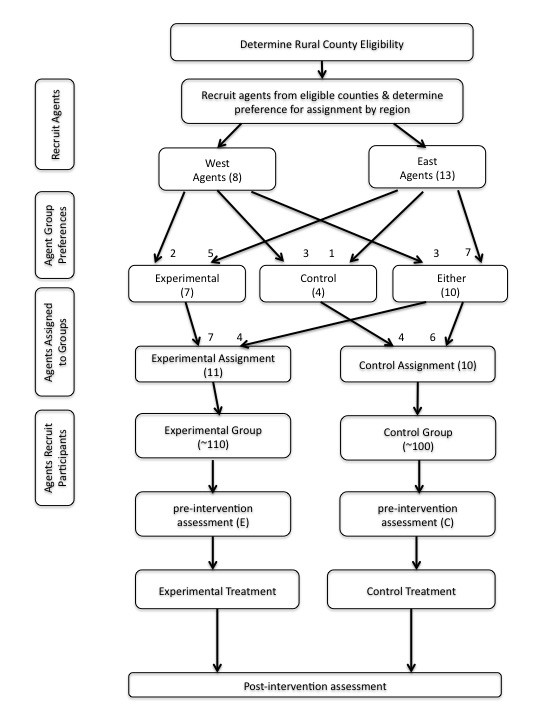
Methods/design: A two-group, repeated measures design is used to assess the effectiveness of the 4-Health intervention program. Assessments include anthropometric measures, child self-evaluations, parent self-evaluations, and parent evaluations of child. County Extension agents from 21 rural Montana counties recruit approximately 150 parent-child dyads and counties are semi-randomly assigned to the active intervention group (4-Health Educational Program) or a "best-practices" (Healthy Living Information) control group.
Discussion: This study will shed light on the effectiveness of this parent-only intervention strategy in reducing obesity risk factors among rural preteens. The 4-Health program is designed to provide information and skills development for busy rural parents that will increase healthy lifestyles of their preteen children and improve the parents' ability to intervene effectively in the lives of their families during this critical developmental period.
Trial registration: ClinicalTrials.gov ID: NCT01510587.
Figures
References
-
- Childhood Obesity Facts. http://www.cdc.gov/healthyyouth/obesity/facts.htm
-
- Rhee K. Childhood overweight and the relationship between parent behaviors, parenting style and family functioning. Ann Am Acad Pol Soc Sci. 2008;615:12–37.
Publication types
MeSH terms
Associated data
LinkOut - more resources
Full Text Sources
Medical
