Adult Changes in Thought study: dementia is an individually varying convergent syndrome with prevalent clinically silent diseases that may be modified by some commonly used therapeutics
- PMID: 22471861
- PMCID: PMC3409333
- DOI: 10.2174/156720512801322555
Adult Changes in Thought study: dementia is an individually varying convergent syndrome with prevalent clinically silent diseases that may be modified by some commonly used therapeutics
Abstract
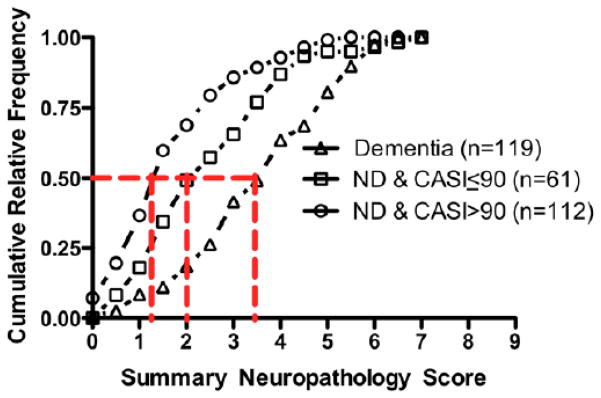
The Adult Changes in Thought (ACT) study is a longitudinal population-based prospective cohort study of brain aging and incident dementia in the Seattle metropolitan area. Observational studies using autopsies from ACT indicate that dementia is a convergent syndrome that commonly derives from Alzheimer's disease (AD), microvascular brain injury (mVBI), and Lewy body disease (LBD), and that these diseases have prevalent subclinical forms that also are commonly co-morbid. The existence of subclinical diseases highlights potential opportunities to intervene before the development of clinically apparent impairments. Our observations suggest that some such interventions already may exist to suppress processes of AD (statin therapy) or mVBI (treatment of hypertension). Reduced burden of LBD is associated with cigarette smoking; although smoking is not recommended as an intervention, these exposure data may provide clues to alternative neuroprotective mechanisms. Self reported anti-oxidant supplementation was without apparent effect in this cohort on indices of AD, mVBI, or LBD. Continued observational studies of brain aging will provide further insight into the convergent complexity of the dementia syndrome and its subclinical forms as well as highlight potential interventions that will require validation in clinical trials.
Conflict of interest statement
CONFLICT OF INTEREST None declared.
Figures


References
-
- Kukull WA, Higdon R, Bowen JD, McCormick WC, Teri L, Schellenberg GD, et al. Dementia and Alzheimer Disease Incidence. Arch Neurol. 2002;59:1737–1746. - PubMed
-
- White L. Brain Lesions at Autopsy in Older Japanese-American Men as Related to Cognitive Impairment and Dementia in the Final Years of Life: A Summary Report from the Honolulu-Asia Aging Study. J Alzheimers Dis. 2009 - PubMed
-
- Snowdon DA, Greiner LH, Mortimer JA, Riley KP, Greiner PA, Markesbery WR. Brain infarction and the clinical expression of Alzheimer disease. The Nun Study. JAMA. 1997;277:813–817. - PubMed