A population-based clinicopathological study in the oldest-old: the 90+ study
- PMID: 22471863
- PMCID: PMC3409303
- DOI: 10.2174/156720512801322537
A population-based clinicopathological study in the oldest-old: the 90+ study
Abstract
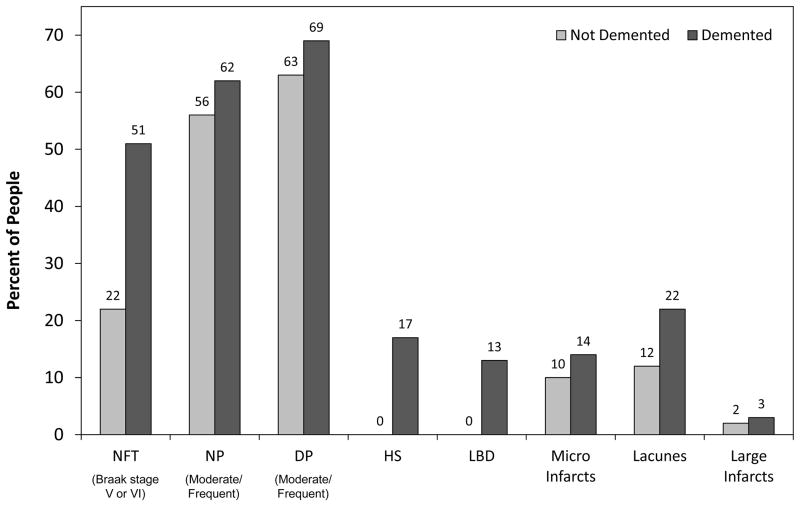
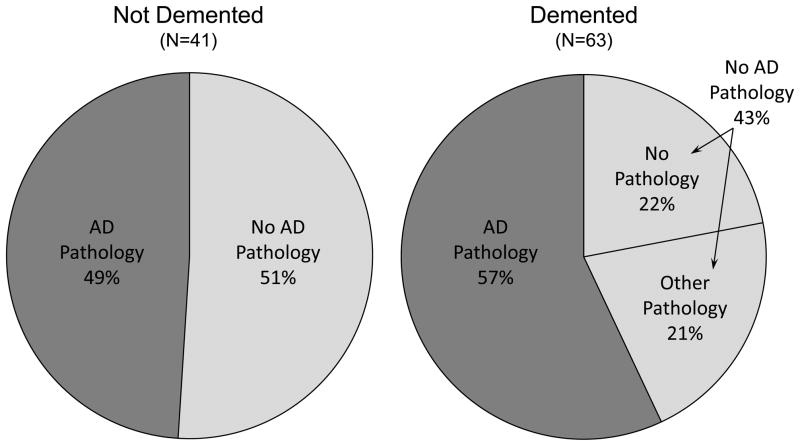
Population-based longitudinal clinicopathological studies provide an ideal opportunity to study a variety of risk and protective factors in relation to pathology associated with dementia in individuals who are representative of the general population. The 90+ Study is a population-based study designed specifically to study aging and dementia as well as its neuropathological correlates in participants 90 years of age and older. We present demographic and pathological data on the first 104 participants to come to autopsy from the brain donation component of the study, The 90+ Autopsy Study. Cognitive diagnosis was assigned according to diagnostic and statistical manual 4th edition criteria for dementia and neuropathological diagnoses were made according to the Consortium to Establish a Registry for Alzheimer's Disease protocol. Dementia was present in 61% of autopsied participants, the majority of whom were diagnosed with Alzheimer's disease (85%). Many different types of pathology typically associated with dementia were common in the oldest-old, and included neurofibrillary tangles, neuritic plaques, diffuse plaques, Lewy bodies, hippocampal sclerosis, and cerebral infarctions. Most types of pathology were more frequently found in participants suffering from dementia but there was extensive overlap in pathology among those with and without dementia. In addition, 22% of demented participants did not have sufficient pathology to account for their cognitive loss. Our results highlight the poor associations between these common pathological lesions and dementia in the oldest-old and the importance of considering many different types of pathology, possibly including some yet to be identified, in order to account for all dementias in the oldest-old.
Conflict of interest statement
The authors have no potential conflicts of interest relevant to the subject matter discussed in this manuscript.
Figures
References
-
- US Census Bureau. Annual Estimates of the Population by Sex and Five-Year Age Groups for the United States: April 1, 2000 to July 1, 2007 (NC-EST2007-01.xls) Population Division, U.S. Census Bureau; May 1, 2008. [Accessed: May 5, 2009]. Available from: http://www.census.gov/popest/national/asrh/NC-EST2007-sa.html.
-
- US Census Bureau. Projected Population by Single Year of Age, Sex, Race, and Hispanic Origin for the United States: July 1, 2000 to July 1, 2050. (NP2008_D1.xls) Population Division, U.S. Census Bureau; Aug 14, 2008. [Accessed: May 5, 2009]. Available from: http://www.census.gov/population/www/projections/downloadablefiles.html.
-
- Corrada MM, Brookmeyer R, Berlau D, Paganini-Hill A, Kawas CH. Prevalence of dementia after age 90: results from the 90+ study. Neurology. 2008;71:337–343. - PubMed