


Cortical representation of animate and inanimate objects in complex natural scenes
- PMID: 22472178
- PMCID: PMC3407302
- DOI: 10.1016/j.jphysparis.2012.02.001
Cortical representation of animate and inanimate objects in complex natural scenes
Abstract
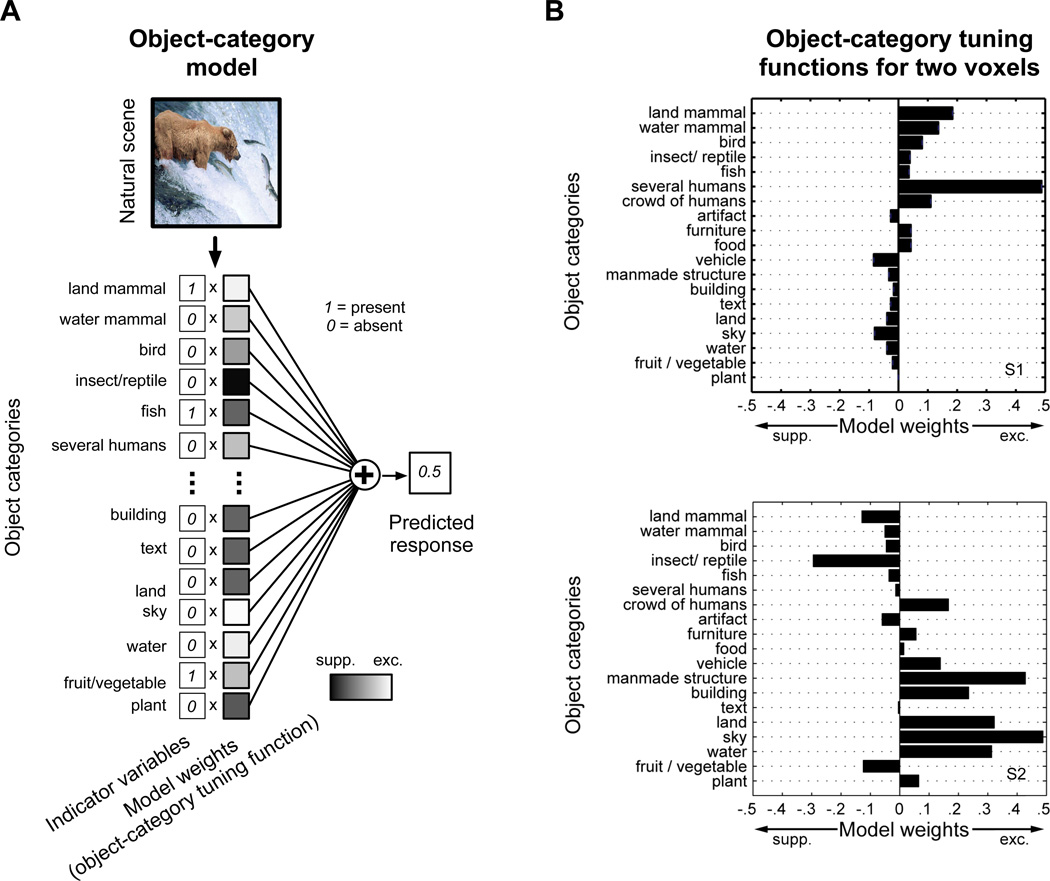
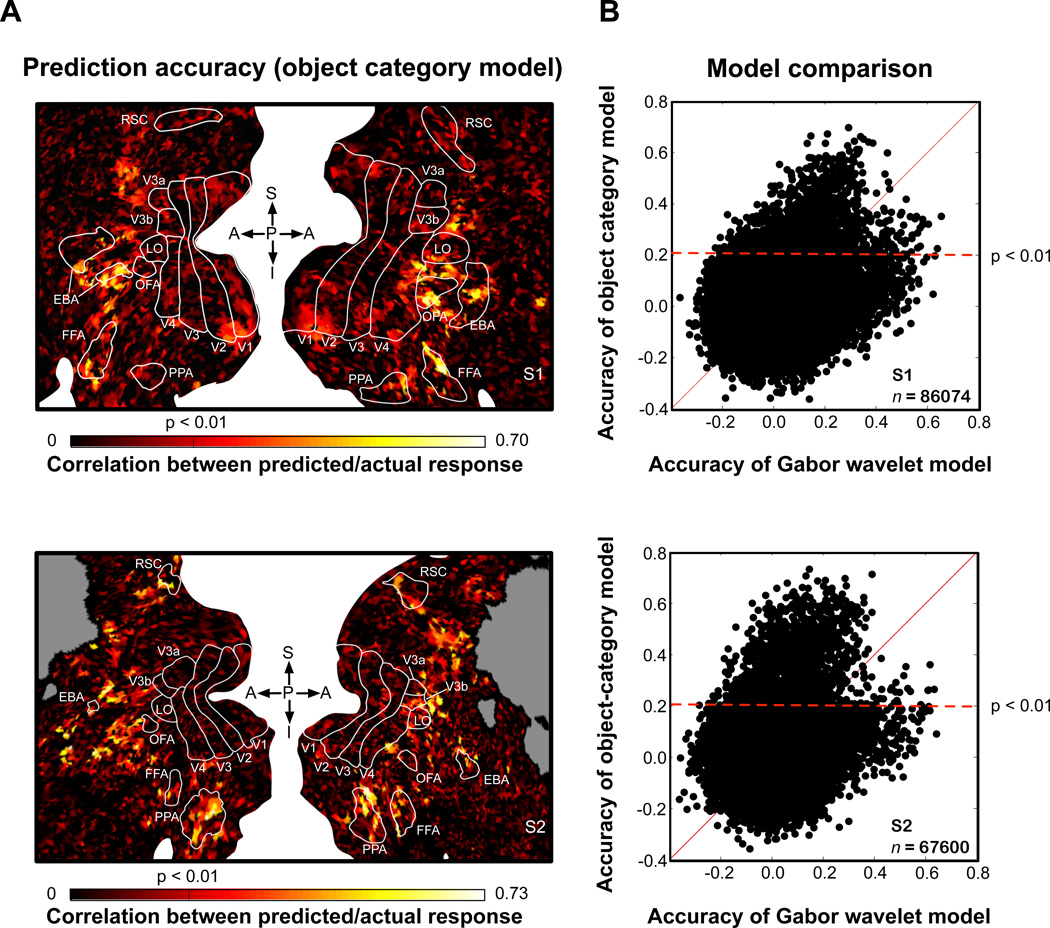
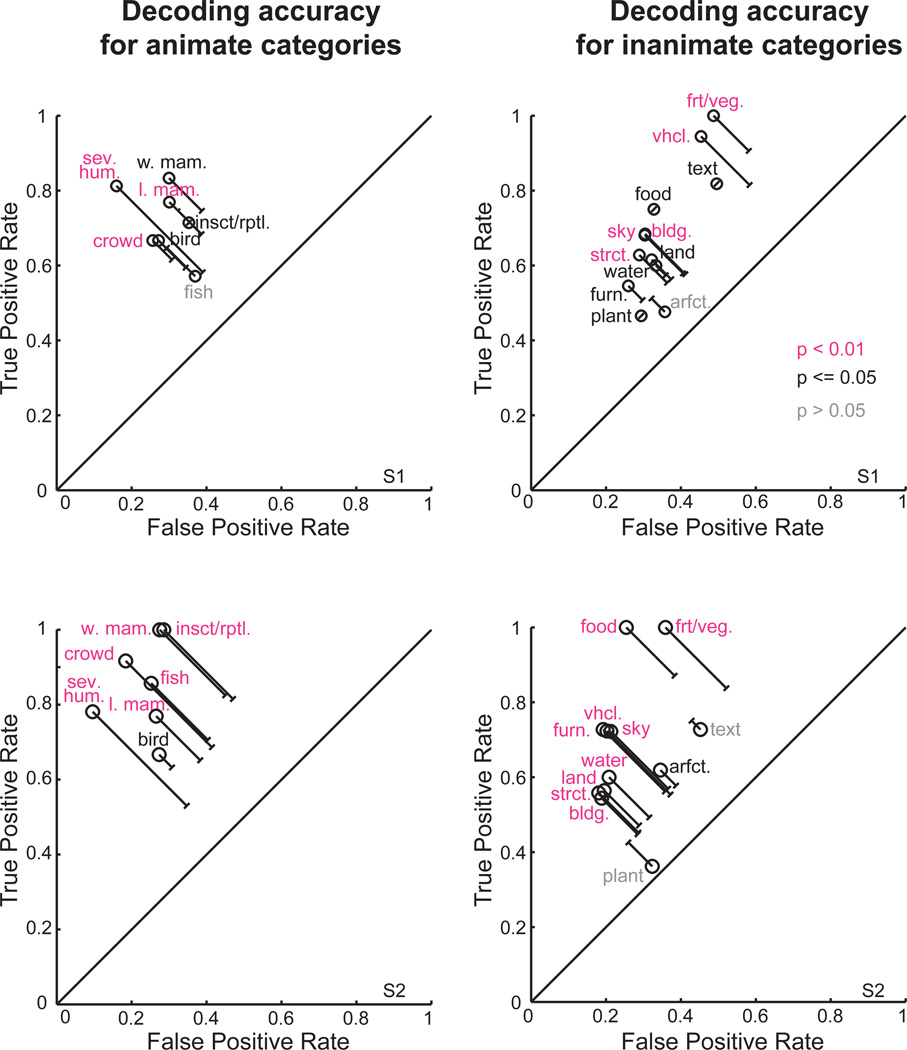
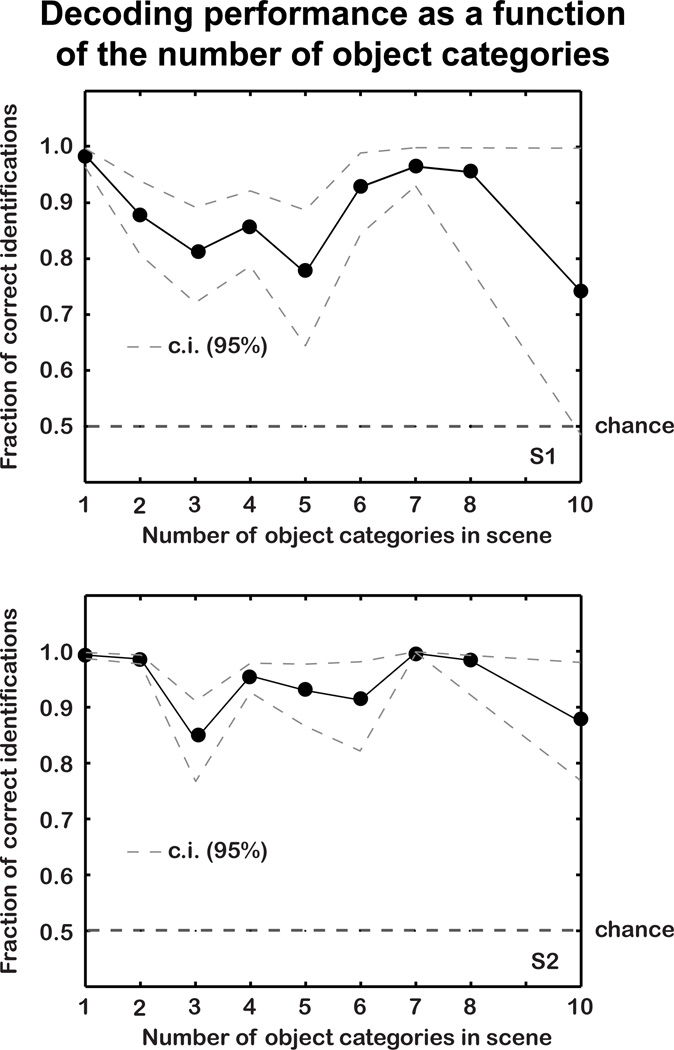
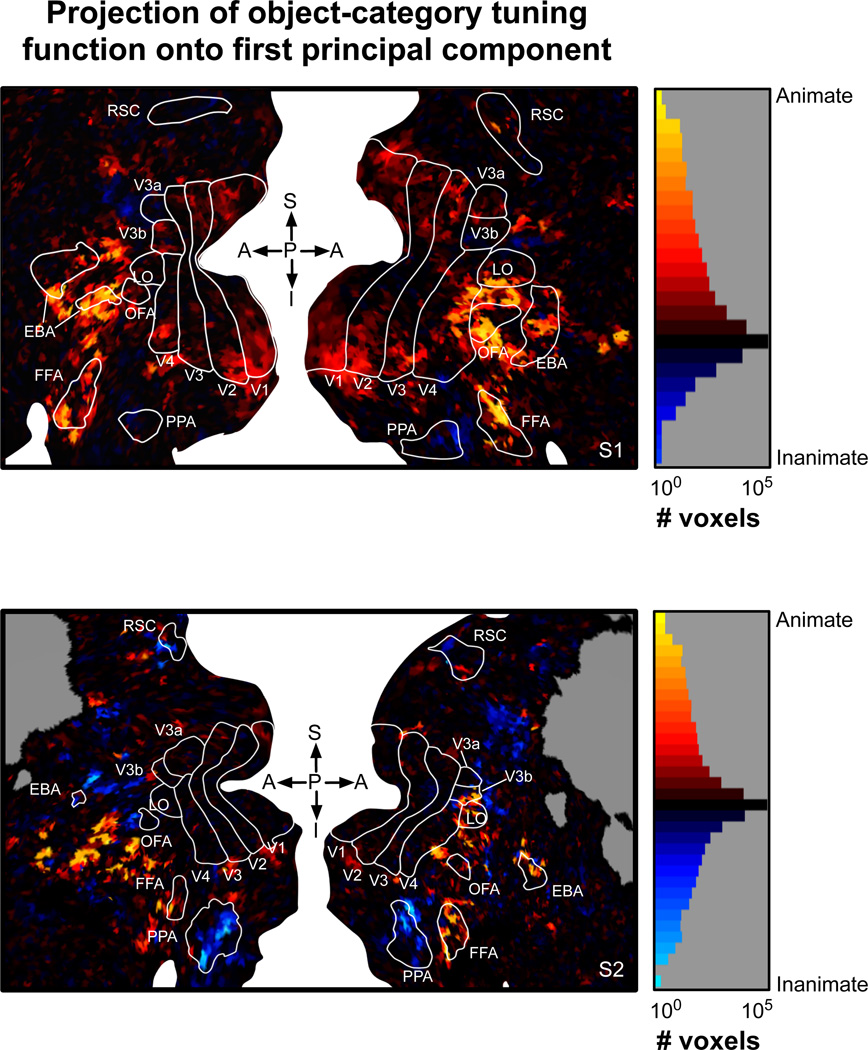
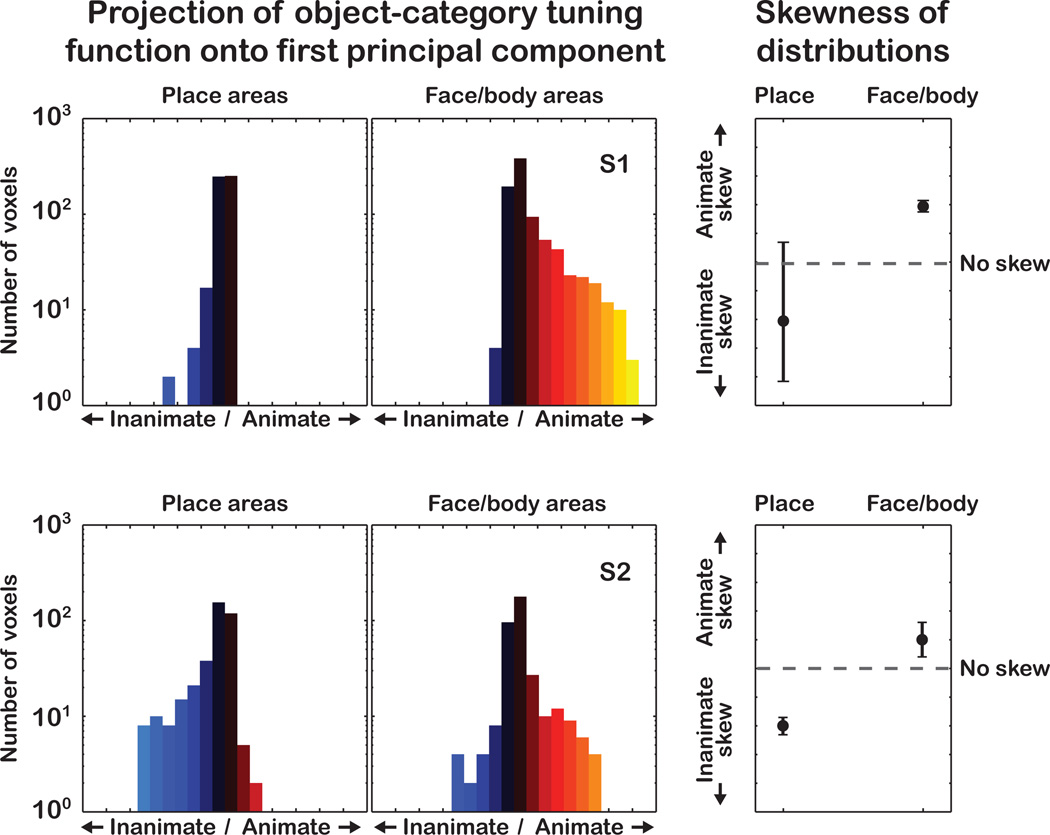
The representations of animate and inanimate objects appear to be anatomically and functionally dissociated in the primate brain. How much of the variation in object-category tuning across cortical locations can be explained in terms of the animate/inanimate distinction? How is the distinction between animate and inanimate reflected in the arrangement of object representations along the cortical surface? To investigate these issues we recorded BOLD activity in visual cortex while subjects viewed streams of natural scenes. We then constructed an explicit model of object-category tuning for each voxel along the cortical surface. We verified that these models accurately predict responses to novel scenes for voxels located in anterior visual areas, and that they can be used to accurately decode multiple objects simultaneously from novel scenes. Finally, we used principal components analysis to characterize the variation in object-category tuning across voxels. Remarkably, we found that the first principal component reflects the distinction between animate and inanimate objects. This dimension accounts for between 50 and 60% of the total variation in object-category tuning across voxels in anterior visual areas. The importance of the animate-inanimate distinction is further reflected in the arrangement of voxels on the cortical surface: voxels that prefer animate objects tend to be located anterior to retinotopic visual areas and are flanked by voxels that prefer inanimate objects. Our explicit model of object-category tuning thus explains the anatomical and functional dissociation of animate and inanimate objects.
Copyright © 2012 Elsevier Ltd. All rights reserved.
Conflict of interest statement
Conflict of Interest:
The authors declare no conflict of interest related to this work.
Figures


References
-
- Caramazza A, Shelton JR. Domain-specific knowledge systems in the brain: The animate-inanimate distinction. J. of Cogn. Neurosci. 1998;10:1–34. - PubMed
-
- David SV, Gallant JL. Predicting neuronal responses during natural vision. Network. 2005;16:239–260. - PubMed
-
- Downing PE, Chan AW-Y, Peelen MV, Dodds CM, Kanwisher N. Domain specificity in visual cortex. Cereb. Cortex. 2006;16:1453–1461. - PubMed
-
- Downing PE, Jiang Y, Shuman M, Kanwisher N. A cortical area selective for visual processing of the human body. Science. 2001;293:2470–2473. - PubMed
-
- Epstein R, Kanwisher N. A cortical representation of the local visual environment. Nature. 1998;392:598–601. - PubMed
Publication types
MeSH terms
Grants and funding
LinkOut - more resources
Full Text Sources
