


Natural history of irritable bowel syndrome in women and dysmenorrhea: a 10-year follow-up study
- PMID: 22474441
- PMCID: PMC3312222
- DOI: 10.1155/2012/534204
Natural history of irritable bowel syndrome in women and dysmenorrhea: a 10-year follow-up study
Abstract
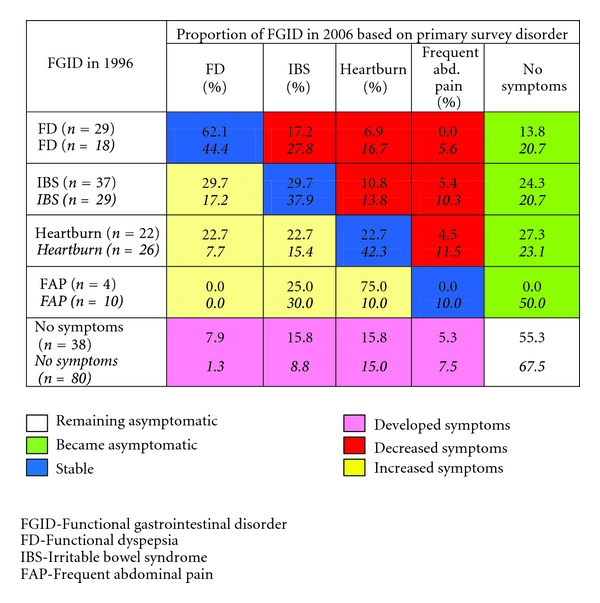
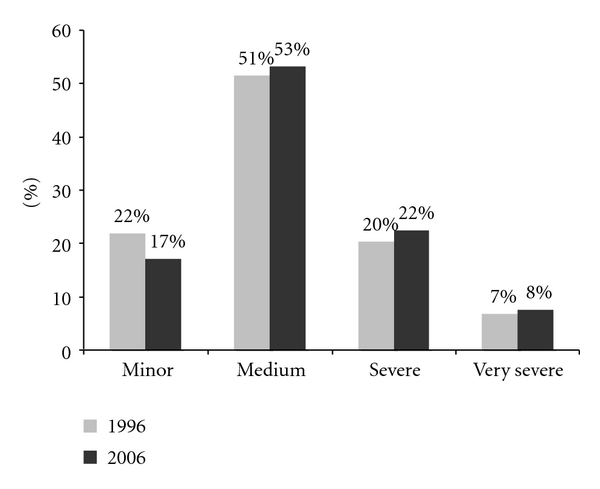
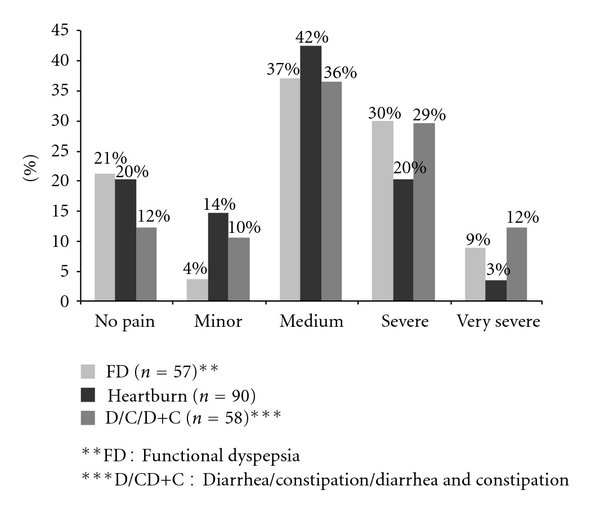
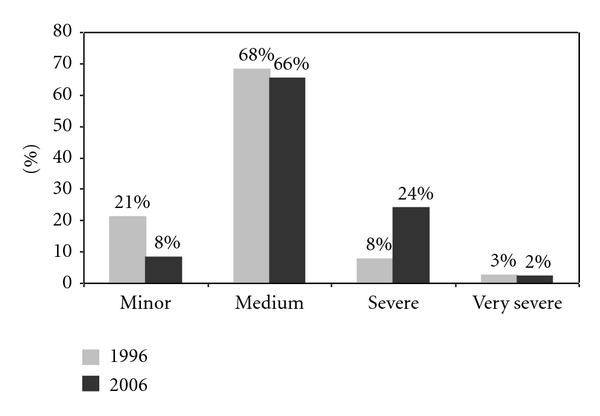
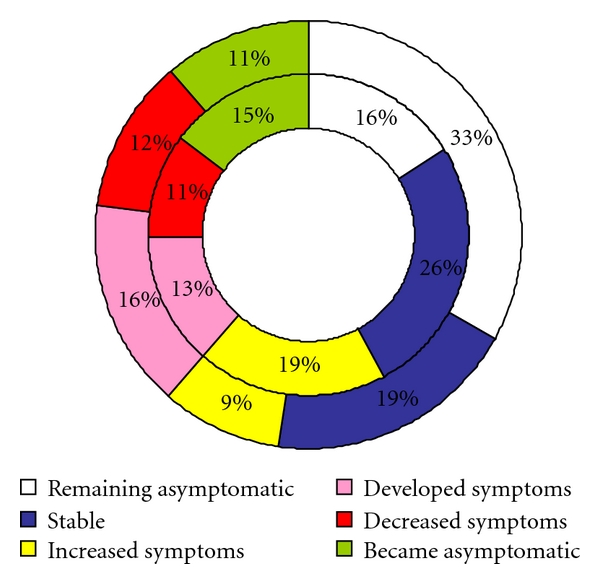
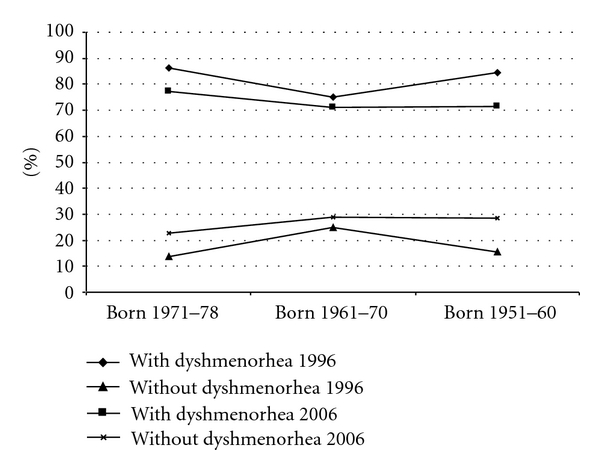
Background. Studies have shown that women are more likely to have irritable bowel syndrome (IBS) and more women seek healthcare because of IBS than men. Aim. We wanted to examine the natural history of IBS and dysmenorrhea in women over a 10-year period and to assess the change in IBS after menopause. Method. A population-based postal study. A questionnaire was mailed to the same age- and gender-stratified random sample of the Icelandic population aged 18-75 in 1996 and again in 2006. Results. 77% premenopausal women had dysmenorrhea in the year 1996 and 74% in 2006. 42% of women with dysmenorrhea had IBS according to Manning criteria in the year 2006 and 49% in 1996. 26% of women with dysmenorrhea had IBS according to Rome III 2006 and 11% in the year 1996. In 2006 30% women had severe or very severe dysmenorrhea pain severity. More women (27%) reported severe abdominal pain after menopause than before menopause 11%. Women without dysmenorrhea were twice more likely to remain asymptomatic than the women with dysmenorrhea. Women with dysmenorrhea were more likely to have stable symptoms and were twice more likely to have increased symptoms. Conclusion. Women with IBS are more likely to experience dysmenorrhea than women without IBS which seems to be a part of the symptomatology in most women with IBS. IBS symptom severity seems to increase after menopause.
Figures
References
-
- A. Drossman D. The Functional Gastrointestinal Disorders. 3rd edition. Degnon Associates; 2006.
-
- Hungin APS, Chang L, Locke GR, Dennis EH, Barghout V. Irritable bowel syndrome in the United States: prevalence, symptom patterns and impact. Alimentary Pharmacology and Therapeutics. 2005;21(11):1365–1375. - PubMed
-
- Chial HJ, Camilleri M. Gender differences in irritable bowel syndrome. Journal of Gender-Specific Medicine. 2002;5(3):37–45. - PubMed
-
- Heitkemper M, Jarrett M. Irritable bowel syndrome: does gender matter? Journal of Psychosomatic Research. 2008;64(6):583–587. - PubMed
-
- Herman J, Pokkunuri V, Braham L, Pimentel M. Gender distribution in irritable bowel syndrome is proportional to the severity of constipation relative to diarrhea. Gender Medicine. 2010;7(3):240–246. - PubMed
LinkOut - more resources
Full Text Sources
