The effect of intravenous labetalol administration on hemodynamic responses during desflurane inhalation
- PMID: 22474551
- PMCID: PMC3315654
- DOI: 10.4097/kjae.2012.62.3.245
The effect of intravenous labetalol administration on hemodynamic responses during desflurane inhalation
Abstract
Background: Inspired concentrations of desflurane ≥ 1 minimum alveolar anesthetic concentration (MAC) have been related to sympathetic stimulation such as hypertension and tachycardia. The current study examined whether labetalol, an α(1) and β-adrenergic antagonist would blunt these hemodynamic responses.
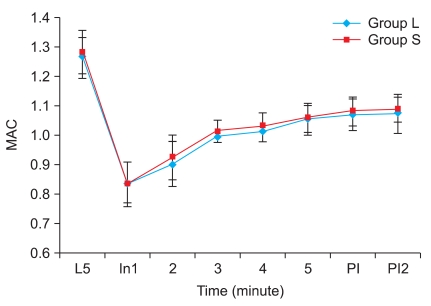
Methods: Fifty-four ASA physical status I patients, aged 20-60 years, were enrolled in this study. The patients were randomly divided into 2 groups. The breathing circuit was primed with an end-tidal desflurane concentration of 1.2 MAC in 6 L/min O(2). Normal saline 5 ml or labetalol 0.3 mg/kg was injected into groups S and L respectively. After 5 minutes, anesthesia was induced with intravenous etomidate 0.2 mg/kg and vecuronium 0.1 mg/kg. Each patient inhaled desflurane through a tight fitting facemask. Heart rate (HR), systolic blood pressure (SBP), diastolic blood pressure (DBP), mean arterial pressure (MAP) and end-tidal concentration of desflurane (et-des) were measured at 5 minutes after saline or labetalol injection (baseline) and every 1 minute for 5 minutes after desflurane inhalation and for 2 minutes after intubation.
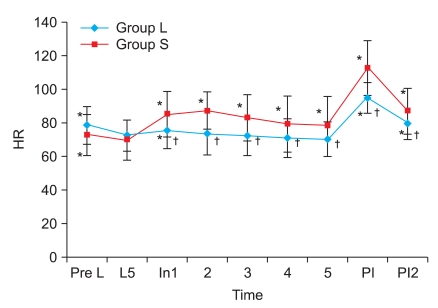
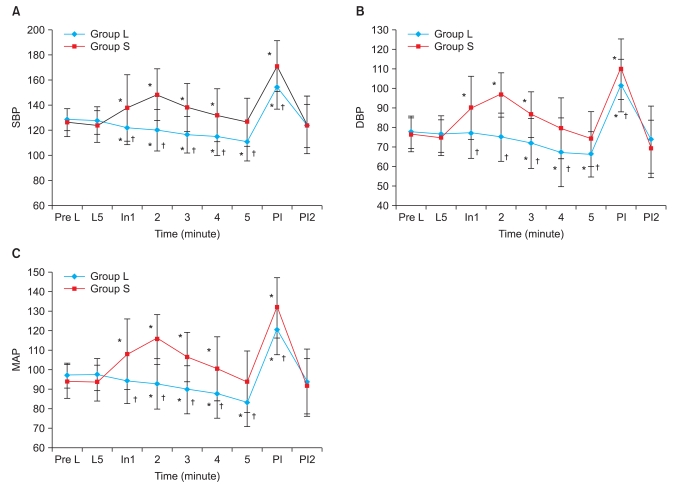
Results: In the saline injection group (group S), desflurane inhalation increased heart rate and blood pressure, while labetalol 0.3 mg/kg attenuated the heart rate and blood pressure increase in group L. After tracheal intubation, heart rate and blood pressure were significantly lower in group L than in group S.
Conclusions: These results demonstrate that administration of intravenous labetalol is effective in attenuating tracheal intubation and desflurane-induced hemodynamic responses.
Keywords: Desflurane; Hypertension; Labetalol; Tachycardia.
Figures
References
-
- Weiskopf RB, Eger EI, 2nd, Noorani M, Daniel M. Fentanyl, esmolol, and clonidine blunt the transient cardiovascular stimulation induced by desflurane in humans. Anesthesiology. 1994;81:1350–1355. - PubMed
-
- Helman JD, Leung JM, Bellows WH, Pineda N, Roach GW, Reeves JD, 3rd, et al. The risk of myocardial ischemia in patients receiving desflurane versus sufentanil anesthesia for coronary artery bypass graft surgery. Anesthesiology. 1992;77:47–62. - PubMed
-
- Kim EA, Lee SS, Lim HS, Ko SH, Lee JR, Lee SK, et al. Comparison of desflurane-induced circulatory responses by the rate of increase in inhaled desflurane concentration. Korean J Anesthesiol. 2005;49:466–471.
-
- Gormley WP, Murray JM, Trinick TR. Intravenous lidocaine does not attenuate the cardiovascular and catecholamine response to a rapid increase in desflurane concentration. Anesth Analg. 1996;82:358–361. - PubMed
-
- Kanto J, Allonen H, Kleimola T, Mäntylä R. Pharmacokinetics of labetalol in healthy volunteers. Int J Clin Pharmacol Ther Toxicol. 1981;19:41–44. - PubMed
LinkOut - more resources
Full Text Sources