Tracheal rupture after endotracheal intubation - A report of three cases -
- PMID: 22474557
- PMCID: PMC3315660
- DOI: 10.4097/kjae.2012.62.3.277
Tracheal rupture after endotracheal intubation - A report of three cases -
Abstract
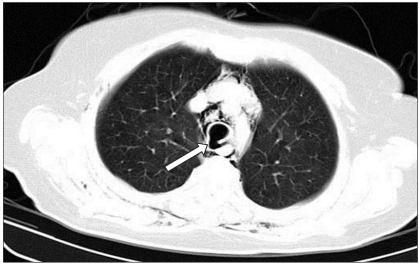
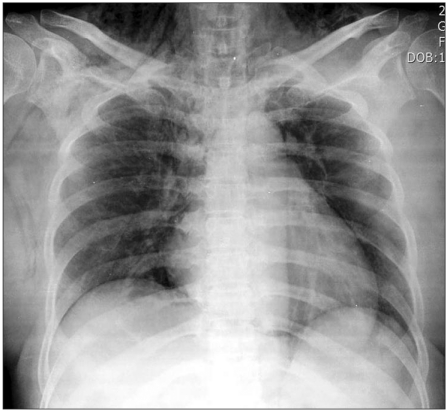
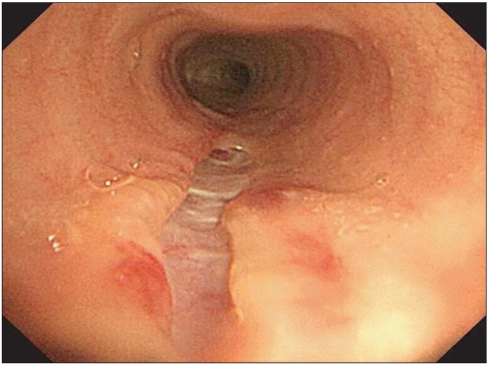
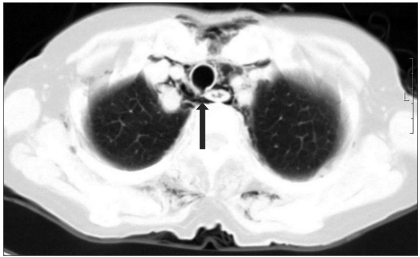
Tracheal rupture is a rare but serious complication that occurs after endotracheal intubation. It usually presents as a linear lesion in the membranous wall of the trachea, and is more prevalent in women and patients older than 50 years. The clinical manifestations of tracheal injury include subcutaneous emphysema and respiratory distress. We report the cases of three female patients of old age presenting tracheal rupture after endotracheal intubation. Two cases received surgical repair without complication and one recovered uneventfully after conservative management. We presume that the tracheal injuries were caused by over-inflation of cuff and sudden movement of the tube by positional change. Therefore, we recommend cuff pressure monitoring during general anesthesia and minimized movement of the head and neck at positional change.
Keywords: Airway; Intubation; Rupture; Subcutaneous emphysema; Trachea.
Figures
References
-
- Borasio P, Ardissone F, Chiampo G. Post-intubation tracheal rupture. A report on ten cases. Eur J Cardiothorac Surg. 1997;12:98–100. - PubMed
-
- Carbognani P, Bobbio A, Cattelani L, Internullo E, Caporale D, Rusca M. Management of postintubation membranous tracheal rupture. Ann Thorac Surg. 2004;77:406–409. - PubMed
-
- Marty-Ane CH, Picard E, Jonquet O, Mary H. Membranous tracheal rupture after endotracheal intubation. Ann Thorac Surg. 1995;60:1367–1371. - PubMed
-
- Jougon J, Ballester M, Choukroun E, Dubrez J, Reboul G, Velly JF. Conservative treatment for postintubation tracheobronchial rupture. Ann Thorac Surg. 2000;69:216–220. - PubMed
LinkOut - more resources
Full Text Sources