


Translational science and evidence-based healthcare: a clarification and reconceptualization of how knowledge is generated and used in healthcare
- PMID: 22474583
- PMCID: PMC3306933
- DOI: 10.1155/2012/792519
Translational science and evidence-based healthcare: a clarification and reconceptualization of how knowledge is generated and used in healthcare
Abstract
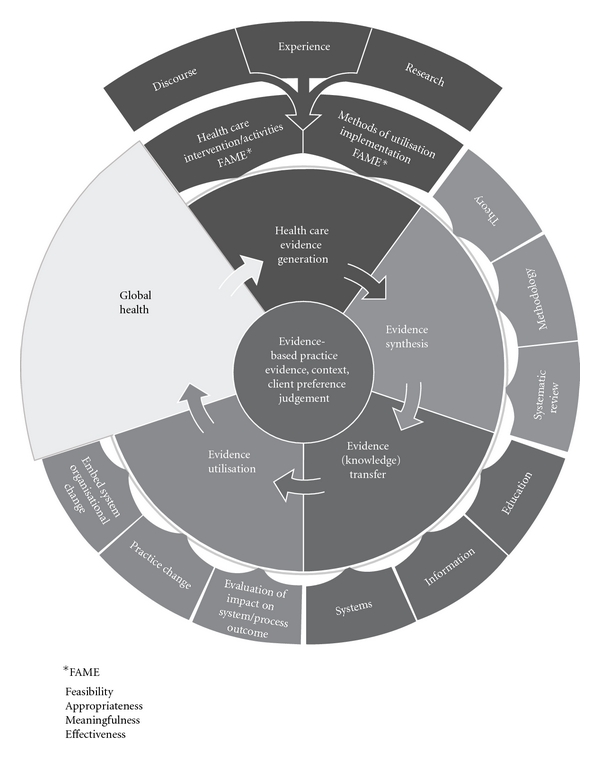
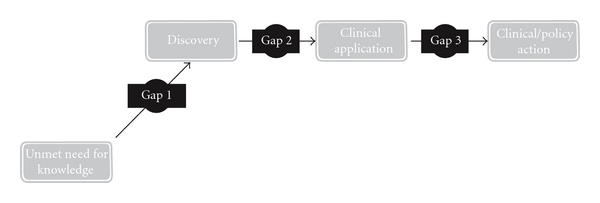
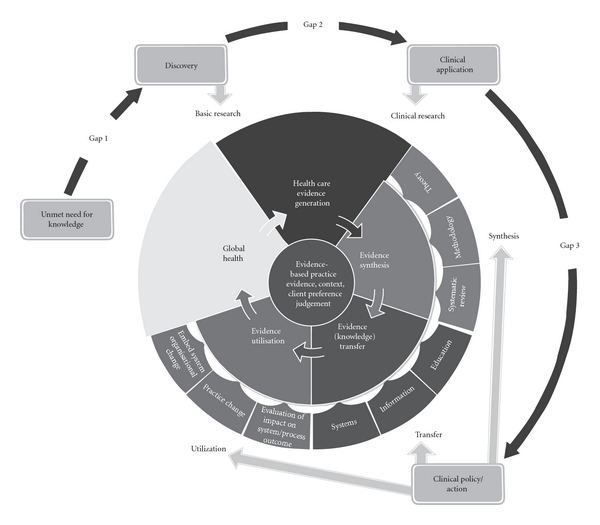
The importance of basing health policy and health care practices on the best available international evidence ("evidence-based health care") and on translating knowledge or evidence into action ("translation science" or "translational research") is increasingly being emphasized across all health sectors inmost countries. Evidence-based healthcare is a process that identifies policy or clinical questions and addresses these questions by generating knowledge and evidence to effectively and appropriately deliver healthcare in ways that are effective, feasible, and meaningful to specific populations, cultures, and settings. This evidence is then appraised, synthesized, and transferred to service delivery settings and health professionals who then utilize it and evaluate its impact on health outcomes, health systems, and professional practice. Many of the common theories that address this translational process place it apart from the evidence-based practice cycle and most recognise only two translational gaps. This paper seeks to clarify the nature of evidence-based healthcare and translation science and proposes a reconceptualization that both brings together these two dominant ideas in modern healthcare and asserts the existence of a third fundamental gap that is rarely addressed the gap between knowledge need and discovery.
Figures

References
-
- Stevens KR. ACE Star Model of EBP: Knowledge Transformation. Academic Centre for Evidence-based Practice, September 2005, http://www.acestar.uthscsa.edu/
-
- Titler MG, Everett LQ. Translating research into practice. Considerations for critical care investigators. Critical Care Nursing Clinics of North America. 2001;13(4):587–604. - PubMed
-
- Stetler CB, Marram G. Evaluating research findings for applicability in practice. Nursing Outlook. 1976;24(9):559–563. - PubMed
-
- Stetler CB. Nurses and research. Responsibility and involvement. NITA. 1983;6(3):207–212. - PubMed
LinkOut - more resources
Full Text Sources
Miscellaneous
