


The expected emotional benefits of influenza vaccination strongly affect pre-season intentions and subsequent vaccination among healthcare personnel
- PMID: 22475860
- PMCID: PMC5901693
- DOI: 10.1016/j.vaccine.2012.03.062
The expected emotional benefits of influenza vaccination strongly affect pre-season intentions and subsequent vaccination among healthcare personnel
Abstract
Background: The relative importance of different attitudes in predicting vaccination among healthcare personnel (HCP) is unclear. We hypothesized that HCP who feel at risk without vaccination or say they would regret not getting vaccinated would be more likely to get vaccinated than HCP who do not expect these emotional benefits.
Methods: A prospective cohort of 1544 HCP with direct patient care was enrolled from September 18 to December 18, 2010 at Scott & White Healthcare in Texas and Kaiser Permanente Northwest in Oregon and Washington. An Internet-based questionnaire assessed pre-season intention to be vaccinated and included 12 questions on attitudes about vaccination: single-item measures of perceived susceptibility and vaccine effectiveness, 5 items that were summed to form a concerns about vaccine scale, and 5 items summed to form an emotional benefits of vaccination scale. Influenza vaccination status for the 2010-2011 season and for 5 prior seasons was confirmed by medical record extraction.
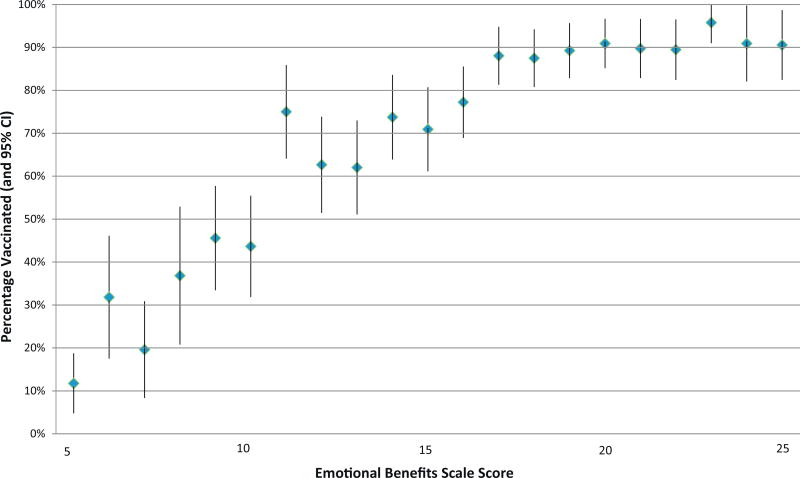
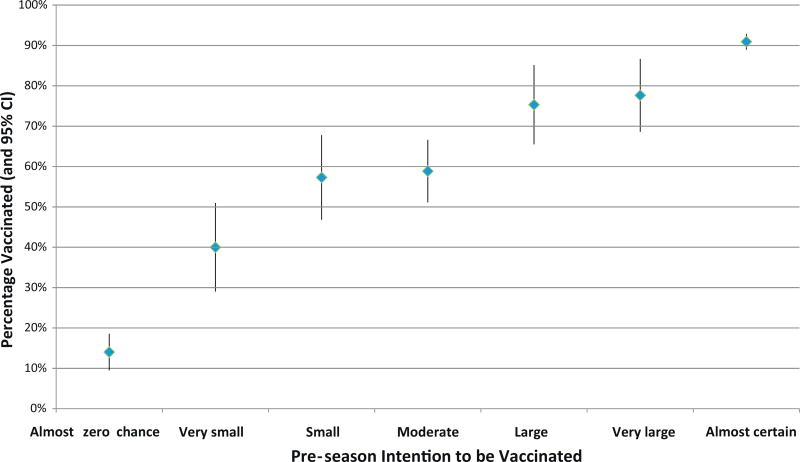
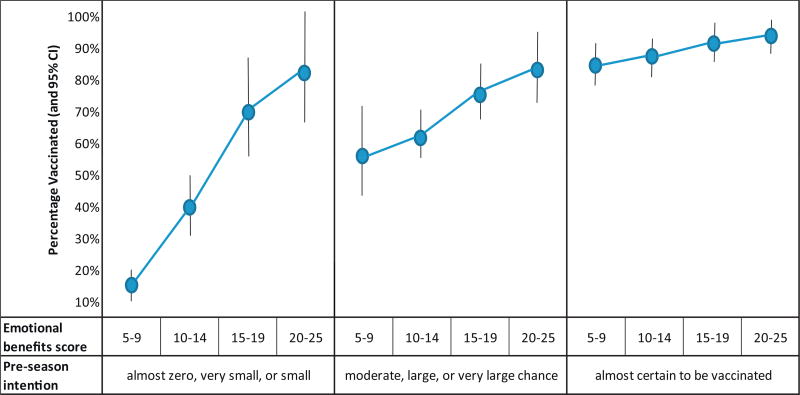
Results: There were significant differences between vaccinated and unvaccinated HCP on all attitude items; 72% of vaccinated HCP agreed that they "worry less about getting the flu" if vaccinated, compared to only 26% of the unvaccinated (odds ratio=7.4, 95% confidence interval=5.8-9.5). In a multivariate model, the emotional benefits scale was the strongest predictor of 2010-2011 seasonal influenza vaccination, after adjusting for other attitude measures, prior vaccination history, and pre-season intention to be vaccinated. The predictive value of the emotional benefits scale was strongest for HCP with low pre-season intention to be vaccinated, where HCP vaccine receipt was 15% versus 83% for those with low versus high scores on the emotional benefits scale.
Conclusions: The expected emotional benefits of vaccination strongly affect seasonal influenza vaccination among HCP, even after taking into account other attitudes, pre-season intentions, and prior vaccination history. These attitudes are promising targets for future vaccination campaigns.
Published by Elsevier Ltd.
Figures
References
-
- Hollmeyer HG, Hayden F, Poland G, Buchholz U. Influenza vaccination of health care workers in hospitals—a review of studies on attitudes and predictors. Vaccine. 2009;27(30):3935–44. - PubMed
-
- Pearson ML, Bridges CB, Harper SA. Influenza vaccination of health-care personnel: recommendations of the Healthcare Infection Control Practices Advisory Committee (HICPAC) and the Advisory Committee on Immunization Practices (ACIP) MMWR Recomm Rep. 2006;55(RR-2):1–16. - PubMed
-
- Hofmann F, Ferracin C, Marsh G, Dumas R. Influenza vaccination of healthcare workers: a literature review of attitudes and beliefs. Infection. 2006;34(3):142–7. - PubMed
-
- Fiore AE, Uyeki TM, Broder K, Finelli L, Euler GL, Singleton JA, et al. Prevention and control of influenza with vaccines: recommendations of the Advisory Committee on Immunization Practices (ACIP), 2010. MMWR Recomm Rep. 2010;59(RR-8):1–62. - PubMed
-
- Poland GA, Tosh P, Jacobson RM. Requiring influenza vaccination for health care workers: seven truths we must accept. Vaccine. 2005;23(17–18):2251–5. - PubMed
Publication types
MeSH terms
Substances
Grants and funding
LinkOut - more resources
Full Text Sources
Medical
Miscellaneous
