


Trends in Women's Participation at the Meetings of the Association for Behavior Analysis: 1975-2005
- PMID: 22478496
- PMCID: PMC2203634
- DOI: 10.1007/BF03392154
Trends in Women's Participation at the Meetings of the Association for Behavior Analysis: 1975-2005
Abstract
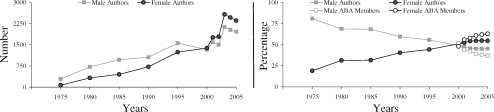
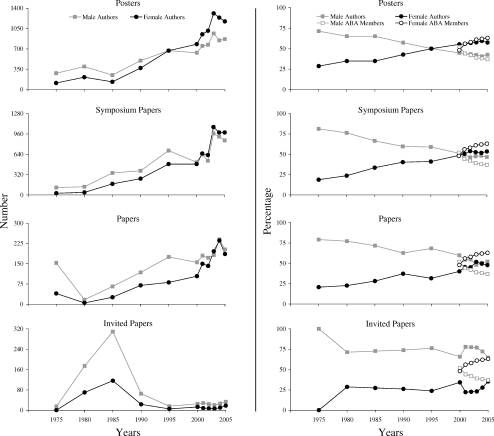
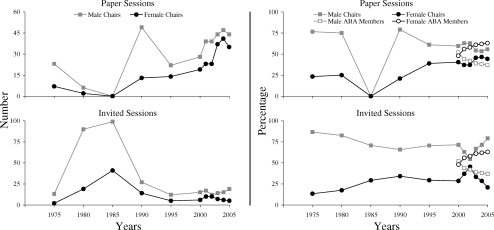
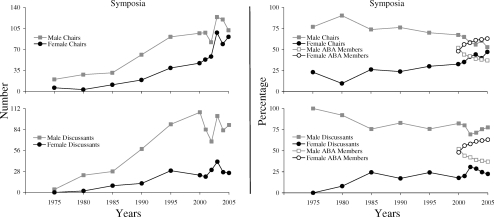
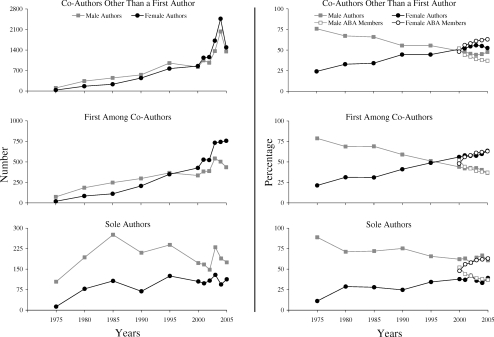
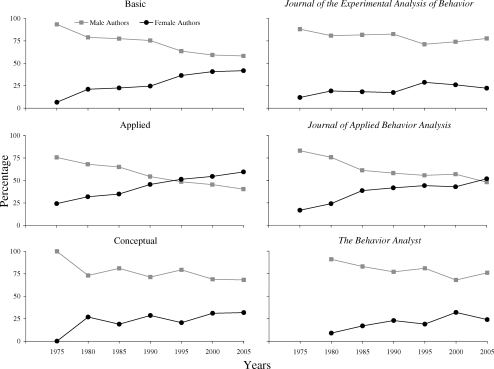
We examined women's participation, relative to men's, at the annual meetings of the Association for Behavior Analysis (ABA) between 1975 and 2005. Among our findings are upward trends in female presenters across formats (e.g., posters), types of authorship (e.g., first authors), and specialty areas (e.g., autism). Where women have attained parity, however, they are still often underrepresented, given their percentage of membership. Women also participate less than men as sole and invited authors and discussants and in the domains of basic research and conceptual analysis, but participate more than men in the applied domain. Data from the Journal of the Experimental Analysis of Behavior and the Journal of Applied Behavior Analysis show parallel but delayed trends toward parity in basic and applied research, whereas data from The Behavior Analyst show only modest gains in the conceptual domain. We discuss the gender disparities in ABA's more prestigious categories of participation (e.g., invited addresses) and across its content domains, as well as in science in general, and the role of social and cultural factors in producing the disparities and how behavior analysts might aid in correcting them.
Figures
References
-
- American Association of University Women Educational Foundation. How schools shortchange girls: A study of major findings in education. Washington, DC: Author; 1992.
-
- American Association of University Women Educational Foundation. Under the microscope: A decade of gender equity projects in the sciences. Washington, DC: Author; 2004.
-
- American Psychological Association. Women in academe: Two steps forward, one step back. 2000.
-
- American Psychological Association. 2002. Directory survey.
-
- Barry H, Bacon M.K, Child I.L. A cross-cultural survey of some sex differences in socialization. Journal of Abnormal and Social Psychology. 1957;55:327–332. - PubMed
LinkOut - more resources
Full Text Sources