


Sex matters during adolescence: testosterone-related cortical thickness maturation differs between boys and girls
- PMID: 22479458
- PMCID: PMC3315517
- DOI: 10.1371/journal.pone.0033850
Sex matters during adolescence: testosterone-related cortical thickness maturation differs between boys and girls
Abstract
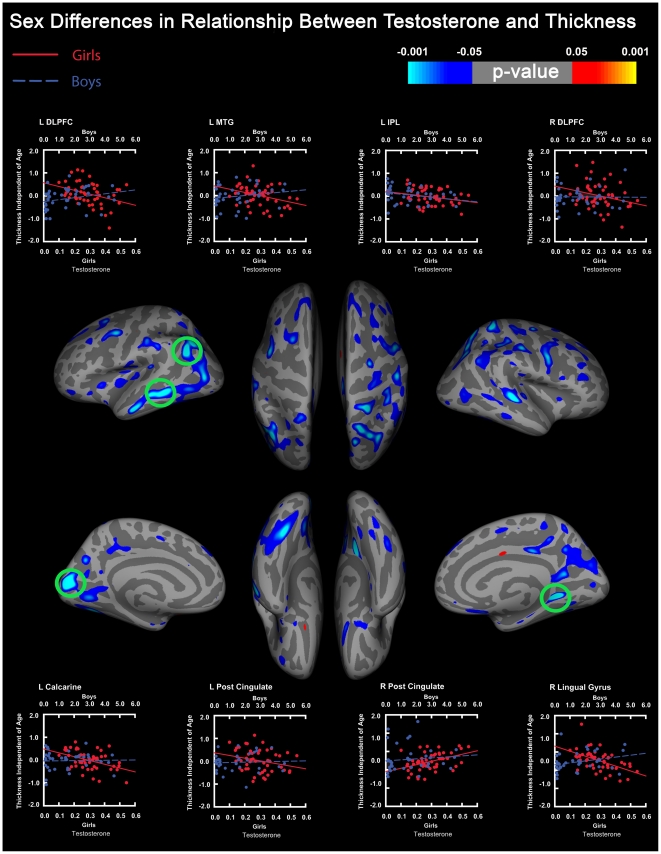
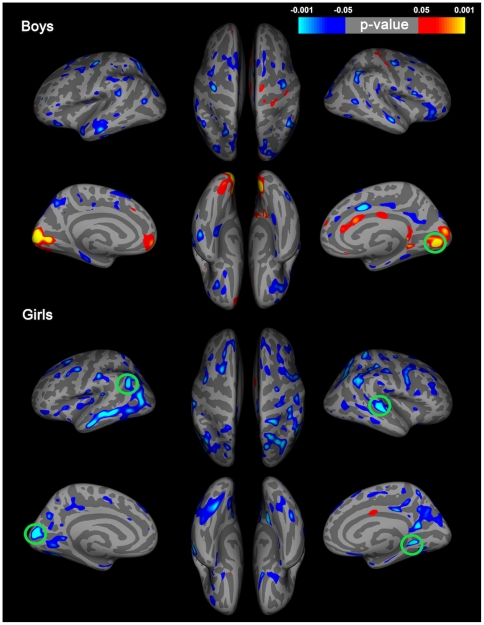
Age-related changes in cortical thickness have been observed during adolescence, including thinning in frontal and parietal cortices, and thickening in the lateral temporal lobes. Studies have shown sex differences in hormone-related brain maturation when boys and girls are age-matched, however, because girls mature 1-2 years earlier than boys, these sex differences could be confounded by pubertal maturation. To address puberty effects directly, this study assessed sex differences in testosterone-related cortical maturation by studying 85 boys and girls in a narrow age range and matched on sexual maturity. We expected that testosterone-by-sex interactions on cortical thickness would be observed in brain regions known from the animal literature to be high in androgen receptors. We found sex differences in associations between circulating testosterone and thickness in left inferior parietal lobule, middle temporal gyrus, calcarine sulcus, and right lingual gyrus, all regions known to be high in androgen receptors. Visual areas increased with testosterone in boys, but decreased in girls. All other regions were more impacted by testosterone levels in girls than boys. The regional pattern of sex-by-testosterone interactions may have implications for understanding sex differences in behavior and adolescent-onset neuropsychiatric disorders.
Conflict of interest statement
Figures
References
-
- Yurgelun-Todd D. Emotional and cognitive changes during adolescence. Curr Opin Neurobiol. 2007;17:251–257. - PubMed
-
- Dahl RE, Gunnar MR. Heightened stress responsiveness and emotional reactivity during pubertal maturation: implications for psychopathology. Dev Psychopathol. 2009;21:1–6. - PubMed
-
- Gaub M, Carlson CL. Gender differences in ADHD: a meta-analysis and critical review. J Am Acad Child Adolesc Psychiatry. 1997;36:1036–1045. - PubMed
-
- Weissman MM, Bland R, Joyce PR, Newman S, Wells JE, et al. Sex differences in rates of depression: cross-national perspectives. J Affect Disord. 1993;29:77–84. - PubMed
-
- Halpern DF, Tan U. Stereotypes and steroids: using a psychobiosocial model to understand cognitive sex differences. Brain Cogn. 2001;45:392–414. - PubMed
