


The anticancer effects of resveratrol: modulation of transcription factors
- PMID: 22482424
- PMCID: PMC3349800
- DOI: 10.1080/01635581.2012.667862
The anticancer effects of resveratrol: modulation of transcription factors
Abstract
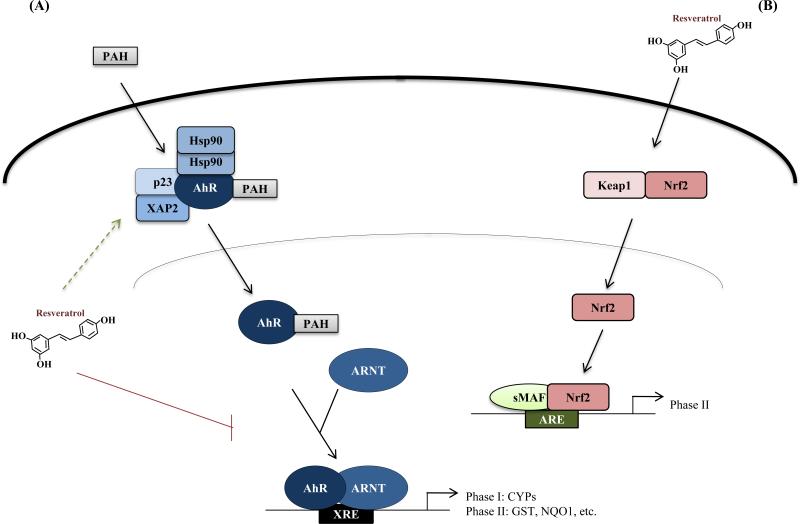
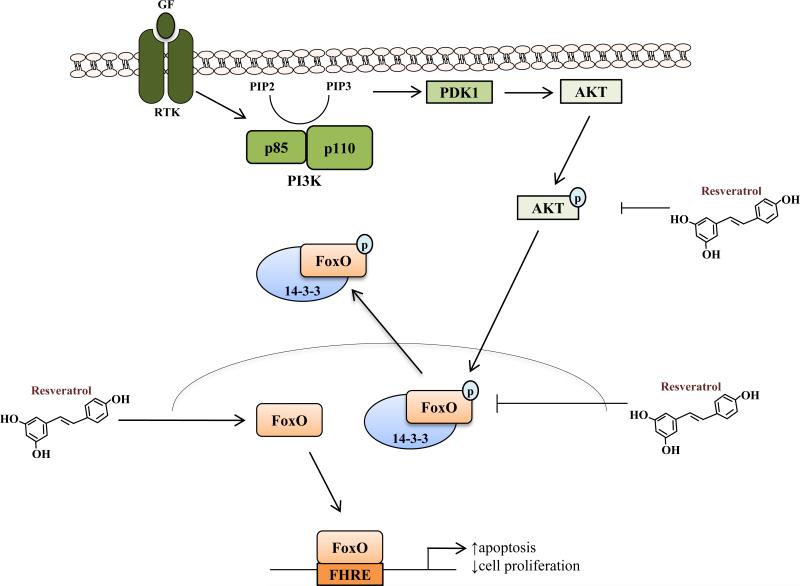
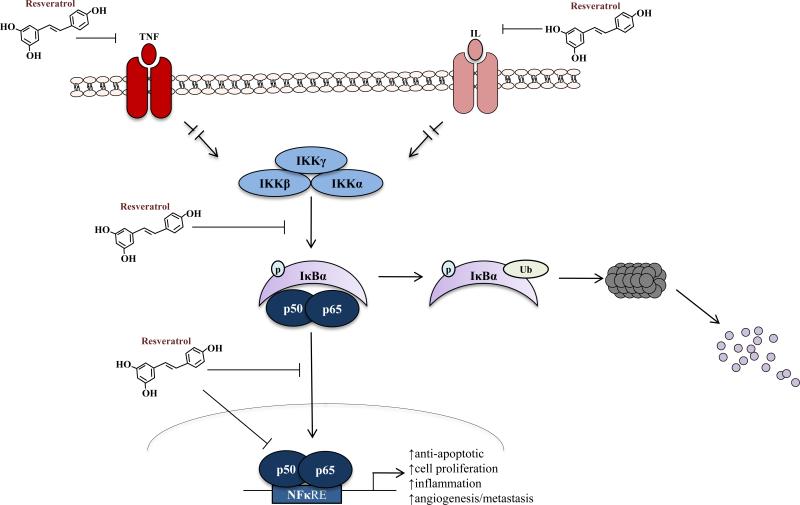
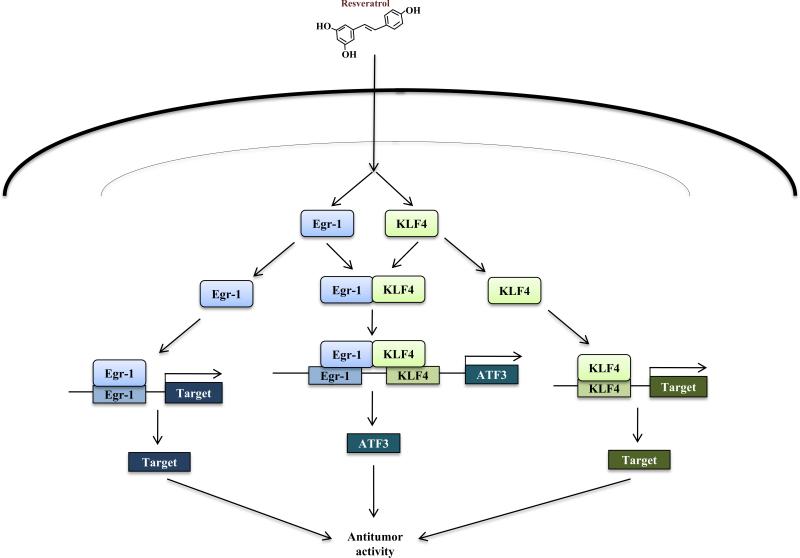
Resveratrol (3, 4', 5-trihydroxystilbene), a naturally occurring phytoalexin readily available in the diet, is reported to possess both chemopreventive and chemotherapeutic activities in several cancers. However, despite the identification of numerous molecular targets, the underlying mechanisms involved in the anticancer activities of resveratrol are not completely understood. Resveratrol is postulated to function as a potential signaling pathway modulator and, as such, is demonstrated to affect a multitude of signal transduction pathways associated with tumorigenesis and/or carcinogenesis; it is likely that this collective activity, rather than just a single effect, may play an important role in the anticancer properties of resveratrol. Since transcription factors control the expression of many genes, the elucidation of molecular targets of resveratrol involved in transcriptional regulation is necessary to better understand how this dietary phytochemical affects chemopreventive and chemotherapeutic processes. As a result, investigators have increasingly searched for and examined possible targets of resveratrol. In this review, we summarize the current knowledge on molecular targets, specifically transcription factors, that contribute to the observed anticancer effects of resveratrol related to 1) inhibition of carcinogenic activation and induction of carcinogen detoxification, 2) induction of growth arrest and apoptosis, and 3) suppression of proinflammatory signaling pathways related to cancer progression.
Figures
References
-
- Surh Y-J. Cancer chemoprevention with dietary phytochemicals. Nat Rev Cancer. 2003;3:768–780. - PubMed
-
- Baur JA, Sinclair DA. Therapeutic potential of resveratrol: the in vivo evidence. Nat Rev Drug Discov. 2006;5:493–506. - PubMed
-
- Jang M, Cai L, Udeani GO, Slowing KV, Thomas CF, et al. Cancer chemopreventive activity of resveratrol, a natural product derived from grapes. Science. 1997;275:218–220. - PubMed
-
- Kundu JK, Surh Y-J. Cancer chemopreventive and therapeutic potential of resveratrol: Mechanistic perspectives. Cancer Lett. 2008;269:243–261. - PubMed
-
- Bishayee A. Cancer prevention and treatment with resveratrol: from rodent studies to clinical trials. Cancer Prev Res. 2009;2:409–418. - PubMed
Publication types
MeSH terms
Substances
Grants and funding
LinkOut - more resources
Full Text Sources
Research Materials
