


A generalized form of context-dependent psychophysiological interactions (gPPI): a comparison to standard approaches
- PMID: 22484411
- PMCID: PMC3376181
- DOI: 10.1016/j.neuroimage.2012.03.068
A generalized form of context-dependent psychophysiological interactions (gPPI): a comparison to standard approaches
Abstract
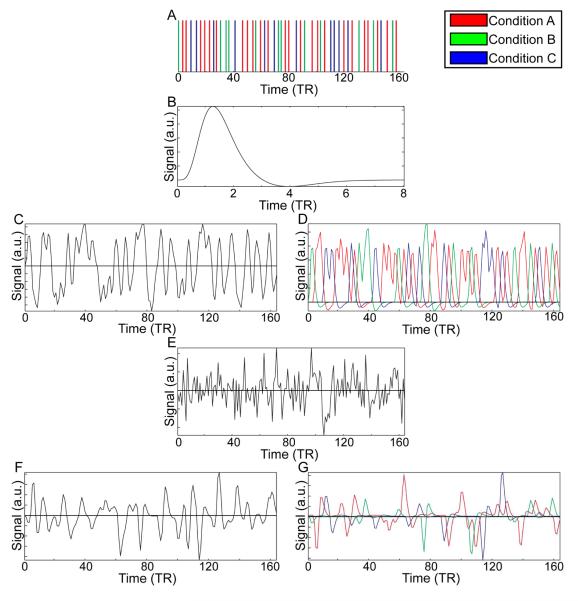
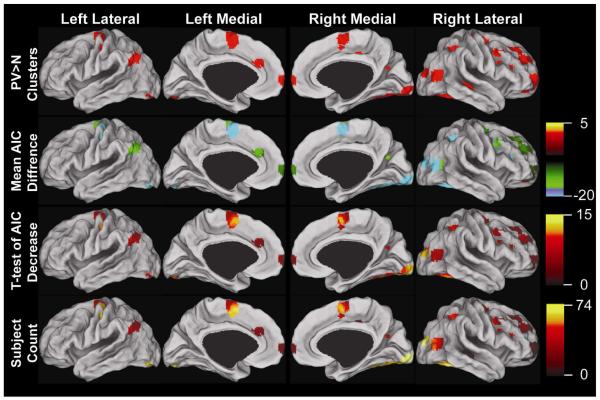
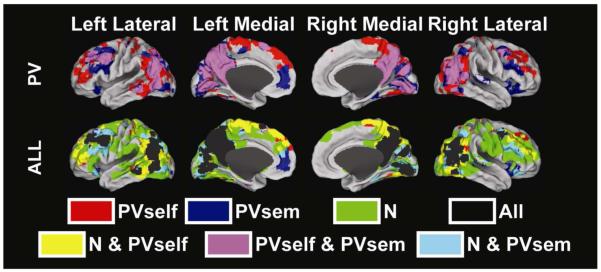
Functional MRI (fMRI) allows one to study task-related regional responses and task-dependent connectivity analysis using psychophysiological interaction (PPI) methods. The latter affords the additional opportunity to understand how brain regions interact in a task-dependent manner. The current implementation of PPI in Statistical Parametric Mapping (SPM8) is configured primarily to assess connectivity differences between two task conditions, when in practice fMRI tasks frequently employ more than two conditions. Here we evaluate how a generalized form of context-dependent PPI (gPPI; http://www.nitrc.org/projects/gppi), which is configured to automatically accommodate more than two task conditions in the same PPI model by spanning the entire experimental space, compares to the standard implementation in SPM8. These comparisons are made using both simulations and an empirical dataset. In the simulated dataset, we compare the interaction beta estimates to their expected values and model fit using the Akaike information criterion (AIC). We found that interaction beta estimates in gPPI were robust to different simulated data models, were not different from the expected beta value, and had better model fits than when using standard PPI (sPPI) methods. In the empirical dataset, we compare the model fit of the gPPI approach to sPPI. We found that the gPPI approach improved model fit compared to sPPI. There were several regions that became non-significant with gPPI. These regions all showed significantly better model fits with gPPI. Also, there were several regions where task-dependent connectivity was only detected using gPPI methods, also with improved model fit. Regions that were detected with all methods had more similar model fits. These results suggest that gPPI may have greater sensitivity and specificity than standard implementation in SPM. This notion is tempered slightly as there is no gold standard; however, data simulations with a known outcome support our conclusions about gPPI. In sum, the generalized form of context-dependent PPI approach has increased flexibility of statistical modeling, and potentially improves model fit, specificity to true negative findings, and sensitivity to true positive findings.
Published by Elsevier Inc.
Figures
References
-
- Akaike H. A new look at the statistical model identification. IEEE Transactions on Automatic Control. 1974;19:716–723.
-
- Burnham KP, Anderson DR. Model selection and multimodel inference: a practical information-theoretic approach. 2nd ed Springer; New York: 2002.
-
- Chee MW, Tan JC, Parimal S, Zagorodnov V. Sleep deprivation and its effects on object-selective attention. Neuroimage. 2010;49:1903–1910. - PubMed
-
- den Dekker AJ, Poot DH, Bos R, Sijbers J. Likelihood-based hypothesis tests for brain activation detection from MRI data disturbed by colored noise: a simulation study. IEEE Trans Med Imaging. 2009;28:287–296. - PubMed
Publication types
MeSH terms
Grants and funding
LinkOut - more resources
Full Text Sources
Other Literature Sources
Medical
