Evaluation of the efficacy and safety of high dose short duration enrofloxacin treatment regimen for uncomplicated urinary tract infections in dogs
- PMID: 22486931
- PMCID: PMC3565442
- DOI: 10.1111/j.1939-1676.2012.00914.x
Evaluation of the efficacy and safety of high dose short duration enrofloxacin treatment regimen for uncomplicated urinary tract infections in dogs
Abstract
Background: Uncomplicated urinary tract infections (UTI) in dogs usually are treated with antimicrobial drugs for 10-14 days. Shorter duration antimicrobial regimens have been evaluated in human patients.
Hypothesis: A high dose short duration (HDSD) enrofloxacin protocol administered to dogs with uncomplicated UTI will not be inferior to a 14-day treatment regimen with amoxicillin-clavulanic acid.
Animals: Client-owned adult, otherwise healthy dogs with aerobic bacterial urine culture yielding ≥ 10(3) CFU/mL of bacteria after cystocentesis.
Methods: Prospective, multicenter, controlled, randomized blinded clinical trial. Enrolled dogs were randomized to group 1 (enrofloxacin 18-20 mg/kg PO q24h for 3 days) or group 2 (amoxicillin-clavulanic acid 13.75-25 mg/kg PO q12h for 14 days). Urine cultures were obtained at days 0, 10, and 21. Microbiologic and clinical cure rates were evaluated 7 days after antimicrobial treatment was discontinued. Lower urinary tract signs and adverse events also were recorded.
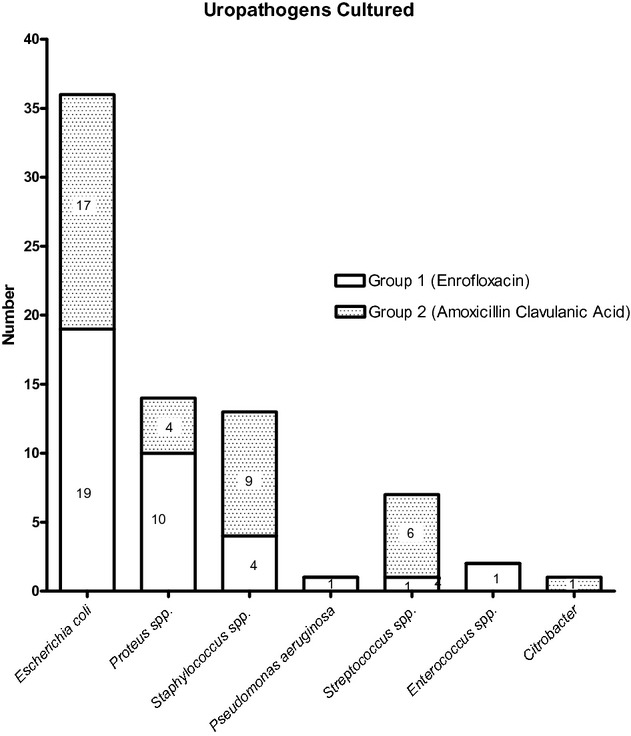
Results: There were 35 dogs in group 1 and 33 in group 2. The microbiologic cure rate was 77.1 and 81.2% for groups 1 and 2, respectively. The clinical cure rate was 88.6 and 87.9% for groups 1 and 2, respectively. Cure rates between groups did not differ according to the selected margin of noninferiority.
Conclusions and clinical importance: HDSD enrofloxacin treatment was not inferior to a conventional amoxicillin-clavulanic acid protocol for the treatment of uncomplicated bacterial UTI in dogs. Further research is warranted to determine if this protocol will positively impact owner compliance and decrease the emergence of antimicrobial resistance.
Copyright © 2012 by the American College of Veterinary Internal Medicine.
Figures
References
-
- Ling GV. Therapeutic strategies involving antimicrobial treatment of the canine urinary tract. J Am Vet Med Assoc. 1984;185:1162–1164. - PubMed
-
- McGuire NC, Schulman R, Ridgway MD, Bollero G. Detection of occult urinary tract infections in dogs with diabetes mellitus. J Am Anim Hosp Assoc. 2002;38:541–544. - PubMed
-
- Litster A, Moss S, Platell J, Trott DJ. Occult bacterial lower urinary tract infections in cats—urinalysis and culture findings. Vet Microbiol. 2009;136:130–134. - PubMed
-
- Pressler BM, Bartges J. Urinary tract infections. In: Ettinger SJ, Feldman EC, editors. Textbook of Veterinary Internal Medicine. 7th ed. St. Louis, MO: Saunders Elsevier; 2010. pp. 2036–2047.
-
- Grauer GF. Urinary tract infections. In: Nelson RW, Couto CG, editors. Small Animal Internal Medicien. St. Louis, MO: Mosby Elsevier; 2009. pp. 664–665.