


Chronic rhinosinusitis, race, and ethnicity
- PMID: 22487286
- PMCID: PMC3345896
- DOI: 10.2500/ajra.2012.26.3741
Chronic rhinosinusitis, race, and ethnicity
Abstract
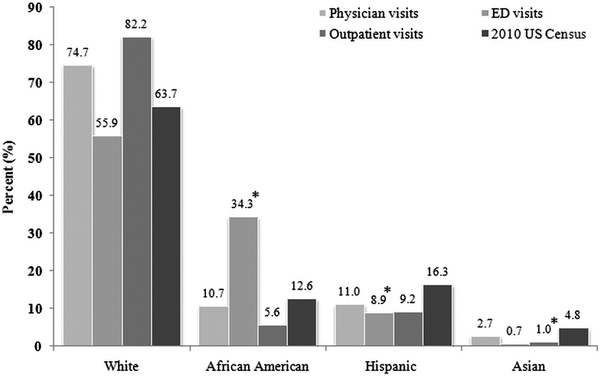
Background: Little is known regarding the epidemiology of chronic rhinosinusitis (CRS) in racial and ethnic minorities in the United States. This study was designed to comprehensively evaluate the current prevalence of CRS across various treatment settings to identify possible disparities in health care access and use between racial and ethnic populations.
Methods: The National Health Interview Survey (NHIS), National Ambulatory Medical Care Survey (NAMCS), and National Hospital Ambulatory Medical Care Survey (NHAMCS) database registries were extracted to identify the national prevalence of CRS in race/ethnic populations and resource use in ambulatory care settings. Systematic literature review identified studies reporting treatment outcomes in minority patients electing endoscopic sinus surgery (ESS). Data were supplemented using a multi-institutional cohort of patients undergoing surgical treatment.
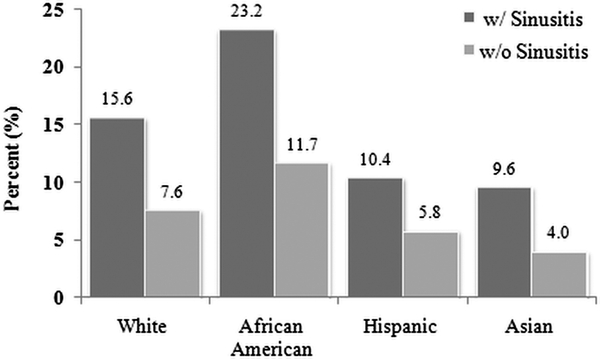
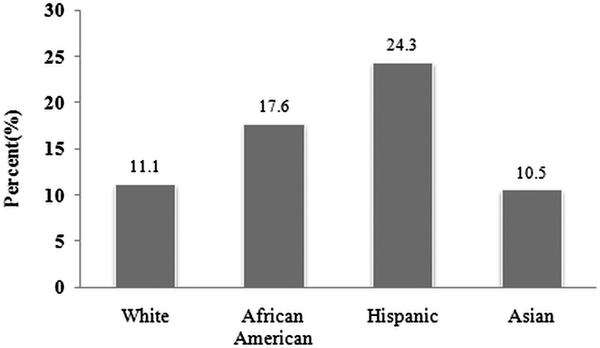
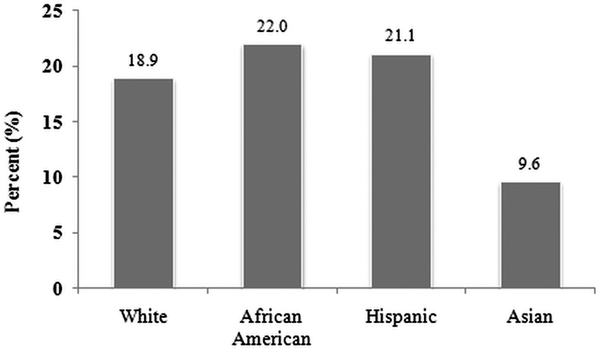
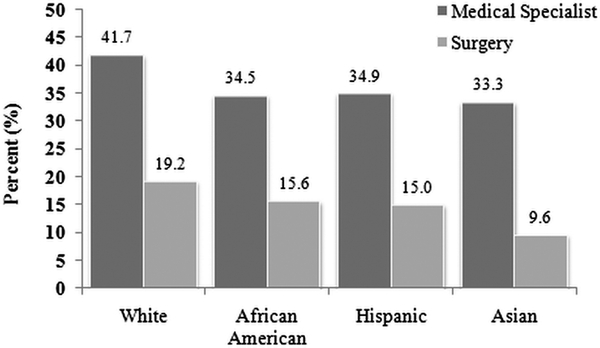
Results: National survey data suggest CRS is a significant health condition for all major race/ethnic groups in the United States, accounting for a sizable portion of office, emergency, and outpatient visits. Differences in insurance status, work absenteeism, and resource use were found between race/ethnic groups. Despite its prevalence, few published studies include information regarding minority patients with CRS. Most (90%) cohort studies did not provide details of race/ethnicity for ESS outcomes. Prospective cohort analysis indicated that minority surgical patients accounted for only 18%, when compared with national census estimates (35%).
Conclusion: CRS is an important health condition for all major race/ethnic groups in the United States. Significant differences may exist across racial and ethnic categories with regard to CRS health status and health care use. Given current demographic shifts in the United States, specific attention should be given to understanding CRS within the context of racial and ethnic populations. Public clinical trial registration (www.clinicaltrials.gov) I.D. No. NCT00799097.
Figures
References
-
- Humes KR, Jones NA, Ramirez RR. Overview of race and Hispanic origin: 2010. 2010 Census Briefs. Available online at www.census.gov/prod/cen2010/briefs/c2010br-02.pdf; last accessed May 10, 2011.
-
- Passel JS, Cohn D. US Population Projections: 2005–2050. Pew ResearchCenter February 11, 2008. Available online at www.pewsocialtrends.org/files/2010/10/85.pdf; last accessed May 10, 2011.
-
- Williams DR. The health of US racial and ethnic populations. J Gerontol B Psychol Sci Soc 60:53–62, 2005. - PubMed
Publication types
MeSH terms
Associated data
Grants and funding
LinkOut - more resources
Full Text Sources
Medical
