


Improved cerebral perfusion pressures and 24-hr neurological survival in a porcine model of cardiac arrest with active compression-decompression cardiopulmonary resuscitation and augmentation of negative intrathoracic pressure
- PMID: 22487997
- PMCID: PMC3741964
- DOI: 10.1097/CCM.0b013e318246b9ad
Improved cerebral perfusion pressures and 24-hr neurological survival in a porcine model of cardiac arrest with active compression-decompression cardiopulmonary resuscitation and augmentation of negative intrathoracic pressure
Abstract
Objective: Generation of negative intrathoracic pressure during the decompression phase of cardiopulmonary resuscitation enhances the refilling of the heart. We tested the hypothesis that when compared with closed-chest manual compressions at 80 chest compressions per min, treatment with active compression-decompression cardiopulmonary resuscitation at 80 chest compressions/min combined with augmentation of negative intrathoracic pressure would lower intracranial pressure and increase cerebral perfusion, thereby improving neurologically intact survival rates following prolonged untreated cardiac arrest.
Design: Prospective, randomized animal study.
Setting: Animal laboratory facilities.
Subjects: A total of 26 female farm pigs in two different protocols (n = 17 and n = 9).
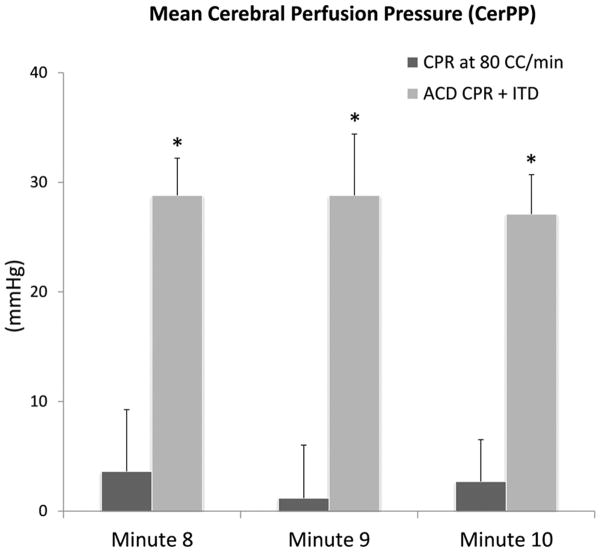
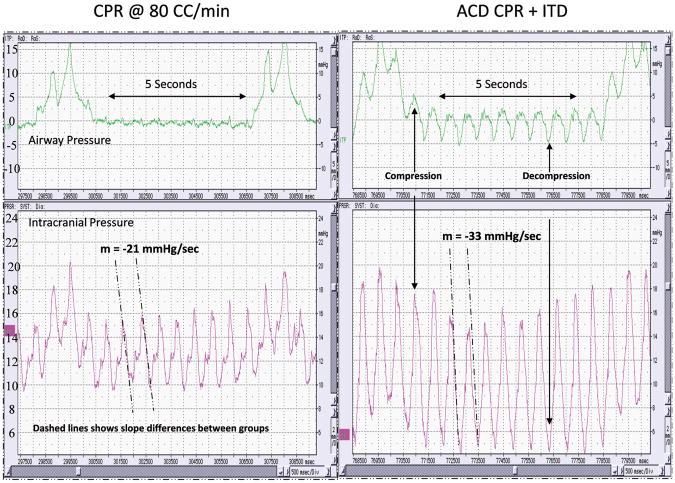
Interventions, measurements, and main results: Seventeen pigs were subjected to 8.5 mins of untreated ventricular fibrillation and prospectively randomized to cardiopulmonary resuscitation at 80 chest compressions/min or active compression-decompression cardiopulmonary resuscitation at 80 chest compressions/min plus an impedance threshold device. Coronary perfusion pressures (29.5 ± 2.7 mm Hg vs. 22.4 ± 1.6 mm Hg, p = .03), carotid blood flow (44.0 ± 12.2 vs. 30.9 ± 10.4, p = .03), and 24-hr neurological survival (88% vs. 22%, p = .015) were higher with active compression-decompression cardiopulmonary resuscitation + an impedance threshold device. Cerebral perfusion pressures, measured in nine additional pigs, were improved with active compression-decompression cardiopulmonary resuscitation + an impedance threshold device (21.9 ± 1.2 mm Hg vs. 8.9 ± 0.8 mm Hg, p < .0001). With active compression-decompression cardiopulmonary resuscitation + impedance threshold device, mean diastolic intracranial pressure during decompression was lower (12.2 ± 0.2 mm Hg vs. 16.6 ± 1.2 mm Hg, p = .02) and the downward slope of the decompression phase intracranial pressure curve was steeper (-60.3 ± 12.9 mm Hg vs. -46.7 ± 11.1 mm Hg/sec, p < .001).
Conclusions: Active compression-decompression cardiopulmonary resuscitation + an impedance threshold device increased cerebral perfusion pressures and lowered diastolic intracranial pressure and intracranial pressure rate during the decompression phase. These mechanisms may underlie the observed increase in cerebral perfusion pressure, carotid blood flow, and survival rates with favorable neurologic outcomes in this pig model of cardiac arrest.
Figures
Comment in
-
Devices that enhance the "squeeze" and "release" of heart and brain during cardiac arrest: it takes two to tango!Crit Care Med. 2012 Jun;40(6):1983-4. doi: 10.1097/CCM.0b013e31824e1d1d. Crit Care Med. 2012. PMID: 22610214 No abstract available.
References
-
- Becker LB, Ostrander MP, Barrett J, Kondos GT. Outcome of CPR in a large metropolitan area--where are the survivors? Ann Emerg Med. 1991;20(4):355–361. - PubMed
-
- Eisenberg MS, Horwood BT, Cummins RO, Reynolds-Haertle R, Hearne TR. Cardiac arrest and resuscitation: a tale of 29 cities. Ann Emerg Med. 1990;19(2):179–186. - PubMed
-
- Lurie KG, Lindo C, Chin J. CPR: the P stands for plumber's helper. Jama. 1990;264(13):1661. - PubMed
-
- Niemann JT. Cardiopulmonary resuscitation. N Engl J Med. 1992;327(15):1075–1080. - PubMed
-
- Lurie KG, Coffeen P, Shultz J, McKnite S, Detloff B, Mulligan K. Improving active compression-decompression cardiopulmonary resuscitation with an inspiratory impedance valve. Circulation. 1995;91(6):1629–1632. - PubMed
Publication types
MeSH terms
Grants and funding
LinkOut - more resources
Full Text Sources
Medical
