Mechanisms of endothelial dysfunction in obesity-associated hypertension
- PMID: 22488221
- PMCID: PMC3854291
- DOI: 10.1590/s0100-879x2012007500058
Mechanisms of endothelial dysfunction in obesity-associated hypertension
Abstract
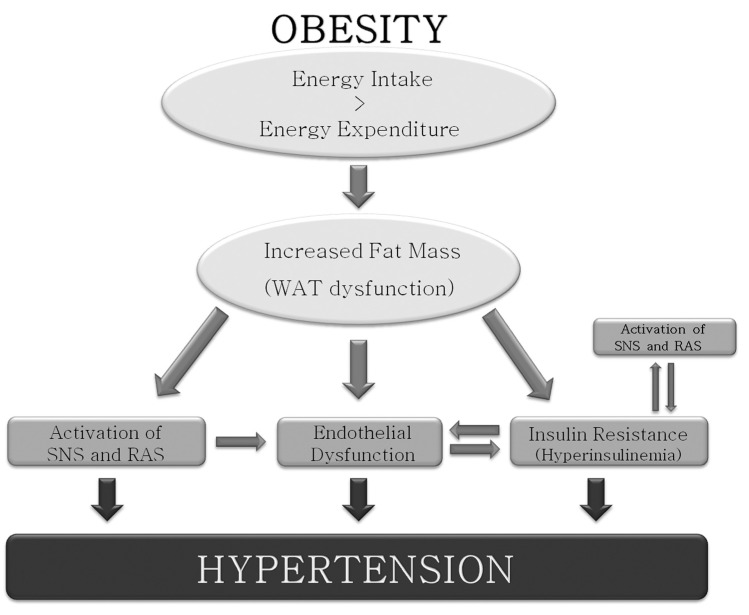
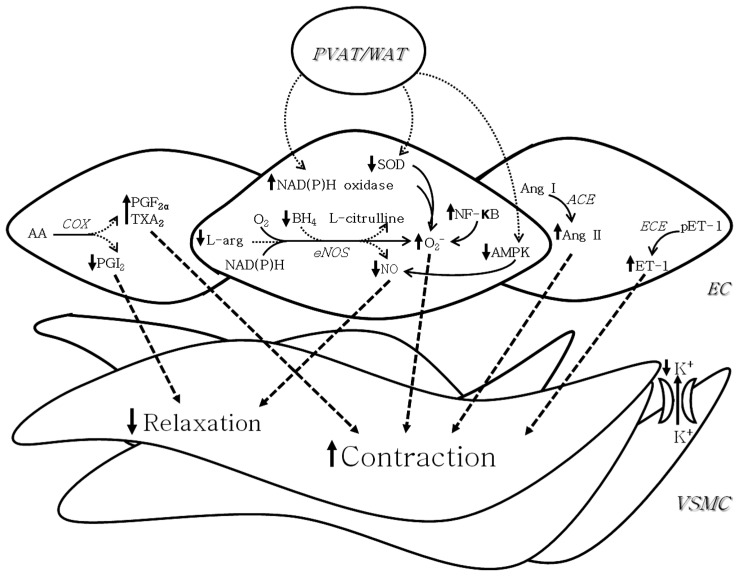
Obesity is strongly associated with high blood pressure, dyslipidemia, and type 2 diabetes. These conditions synergistically increase the risk of cardiovascular events. A number of central and peripheral abnormalities can explain the development or maintenance of high blood pressure in obesity. Of great interest is endothelial dysfunction, considered to be a primary risk factor in the development of hypertension. Additional mechanisms also related to endothelial dysfunction have been proposed to mediate the development of hypertension in obese individuals. These include: increase in both peripheral vasoconstriction and renal tubular sodium reabsorption, increased sympathetic activity and overactivation of both the renin-angiotensin system and the endocannabinoid system and insulin resistance. The discovery of new mechanisms regulating metabolic and vascular function and a better understanding of how vascular function can be influenced by these systems would facilitate the development of new therapies for treatment of obesity-associated hypertension.
Figures
References
-
- Ogden CL, Carroll MD, Curtin LR, McDowell MA, Tabak CJ, Flegal KM. Prevalence of overweight and obesity in the United States, 1999-2004. JAMA. 2006;295:1549–1555. - PubMed
-
- Flegal KM, Carroll MD, Ogden CL, Curtin LR. Prevalence and trends in obesity among US adults, 1999-2008. JAMA. 2010;303:235–241. - PubMed
-
- Yach D, Stuckler D, Brownell KD. Epidemiologic and economic consequences of the global epidemics of obesity and diabetes. Nat Med. 2006;12:62–66. - PubMed
-
- Hossain P, Kawar B, El Nahas M. Obesity and diabetes in the developing world - a growing challenge. N Engl J Med. 2007;356:213–215. - PubMed
-
- Schmidt MI, Duncan BB, Azevedo e Silva, Menezes AM, Monteiro CA, Barreto SM, et al. Chronic non-communicable diseases in Brazil: burden and current challenges. Lancet. 2011;377:1949–1961. - PubMed
Publication types
MeSH terms
LinkOut - more resources
Full Text Sources
Medical