Heterogeneity of coenzyme Q10 deficiency: patient study and literature review
- PMID: 22490322
- PMCID: PMC3639472
- DOI: 10.1001/archneurol.2012.206
Heterogeneity of coenzyme Q10 deficiency: patient study and literature review
Erratum in
- Arch Neurol. 2012 Jul;69(7):886. López, Luis [corrected to López, Luis C]
Abstract
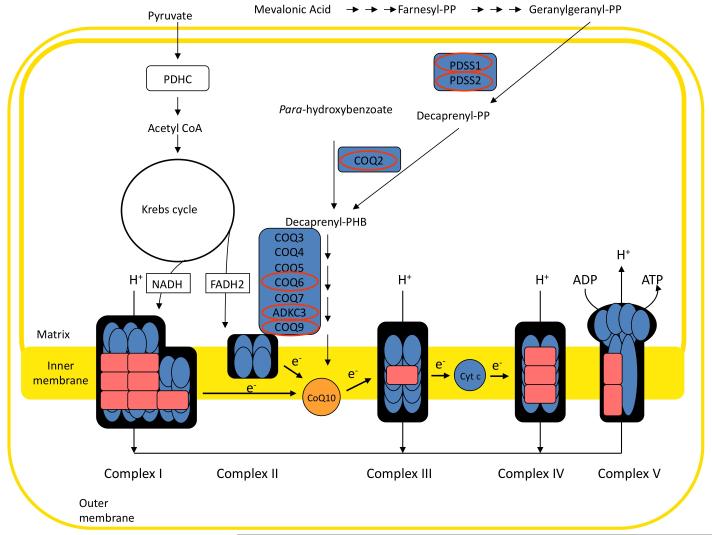
Coenzyme Q(10) (CoQ(10)) deficiency has been associated with 5 major clinical phenotypes: encephalomyopathy, severe infantile multisystemic disease, nephropathy, cerebellar ataxia, and isolated myopathy. Primary CoQ(10) deficiency is due to defects in CoQ(10) biosynthesis, while secondary forms are due to other causes. A review of 149 cases, including our cohort of 76 patients, confirms that CoQ(10) deficiency is a clinically and genetically heterogeneous syndrome that mainly begins in childhood and predominantly manifests as cerebellar ataxia. Coenzyme Q(10) measurement in muscle is the gold standard for diagnosis. Identification of CoQ(10) deficiency is important because the condition frequently responds to treatment. Causative mutations have been identified in a small proportion of patients.
Figures
References
-
- Sobreira C, Hirano M, Shanske S, et al. Mitochondrial encephalomyopathy with coenzyme Q10 deficiency. Neurology. 1997;48(5):1238–1243. - PubMed
Publication types
MeSH terms
Substances
Grants and funding
LinkOut - more resources
Full Text Sources
Medical