. 2012 May 15;188(10):4769-75.
doi: 10.4049/jimmunol.1103355. Epub 2012 Apr 6.

U1-small nuclear ribonucleoprotein activates the NLRP3 inflammasome in human monocytes

Affiliations

U1-small nuclear ribonucleoprotein activates the NLRP3 inflammasome in human monocytes

Min Sun Shin et al. J Immunol. .

Abstract

The NOD-like receptor family, pyrin domain-containing 3 (NLRP3) inflammasome is a caspase-1-containing cytosolic protein complex that is essential for processing and secretion of IL-1β. The U1-small nuclear ribonucleoprotein (U1-snRNP) that includes U1-small nuclear RNA is a highly conserved intranuclear molecular complex involved in splicing pre-mRNA. Abs against this self nuclear molecule are characteristically found in autoimmune diseases like systemic lupus erythematosus, suggesting a potential role of U1-snRNP in autoimmunity. Although endogenous DNA and microbial nucleic acids are known to activate the inflammasomes, it is unknown whether endogenous RNA-containing U1-snRNP could activate this molecular complex. In this study, we show that U1-snRNP activates the NLRP3 inflammasome in CD14(+) human monocytes dependently of anti-U1-snRNP Abs, leading to IL-1β production. Reactive oxygen species and K(+) efflux were responsible for this activation. Knocking down the NLRP3 or inhibiting caspase-1 or TLR7/8 pathway decreased IL-1β production from monocytes treated with U1-snRNP in the presence of anti-U1-snRNP Abs. Our findings indicate that endogenous RNA-containing U1-snRNP could be a signal that activates the NLRP3 inflammasome in autoimmune diseases like systemic lupus erythematosus where anti-U1-snRNP Abs are present.


Conflict of interest statement

Disclosures

The authors declare no conflicts of interests.

Figures
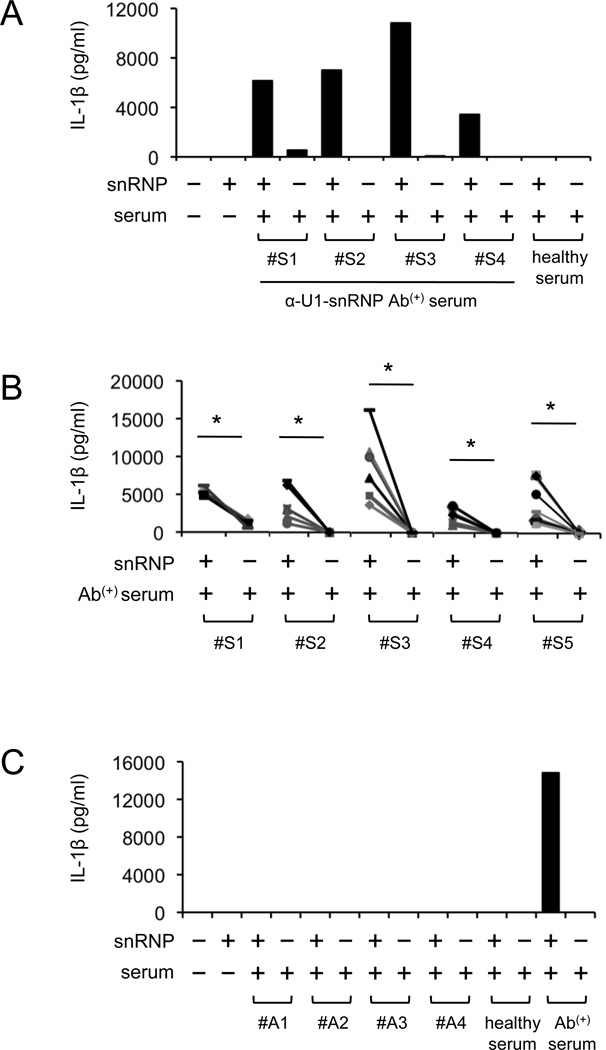
FIGURE 1
FIGURE 1. U1-snRNP induces IL-1β production from human monocytes in the presence of U1-snRNP antibody-positive serum
(A–C) IL-1β ELISA at 18 hours from cell culture supernatants of human monocytes incubated in the following conditions. (A–B) Monocytes from a single (A) or multiple donors (B, symbols indicate individual donors) were incubated with or without U1-snRNP (snRNP, 5 µg/ml) in the presence or absence of healthy serum or anti-U1-snRNP antibody-positive (Ab(+)) serum (5% final concentration) from multiple donors (#S1–#S5). (C) ANA-positive sera without anti-U1-snRNP antibodies (donors, #A1–#A4) were added to monocytes from a single donor in the presence or absence of U1-snRNP. Representative data from 2 independent experiments (A and C). *P < 0.05.
FIGURE 2
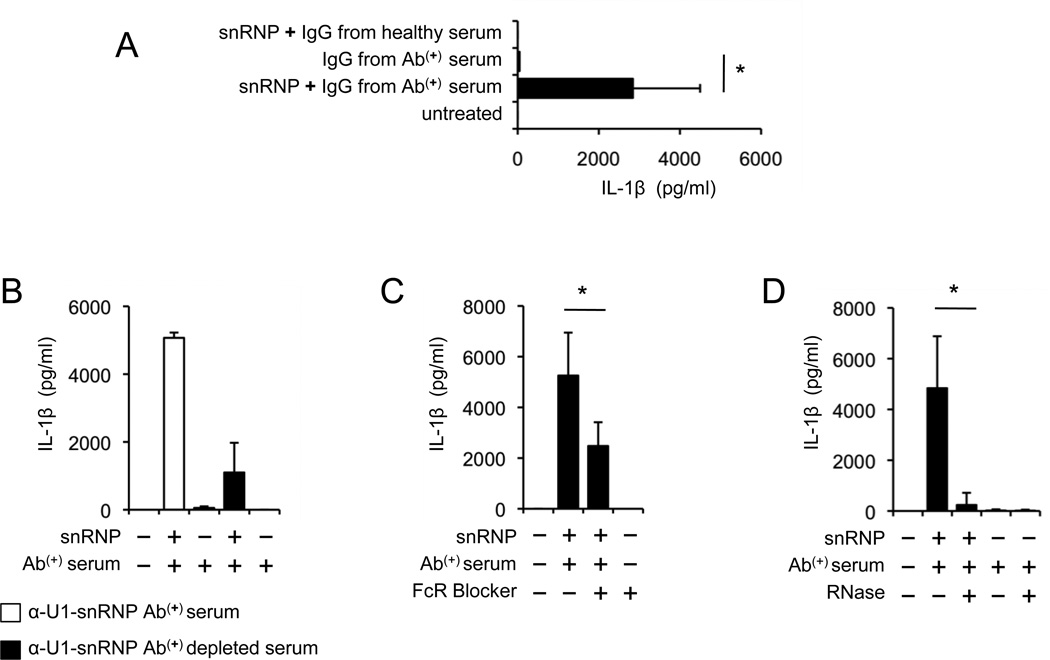
FIGURE 2. The production of IL-1β from human monocytes in response to U1-snRNP requires anti-U1-snRNP antibodies
(A–D) IL-1β ELISA at 18 hours from cell culture supernatants of human monocytes incubated in the following conditions. (A) Monocytes were incubated with or without U1-snRNP in the presence or absence of total IgG purified from anti-U1-snRNP antibody-positive (Ab(+)) serum or healthy serum. (B) Monocytes were incubated with or without U1-snRNP in the presence or absence of serum depleted or un-depleted of anti-U1-snRNP antibodies (Bars and error bars indicate mean and SEM, n = 2). (C) Monocytes were treated with anti-CD32 antibodies (FcR blocker) followed by incubation with U1-snRNP and anti-U1-snRNP antibody-positive (Ab(+)) serum. (D) Monocytes were incubated with anti-U1-snRNP antibody-positive (Ab(+)) serum or U1-snRNP and anti-U1-snRNP antibody-positive serum in the presence or absence of RNase. Bars and error bars indicate mean and SEM, respectively (n = 5–7 donors for A, C and D). *P < 0.05.
FIGURE 3
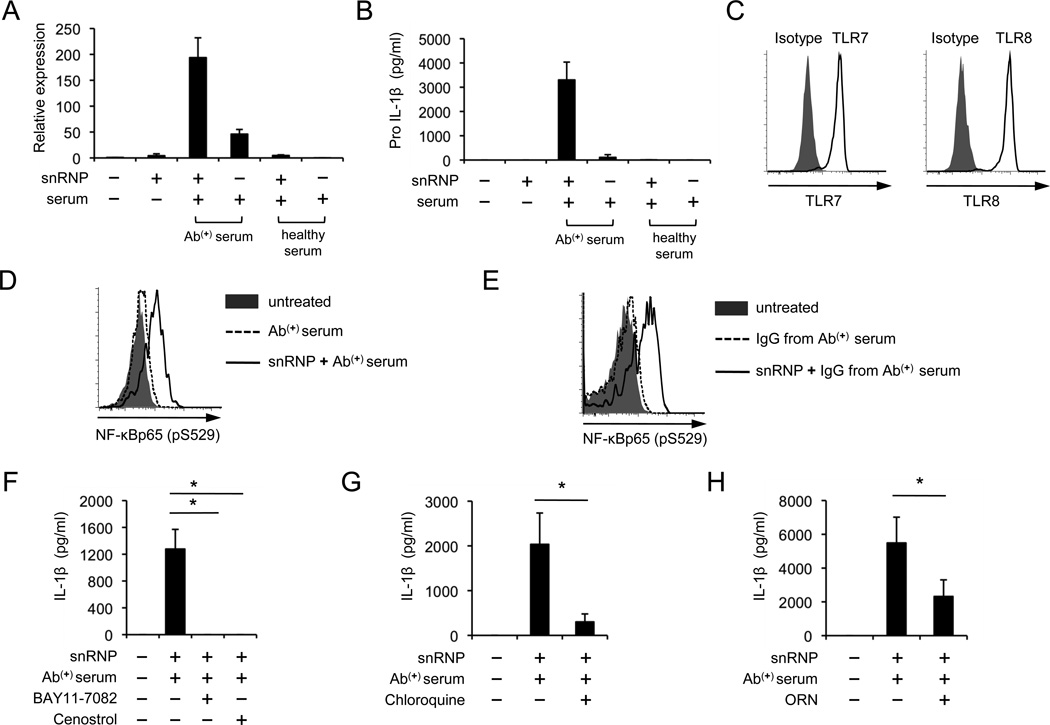
FIGURE 3. U1-snRNP induces IL-1β production from human monocytes by activating NF-κB through triggering TLR7 and 8 in the presence of anti-U1-snRNP antibody-positive serum
(A–B) Pro-IL-1β qPCR (A) and ELISA (B) of human monocytes incubated for 6 (qPCR) or 10 (ELISA) hours with or without U1-snRNP (snRNP, 5 µg/ml) in the presence or absence of healthy or anti-U1-snRNP antibody-positive serum (5% final concentration) (Bars and error bars indicate mean and SEM, respectively, n = 2 and 3 donors for A and B). (C) Flow cytometric analysis of TLR7 and 8 expression by CD14+ human monocytes. (D–E) Flow cytometric analysis of NF-κB activation in monocytes treated for 3 hours with anti-U1-snRNP antibody-positive (Ab(+)) serum (D) or IgG purified from anti-U1-snRNP antibody-positive (Ab(+)) serum (E) in the presence or absence of U1-snRNP. (F–H) IL-1β ELISA of culture supernatants from monocytes incubated for 18 hours with U1-snRNP and anti-U1-snRNP antibody-positive (Ab(+)) serum in the presence or absence of the NF-κB inhibitors (F, Bay11-7082 and Cenostrol), chloroquine (G) or inhibitory nucleic acid sequences for TLR7/8 (H, ORN). Representative data from 2–3 independent experiments (C–E). Bars and error bars indicate mean and SEM, respectively (n = 4–8 donors for F–H). *P < 0.05.
FIGURE 4
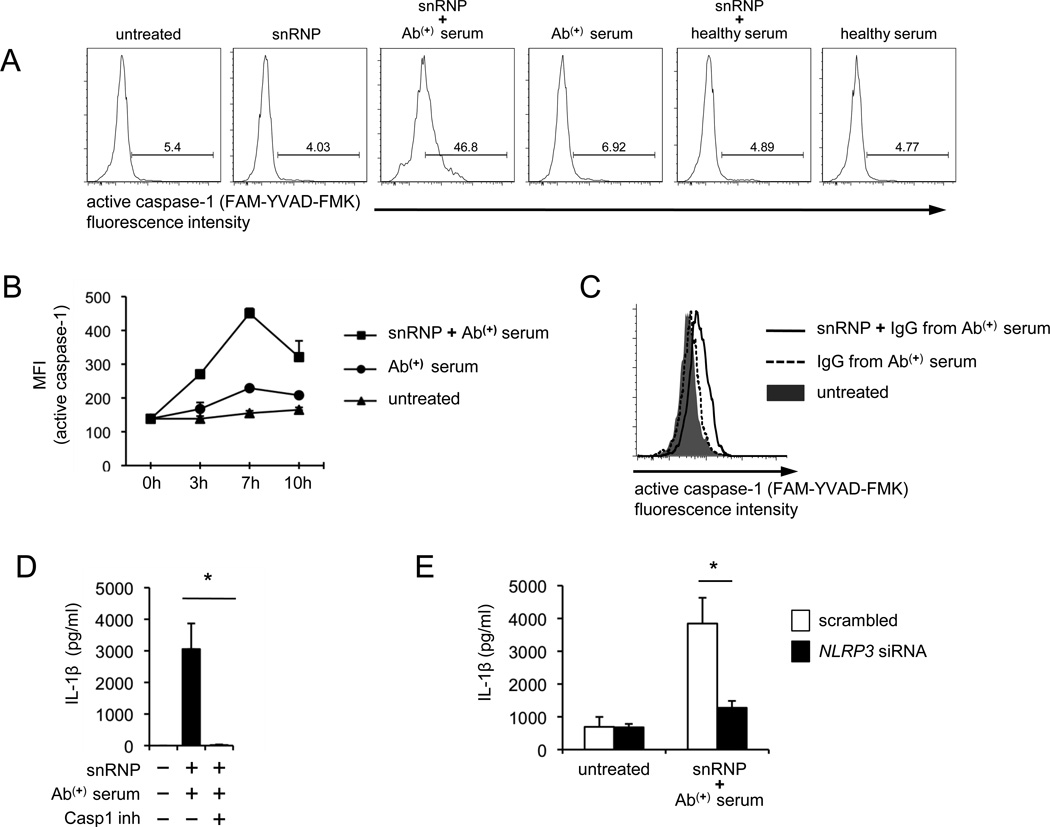
FIGURE 4. The production of IL-1β from human monocytes in response to U1-snRNP and anti-U1-snRNP antibody-positive serum requires caspase-1 activation and NLRP3 inflammasome
(A–C) Flow cytometric analysis of active caspase-1 in human monocytes stimulated for 7 (A) or indicated hours (B) with or without U1-snRNP (5 µg/ml) in the presence or absence of anti-U1-snRNP (snRNP) antibody-positive (Ab(+)) serum (5% final concentration), healthy serum (A–B) or total IgG purified from anti-U1-snRNP antibody-positive (Ab(+)) serum (C). (D) IL-1β ELISA of culture supernatants from monocytes incubated for 18 hours with U1-snRNP and anti-U1-snRNP antibody-positive (Ab(+)) serum in the presence or absence of caspase-1 inhibitor. (E) IL-1β ELISA of culture supernatants from monocytes transfected with scrambled or NLRP3-specific siRNA followed by the incubation for 18 hours with U1-snRNP and anti-U1-snRNP antibody-positive (Ab(+)) serum. Representative data from 3 independent experiments (A, C). Numbers in histograms indicate the frequency of cells stained positive. Symbols and error bars indicate mean + SD (n = 2) (B). Bars and error bars indicate mean and SEM, respectively (n = 4–7 donors for D–E). *P < 0.05.
FIGURE 5
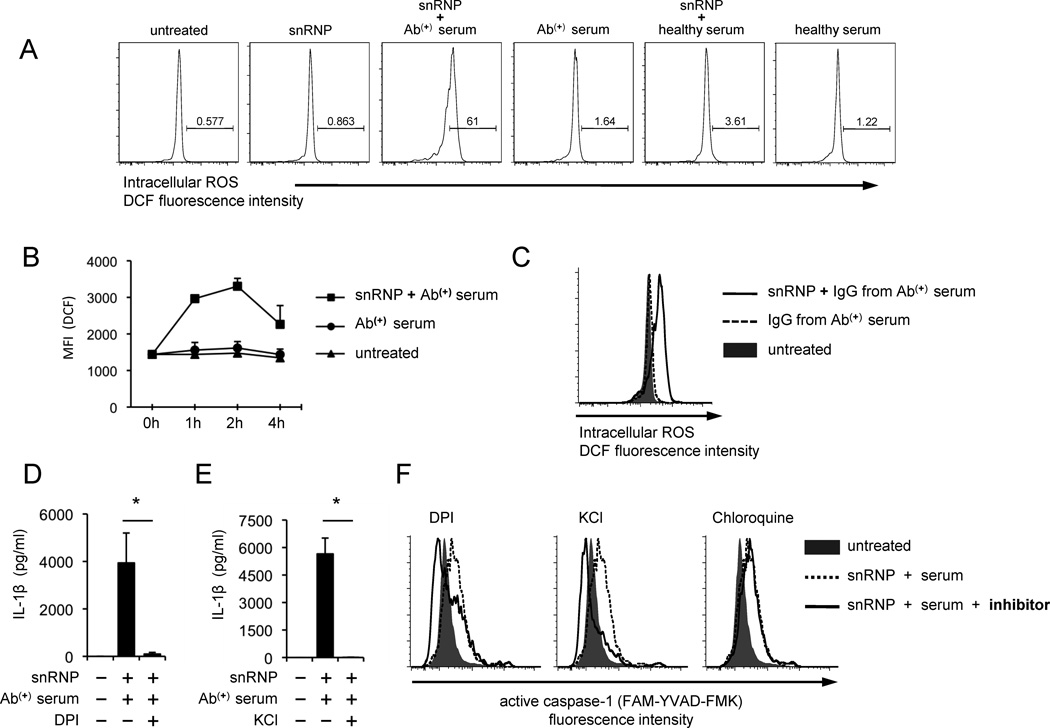
FIGURE 5. The production of IL-1β and activation of caspase-1 by human monocytes in response to U1-snRNP and anti-U1-snRNP antibody-positive serum requires ROS synthesis and K+ efflux
(A–C) Flow cytometric analysis of reactive oxygen species (ROS) in monocytes stimulated for 3 (A) or indicated hours (B) with or without U1-snRNP (5 µg/ml) in the presence or absence of anti-U1-snRNP (snRNP) antibody-positive (Ab(+)) serum (5% final concentration), healthy serum (A–B) or total IgG purified from anti-U1-snRNP antibody-positive (Ab(+)) serum (C). (D–E) IL-1β ELISA of culture supernatants from monocytes incubated for 18 hours with U1-snRNP and anti-U1-snRNP antibody-positive (Ab(+)) serum in the presence or absence of the ROS inhibitor DPI (D) or KCl (E). (F) Flow cytometric analysis of active caspase-1 in monocytes treated for 7 hours with U1-snRNP and anti-U1-snRNP antibody-positive (Ab(+)) serum in the presence or absence of DPI, KCl or chloroquine. Representative data from 3–4 independent experiments (A, C, F). Symbols and error bars indicate mean + SD (n = 2) (B). Bars and error bars indicate mean and SEM, respectively (n = 4–7 donors for D–E). *P < 0.05.

References

    1. Kawai T, Akira S. The role of pattern-recognition receptors in innate immunity: update on Toll-like receptors. Nat Immunol. 2010;11:373–384. - PubMed
    1. Davis BK, Wen H, Ting JP. The Inflammasome NLRs in Immunity, Inflammation, and Associated Diseases. Annu Rev Immunol. 2010 - PMC - PubMed
    1. van de Veerdonk FL, Netea MG, Dinarello CA, Joosten LA. Inflammasome activation and IL-1beta and IL-18 processing during infection. Trends Immunol. 2011;32:110–116. - PubMed
    1. Martinon F, Petrilli V, Mayor A, Tardivel A, Tschopp J. Gout-associated uric acid crystals activate the NALP3 inflammasome. Nature. 2006;440:237–241. - PubMed
    1. Duewell P, Kono H, Rayner KJ, Sirois CM, Vladimer G, Bauernfeind FG, Abela GS, Franchi L, Nunez G, Schnurr M, Espevik T, Lien E, Fitzgerald KA, Rock KL, Moore KJ, Wright SD, Hornung V, Latz E. NLRP3 inflammasomes are required for atherogenesis and activated by cholesterol crystals. Nature. 2010;464:1357–1361. - PMC - PubMed

Publication types

MeSH terms