


Research guidelines in the era of large-scale collaborations: an analysis of Genome-wide Association Study Consortia
- PMID: 22491085
- PMCID: PMC3339312
- DOI: 10.1093/aje/kwr441
Research guidelines in the era of large-scale collaborations: an analysis of Genome-wide Association Study Consortia
Abstract
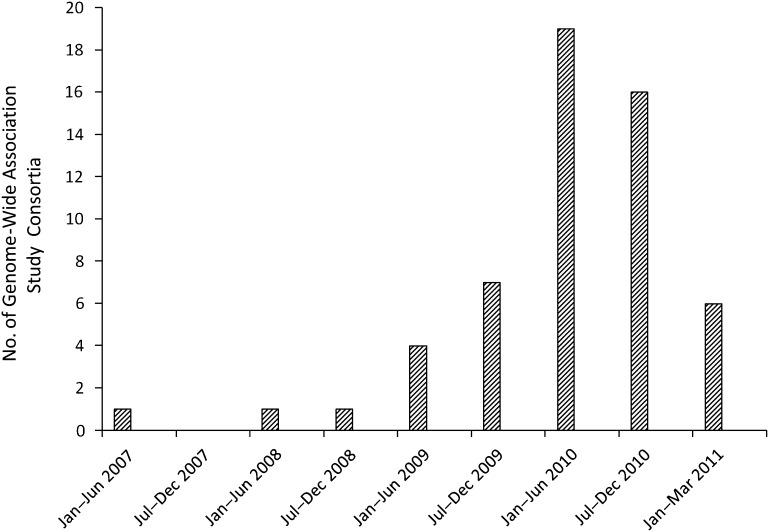
Scientific research has shifted from studies conducted by single investigators to the creation of large consortia. Genetic epidemiologists, for example, now collaborate extensively for genome-wide association studies (GWAS). The effect has been a stream of confirmed disease-gene associations. However, effects on human subjects oversight, data-sharing, publication and authorship practices, research organization and productivity, and intellectual property remain to be examined. The aim of this analysis was to identify all research consortia that had published the results of a GWAS analysis since 2005, characterize them, determine which have publicly accessible guidelines for research practices, and summarize the policies in these guidelines. A review of the National Human Genome Research Institute's Catalog of Published Genome-Wide Association Studies identified 55 GWAS consortia as of April 1, 2011. These consortia were comprised of individual investigators, research centers, studies, or other consortia and studied 48 different diseases or traits. Only 14 (25%) were found to have publicly accessible research guidelines on consortia websites. The available guidelines provide information on organization, governance, and research protocols; half address institutional review board approval. Details of publication, authorship, data-sharing, and intellectual property vary considerably. Wider access to consortia guidelines is needed to establish appropriate research standards with broad applicability to emerging forms of large-scale collaboration.
Figures
References
-
- Wuchty S, Jones BF, Uzzi B. The increasing dominance of teams in production of knowledge. Science. 2007;316(5827):1036–1039. - PubMed
-
- Disis ML, Slattery JT. The road we must take: multidisciplinary team science. Sci Transl Med. 2010;2(22):22cm9. (doi:10.1126/scitranslmed.3000421) - PubMed
-
- Stvilia B, Hinnant CC, Schindler K, et al. Composition of scientific teams and publication productivity at a national science lab. J Am Soc Inform Sci Technol. 2011;62(2):270–283.
-
- Lee S, Bozeman B. The impact of research collaboration on scientific productivity. Soc Sci Med. 2005;35(5):673–702.
Publication types
MeSH terms
Grants and funding
LinkOut - more resources
Full Text Sources
Molecular Biology Databases
Miscellaneous
