


Influence of late-life cognitive activity on cognitive health
- PMID: 22491864
- PMCID: PMC3320053
- DOI: 10.1212/WNL.0b013e31824f8c03
Influence of late-life cognitive activity on cognitive health
Abstract
Objective: To test the hypothesis that late-life participation in mentally stimulating activities affects subsequent cognitive health.
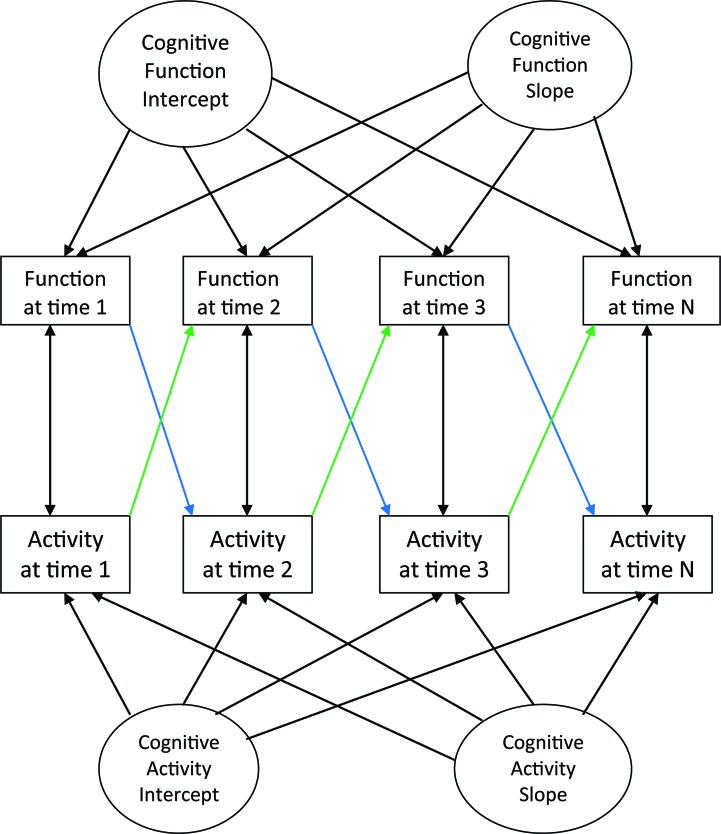
Methods: Analyses are based on 1,076 older persons without dementia at study onset participating in a longitudinal cohort study. They completed annual clinical evaluations for a mean of 4.9 years. Each evaluation included administration of a self-report scale about participation in mentally stimulating activities and a battery of cognitive performance tests. Previously established measures of cognitively stimulating activity and cognitive function were derived. We assessed the temporal sequence of activity changes in relation to functional changes in a series of cross-lagged panel models adjusted for age, sex, and education.
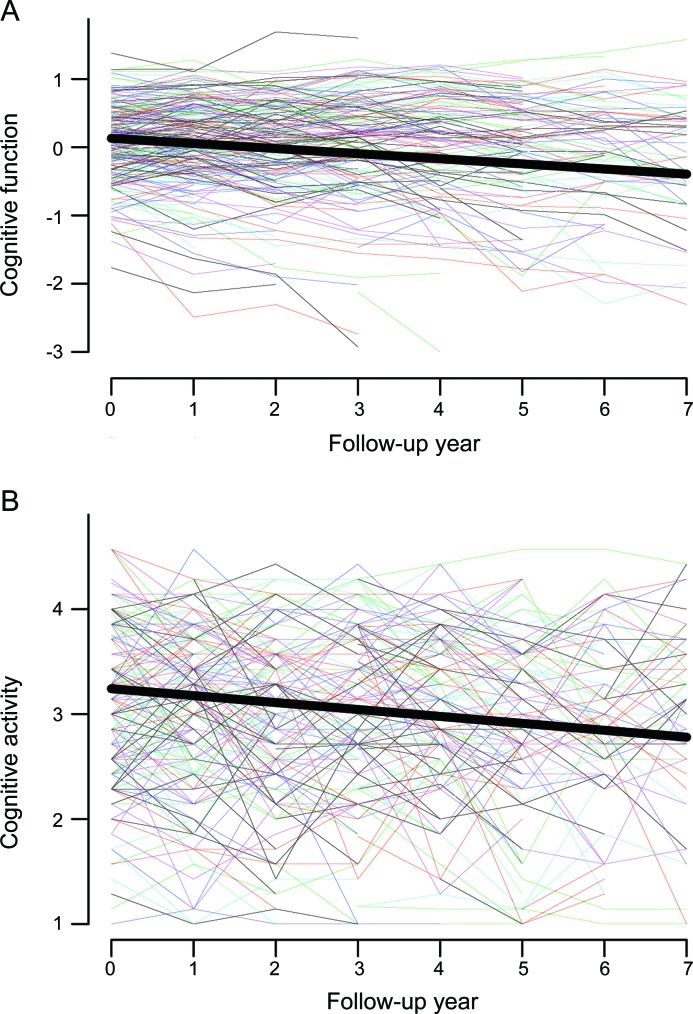
Results: During the observation period, cognitive activity participation (estimate of mean annual change = -0.066, SE = 0.005, p < 0.001) and cognitive functioning (estimate = -0.077, SE = 0.005, p < 0.001) declined at rates that were moderately correlated (r = 0.44, p < 0.001). The level of cognitive activity in a given year predicted the level of global cognitive function in the following year, but the level of global cognition did not predict the subsequent level of cognitive activity participation. Cognitive activity showed the same pattern of unidirectional associations with measures of episodic and semantic memory, but its associations with working memory were bidirectional.
Conclusions: The results suggest that more frequent mental stimulation in old age leads to better cognitive functioning.
Figures
References
-
- Aartsen MJ, Smits CH, van Tilburg T, Knipscheer KC, Deeg DJ. Activity in older adults: cause or consequence of cognitive functioning? A longitudinal study on everyday activities and cognitive performance in older adults. J Gerontol B Psychol Sci Soc Sci 2002; 57: P153– P162 . - PubMed
-
- Bosma H, van Boxtel MP, Ponds RW, et al. Engaged lifestyle and cognitive function in middle and old-aged, non-demented persons: a reciprocal association? Z Gerontol Geriatr 2002; 35: 575– 581 . - PubMed
-
- Hultsch DF, Hertzog C, Small BJ, Dixon RA. Use it or lose it: engaged lifestyle as a buffer of cognitive decline in aging? Psychol Aging 1999; 14: 245– 263 . - PubMed
-
- Schooler C, Mulatu MS. The reciprocal effects of leisure time activities and intellectual functioning in older people: a longitudinal analysis. Psychol Aging 2001; 16: 466– 482 . - PubMed
-
- Wilson RS, Bennett DA, Bienias JL, Mendes de Leon CF, Morris MC, Evans DA. Cognitive activity and cognitive decline in a biracial community population. Neurology 2003; 61: 812– 816 . - PubMed
Publication types
MeSH terms
Grants and funding
LinkOut - more resources
Full Text Sources
Medical
