


No evidence for transmission of antibiotic-resistant Escherichia coli strains from humans to wild western lowland gorillas in Lopé National Park, Gabon
- PMID: 22492436
- PMCID: PMC3370549
- DOI: 10.1128/AEM.07593-11
No evidence for transmission of antibiotic-resistant Escherichia coli strains from humans to wild western lowland gorillas in Lopé National Park, Gabon
Abstract
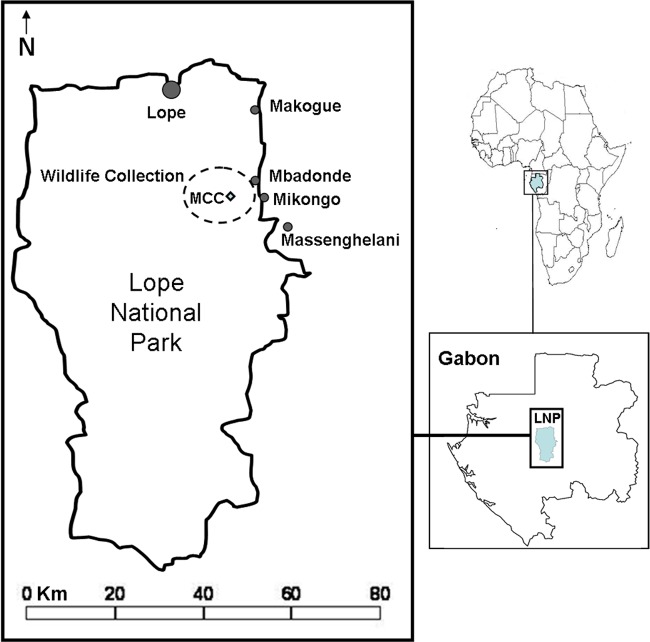
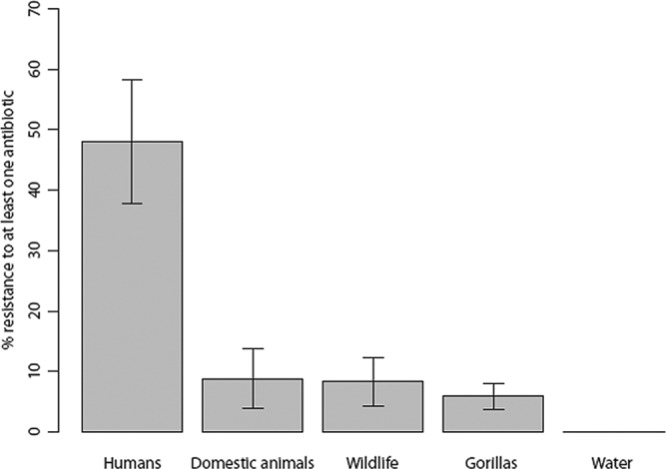
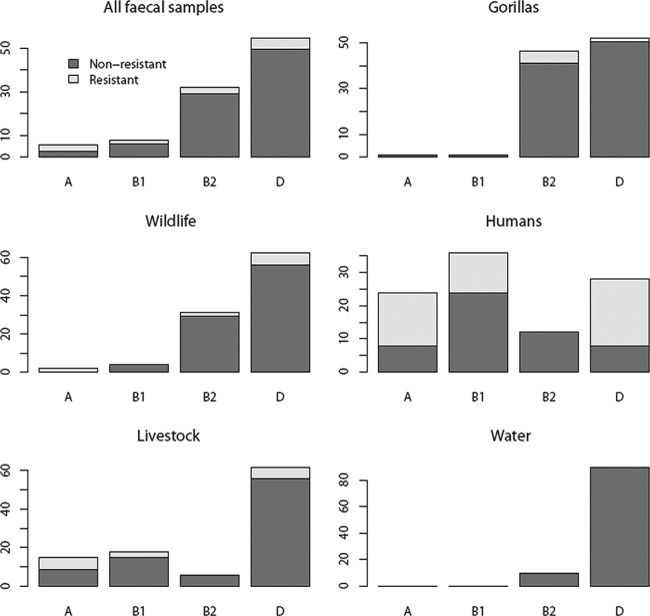
The intensification of human activities within the habitats of wild animals is increasing the risk of interspecies disease transmission. This risk is particularly important for great apes, given their close phylogenetic relationship with humans. Areas of high human density or intense research and ecotourism activities expose apes to a high risk of disease spillover from humans. Is this risk lower in areas of low human density? We determined the prevalence of Escherichia coli antibiotic-resistant isolates in a population of the critically endangered western lowland gorilla (Gorilla gorilla gorilla) and other wild mammals in Lopé National Park (LNP), Gabon, and we tested whether the observed pattern could be explained by bacterial transmission from humans and domestic animals into wildlife populations. Our results show a high prevalence of antibiotic-resistant bacterial isolates in humans and low levels in gorillas and other wildlife. The significant differences in the genetic background of the resistant bacteria isolated from humans and gorillas suggest that transmission is low or does not occur between these two species. These findings indicate that the presence of antibiotic-resistant strains in wildlife do not imply direct bacteria transmission from humans. Thus, in areas of low human density, human-wildlife E. coli transmission seems to be low. The presence of antibiotic-resistant isolates in gorillas may be better explained by other mechanisms for resistance acquisition, such as horizontal gene exchange among bacteria or naturally acquired resistance.
Figures
References
-
- Allen HK, et al. 2010. Call of the wild: antibiotic resistance genes in natural environments. Nat. Rev. Microbiol. 8:251–259 - PubMed
-
- Andersson DI, Levin BR. 1999. The biological cost of antibiotic resistance. Curr. Opin. Microbiol. 2:489–493 - PubMed
-
- Archie EA, Luikart G, Ezenwa VO. 2009. Infecting epidemiology with genetics: a new frontier in disease ecology. Trends Ecol. Evol. 24:21–30 - PubMed
-
- Clinical and Laboratory Standards Institute 2006. Performance standards for antimicrobial disc susceptibility tests; approved standard, 9th ed Clinical and Laboratory Standards Institute, Wayne, PA
Publication types
MeSH terms
Substances
LinkOut - more resources
Full Text Sources
Medical
