. 2012 Jun;32(12):2170-82.
doi: 10.1128/MCB.00010-12. Epub 2012 Apr 9.

Protein landscape at Drosophila melanogaster telomere-associated sequence repeats

Affiliations

Protein landscape at Drosophila melanogaster telomere-associated sequence repeats

José M Antão et al. Mol Cell Biol. 2012 Jun.

Abstract

The specific set of proteins bound at each genomic locus contributes decisively to regulatory processes and to the identity of a cell. Understanding of the function of a particular locus requires the knowledge of what factors interact with that locus and how the protein composition changes in different cell types or during the response to internal and external signals. Proteomic analysis of isolated chromatin segments (PICh) was developed as a tool to target, purify, and identify proteins associated with a defined locus and was shown to allow the purification of human telomeric chromatin. Here we have developed this method to identify proteins that interact with the Drosophila telomere-associated sequence (TAS) repeats. Several of the purified factors were validated as novel TAS-bound proteins by chromatin immunoprecipitation, and the Brahma complex was confirmed as a dominant modifier of telomeric position effect through the use of a genetic test. These results offer information on the efficacy of applying the PICh protocol to loci with sequence more complex than that found at human telomeres and identify proteins that bind to the TAS repeats, which might contribute to TAS biology and chromatin silencing.


Figures
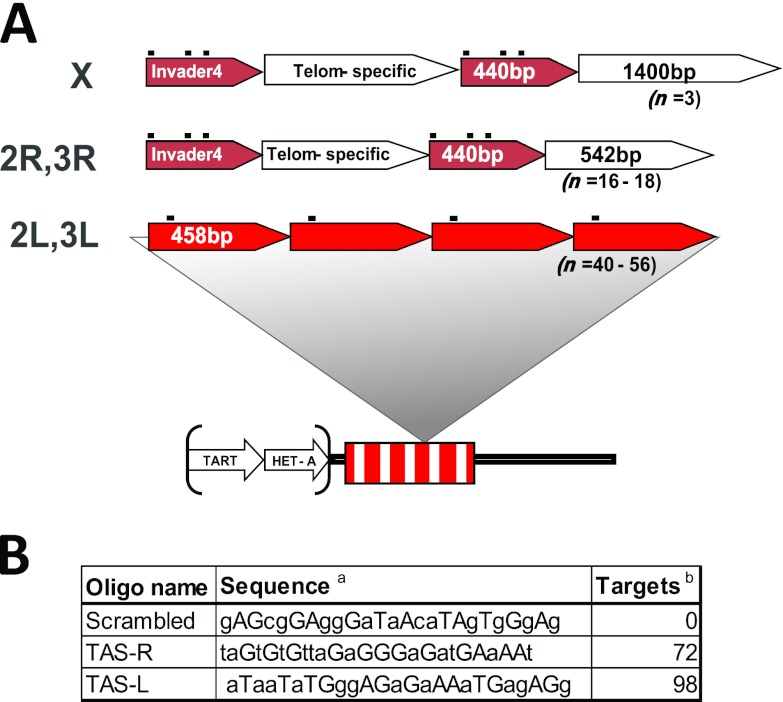
Fig 1
Fig 1
Structures of the TAS repeats and sequences of PICh capture probes used in this study. (A) Schematic of the structure of TAS repeats (see the text for details): TAS repeats are adjacent to the telomeric retrotransposon arrays (TART, HET-A) and are organized as a single repeat unit in chromosomes 2L and 3L or as a combination of two repeat units, one of which is common to chromosomes 2R, 3R, and XL and the other of which differs between the autosomes and X. The black dots above the repeat blocks indicate the capture probe hybridization sequences. Telom, telomere. (B) Sequences of the capture probes used. a, homology region of the capture probes, not including the desthiobiotin and spacers (lowercase, DNA residues; uppercase, LNA). b, number of predicted targets in the haploid Drosophila genome.
Fig 2
Fig 2
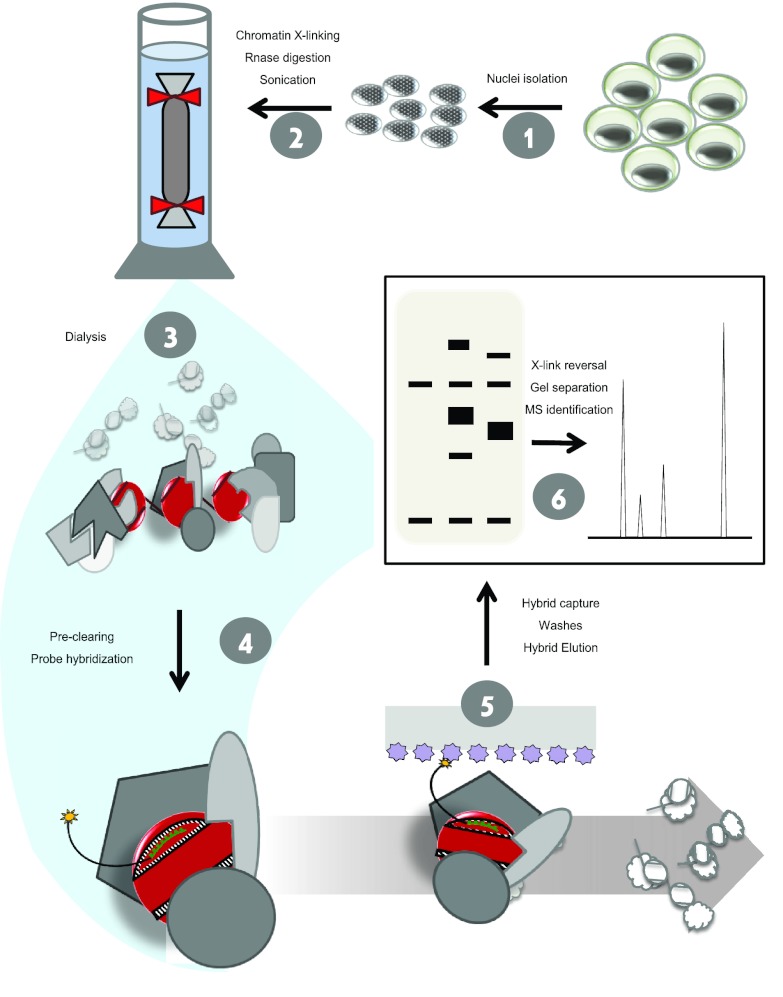
Optimized PICh protocol. Cell cultures are harvested and nuclei are isolated in step 1. Nuclei are cross-linked, RNA is digested, and chromatin is solubilized by sonication in step 2. Chromatin is dialyzed through a membrane with a molecular weight cutoff of 106 to obtain the substrate for hybridization in step 3. The desthiobiotinylated capture probe (shown as a black- and-green line with a yellow star representing desthiobiotin) is hybridized to the target DNA in a complex with the cross-linked associated proteins, including the histones (red) and nonnucleosomal chromatin proteins (gray) in step 4. The nucleoprotein complex is captured with streptavidin resin (lilac), and the nonassociated proteins and DNA (white outlined complexes) are washed away in step 5. The specific complexes are isolated, and the proteins are separated on a gel and subjected to mass spectrometric identification in step 6.
Fig 3
Fig 3
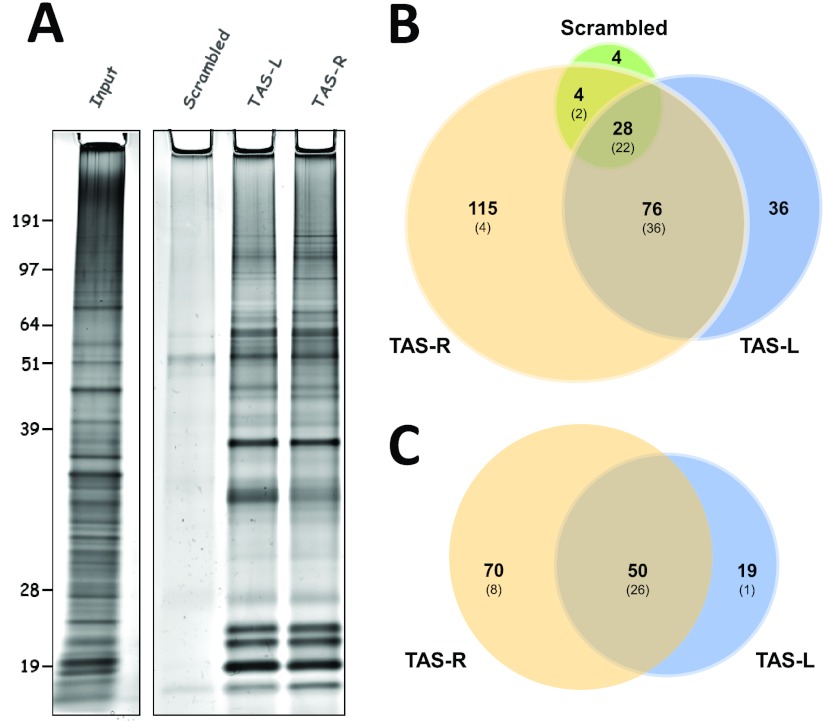
TAS repeat chromatin purification. (A) Silver-stained gels with input Kc nuclear chromatin (left) and 20% of the protein isolated from Kc nuclear chromatin using the indicated capture probes (right). Molecular masses (kDa) are indicated on the left. (B) Overlap between the factors identified associated with the capture probes in Kc cells. The values in parentheses are the numbers of proteins in the respective sectors which are among the overall top 25% of proteins based on the absolute number of identified peptides. (C) Overlap between the factors identified associated with TAS-L and TAS-R capture probes after the removal of proteins identified in the negative control and common contaminants (see the text for details) using combined data from Kc and S3 cells. Values in parentheses are as in panel B.
Fig 4
Fig 4
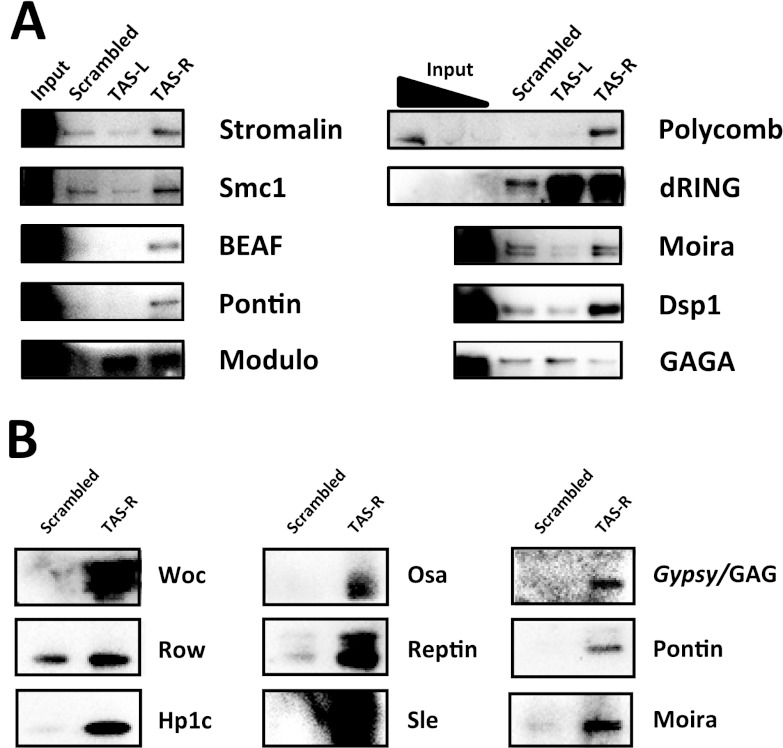
Candidate TAS repeat factor enrichment levels by Western blot assay. (A) Candidate enrichment on PICh-purified protein from S3 cells. Lanes contain 15% of the purified protein and 0.01% input; for Polycomb and dRING, 0.03% and 0.1% input lanes are shown. (B) Negative control and TAS-R purifications from Kc cells. Lanes contain 15% of the purified protein.
Fig 5
Fig 5
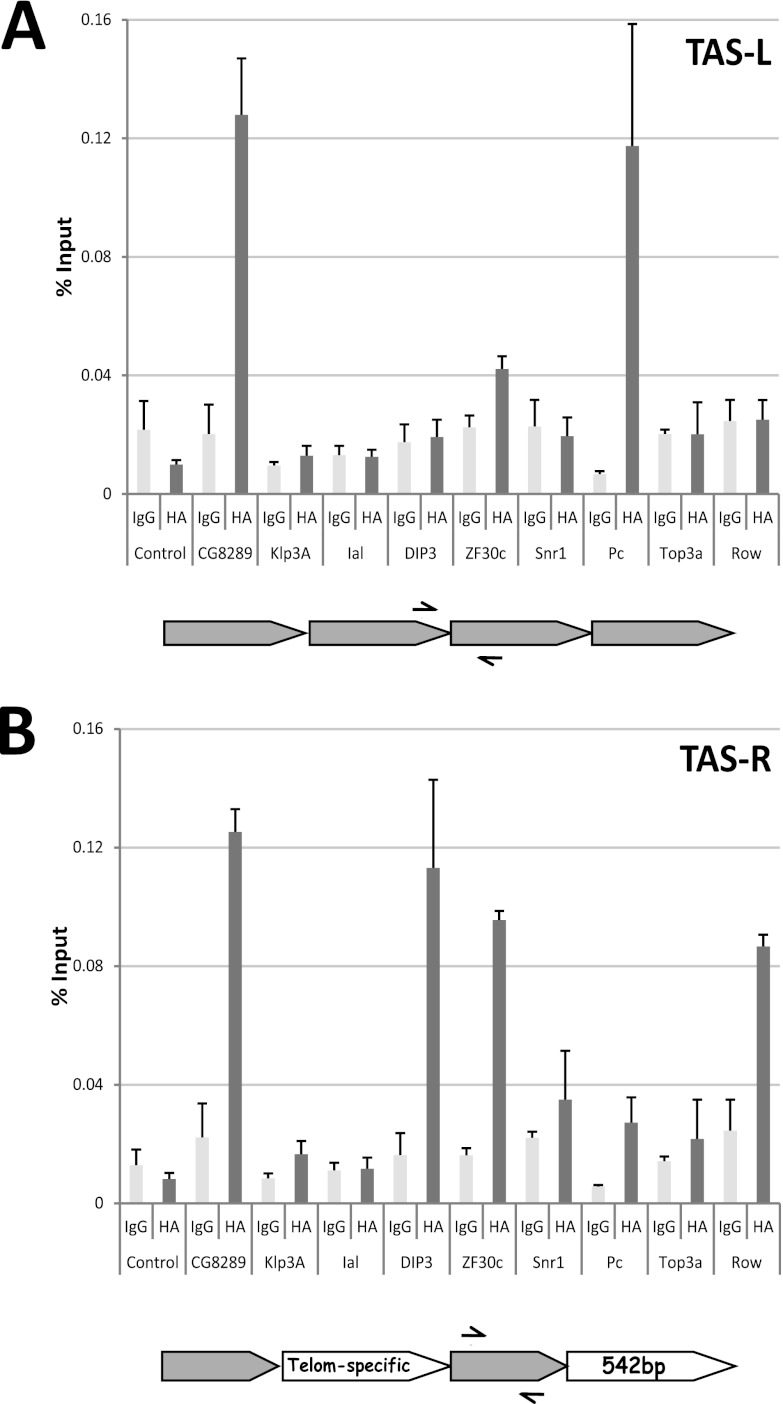
ChIP analysis of candidate TAS protein binding at TAS repeats. Sg4 cells were transfected with expression vectors for HA-tagged versions of the indicated proteins, and ectopic expression of the transgenes was induced by the addition of CuSO4. At 24 h postinduction, cells were cross-linked and ChIP was performed. (A) ChIP, with primers specific for the TAS-L repeat, from cells transfected with expression vectors for the indicated tagged proteins. The two bars represent the average percentage of input DNA precipitated using a control IgG antiserum and an anti-HA polyclonal antibody, and the error bars are the standard errors from two or three independent transfections. CG8289 and Polycomb enrichments are significant (P < 0.05). (B) Same as panel A but with primers specific for the TAS-R repeat family. The Dip3 and Polycomb (P < 0.05) enrichments and the CG8289 and Row (P < 0.01) enrichments are statistically significantly different. A schematic of the respective TAS repeat structures and primers used (arrows) is below each graph. Pc, Polycomb; Telom, telomere.
Fig 6
Fig 6
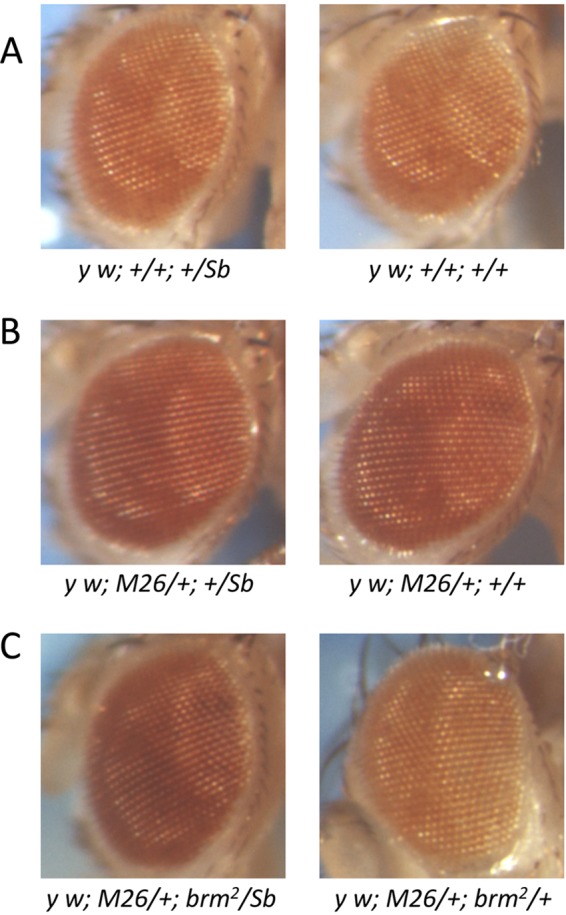
brm2 effects on Df(2L)M26 suppression of TPE. (A) Male progeny from a cross of y w67c23; +/Sb males and y w67c23; +; P(w+)39C-62 females. There are no Su(TPE) present in these males. Therefore, the mini-white insert in 3R TAS is repressed. (B) Male progeny from a cross of y w67c23; +/Sb males and y w67c23; Df(2L)D26; P(w+)39C-62 females. Df(2L)M26, a deficiency for 2L TAS and a Su(TPE). Therefore, the silencing of the mini-white insert imposed by 3R TAS is repressed and the mini-white gene exhibits increased expression. (C) Male progeny from a cross of y w67c23; brm2/Sb males and y w67c23; Df(2L)D26; P(w+)39C-62 females. Heterozygous Df(2L)M26/+; P(w+)39C-62/brm2 males exhibit silencing of the mini-white transgene similar to that seen when Df(2L)M26 is absent. Control Df(2L)M26/+; P(w+)39C-62/Sb sibling males, however, exhibit high expression of mini-white similar to that seen when silencing is suppressed.

References

    1. Abel J, Eskeland R, Raffa GD, Kremmer E, Imhof A. 2009. Drosophila HP1c is regulated by an auto-regulatory feedback loop through its binding partner Woc. PLoS One 4: e5089 doi: - DOI - PMC - PubMed
    1. Andreyeva EN, Belyaeva ES, Semeshin VF, Pokholkova GV, Zhimulev IF. 2005. Three distinct chromatin domains in telomere ends of polytene chromosomes in Drosophila melanogaster Tel mutants. J. Cell Sci. 118: 5465– 5477 - PubMed
    1. Aulner N, et al. 2002. The AT-hook protein D1 is essential for Drosophila melanogaster development and is implicated in position-effect variegation. Mol. Cell. Biol. 22: 1218– 1232 - PMC - PubMed
    1. Benyajati C, et al. 1997. Multiple isoforms of GAGA factor, a critical component of chromatin structure. Nucleic Acids Res. 25: 3345– 3353 - PMC - PubMed
    1. Blanton J, Gaszner M, Schedl P. 2003. Protein:protein interactions and the pairing of boundary elements in vivo. Genes Dev. 17: 664– 675 - PMC - PubMed

Publication types

LinkOut - more resources